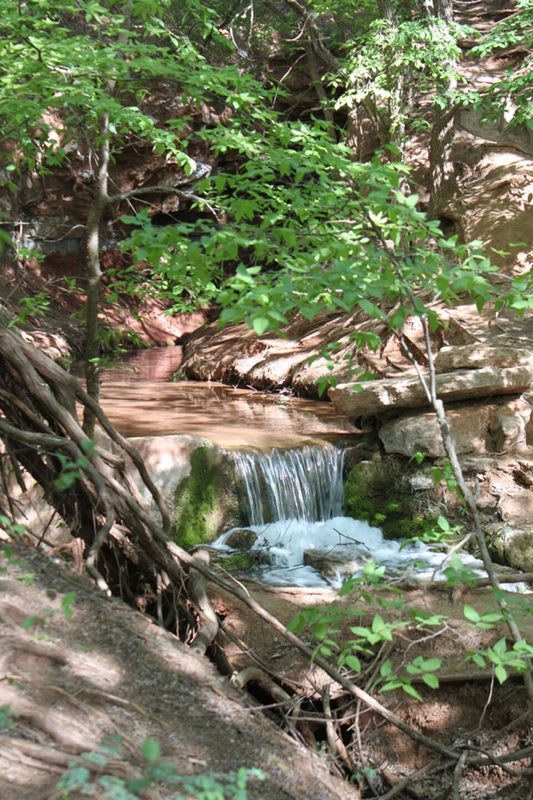
 Matt Howry / CC BY 2.0 via Wikimedia Commons
The Story
North of Watonga the gypsum hills open into a small canyon of gypsum cliffs fed by three natural springs. The Civilian Conservation Corps built the park in the 1930s, and it is one of the original seven Oklahoma state parks. The CCC's pool is still in use, and the 1956 lodge, rebuilt to its mid-century lines, has 22 rooms above the canyon.
The park is named for Henry Roman Nose, a Cheyenne chief. After the Red River War he was one of the prisoners the army sent to Fort Marion at St. Augustine, Florida, years the Cheyenne and Arapaho Tribes mark as 1875 to 1878. From there he went to the Hampton Institute in Virginia, and on October 6, 1879, he entered the Carlisle Indian School in Pennsylvania, which he left in September 1883. His Carlisle file shows him farming near Bickford, Oklahoma, from 1910 to 1914 and records that he became a chief of the Cheyenne. In 2024 the Cheyenne and Arapaho Tribes held a symposium on the Fort Marion years, Honoring Historic Footprints, 1875-1878.
Today the canyon has hiking and mountain-bike trails, trout fishing in season, canoes and paddle boats, an 18-hole golf course set among the canyon walls and mesas, cabins, campsites, and from April through October teepees to rent for the night.
Visitor Info
On the Map
Nearby
The closest stops worth working into your route
Historical markers nearby
Roadside plaques and monuments within a short detour