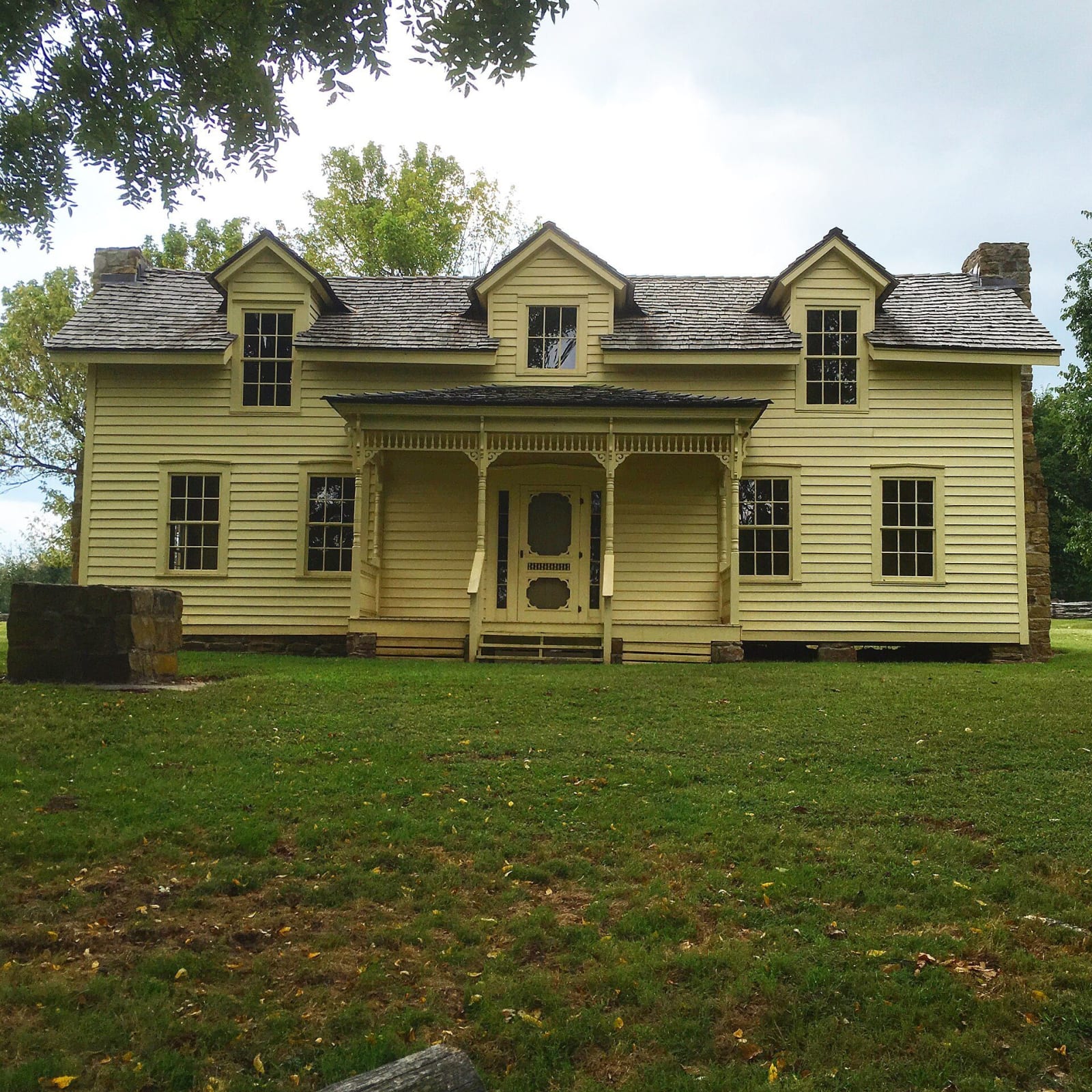
 Tombstone Drone / CC BY-SA 4.0 via Wikimedia Commons
The Story
The Battle of Prairie Grove was fought on December 7, 1862. Confederate Major General Thomas Hindman had about 12,000 men and 22 cannon. Union Brigadier Generals James Blunt and Francis Herron together had about 10,000 and 44 cannon. Herron's divisions force-marched about 120 miles from Springfield, Missouri. Soldiers of the Cherokee and Creek nations served on both sides. At the Borden orchard, the 37th Illinois and 26th Indiana attacked uphill and were turned back. Lieutenant Colonel John Charles Black led the Illinois men with his arm in a sling and received the only Medal of Honor of the battle. About 2,700 men were killed, wounded or missing. That night Hindman's army muffled its cannon wheels with blankets and left, short of food and ammunition. A full Confederate army never returned to northwest Arkansas, and the Encyclopedia of Arkansas calls it probably the bloodiest day in Arkansas history.
The park grew in pieces. The United Daughters of the Confederacy bought nine acres in 1908. In August 1938 the last Confederate veterans from the area attended a reunion here. Governor Dale Bumpers signed the law creating the state park in 1971, and the Borden House property, where some of the heaviest fighting took place, was added in 1980. Hindman Hall, dedicated in 1965 with a $100,000 bequest from the general's son Biscoe Hindman, holds the park museum.
The park is at 506 East Douglas Street in Prairie Grove, on more than 1,000 acres by the state's count. The museum shows artifacts recovered from the field.
Visitor Info
On the Map
Nearby
The closest stops worth working into your route
Historical markers nearby
Roadside plaques and monuments within a short detour