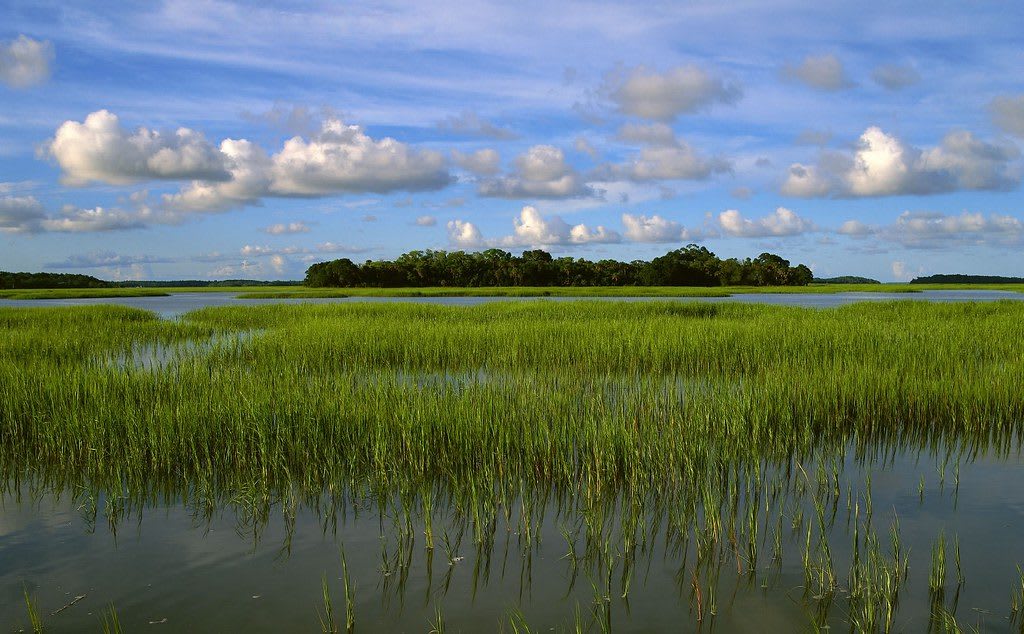
 USFWS Headquarters / CC BY 2.0 via Flickr
The Story
People lived on these islands for thousands of years before the plantation; 115 prehistoric and historic sites have been found here, with use reaching back to the Archaic period and heaviest in the Mississippian centuries before 1500. In 1708 Alexander Mackay, an Indian trader, took title to the first two hundred acres, and in 1736 his widow sold the islands to Charles Pinckney, father of the Revolutionary general and Constitution signer Charles Cotesworth Pinckney.
The younger Pinckney moved here in 1804 and turned the island into a cotton plantation, clearing much of the maritime forest. By 1818 the family held more than two hundred enslaved people who grew long-staple Sea Island cotton, and by 1840 three hundred. Union troops occupied the island after November 1861, freeing the people held here, and in August 1862 Confederates crossed and attacked a New Hampshire company's camp, killing four. The plantation never recovered; it lay nearly abandoned until a New York banker's wife bought it in 1937 as a hunting preserve, and it became a refuge in 1975.
Today it is 4,053 acres, mostly salt marsh and tidal creek, and the one island in its refuge complex open to visitors. Cars stop at the parking area just off US 278; from there it is walking or cycling only, about two miles round trip to the first pond, where white ibis, egrets and herons gather. There is no water, no restroom and little shade, and alligators live in the ponds.
Visitor Info
On the Map
Nearby
The closest stops worth working into your route
Historical markers nearby
Roadside plaques and monuments within a short detour