 Carol M. Highsmith / public domain via Library of Congress
The Story
Before the Marines, before the Spanish and the French, this island belonged to the peoples of Port Royal Sound, among them the Orista and the Escamazu, with the Guale to the south. In 1562 the Huguenot captain Jean Ribault left about two dozen men here to build Charlesfort; within fourteen months, short of food and at odds with their neighbors, they sailed home in an open boat and were reduced to cannibalism before an English ship found them. In 1566 Pedro Menéndez de Avilés founded Santa Elena on the same ground, and for much of its first decade it was the capital of Spanish Florida.
The Spanish demanded food and labor from the surrounding towns, and in 1576 the Orista, Guale and Escamazu joined forces and drove them out, burning the town. Spain rebuilt it a year later and answered with a war of fire and blood in the early 1580s, then abandoned Santa Elena for good in 1587 after Drake's raid on St. Augustine. The site was declared a National Historic Landmark in 2001.
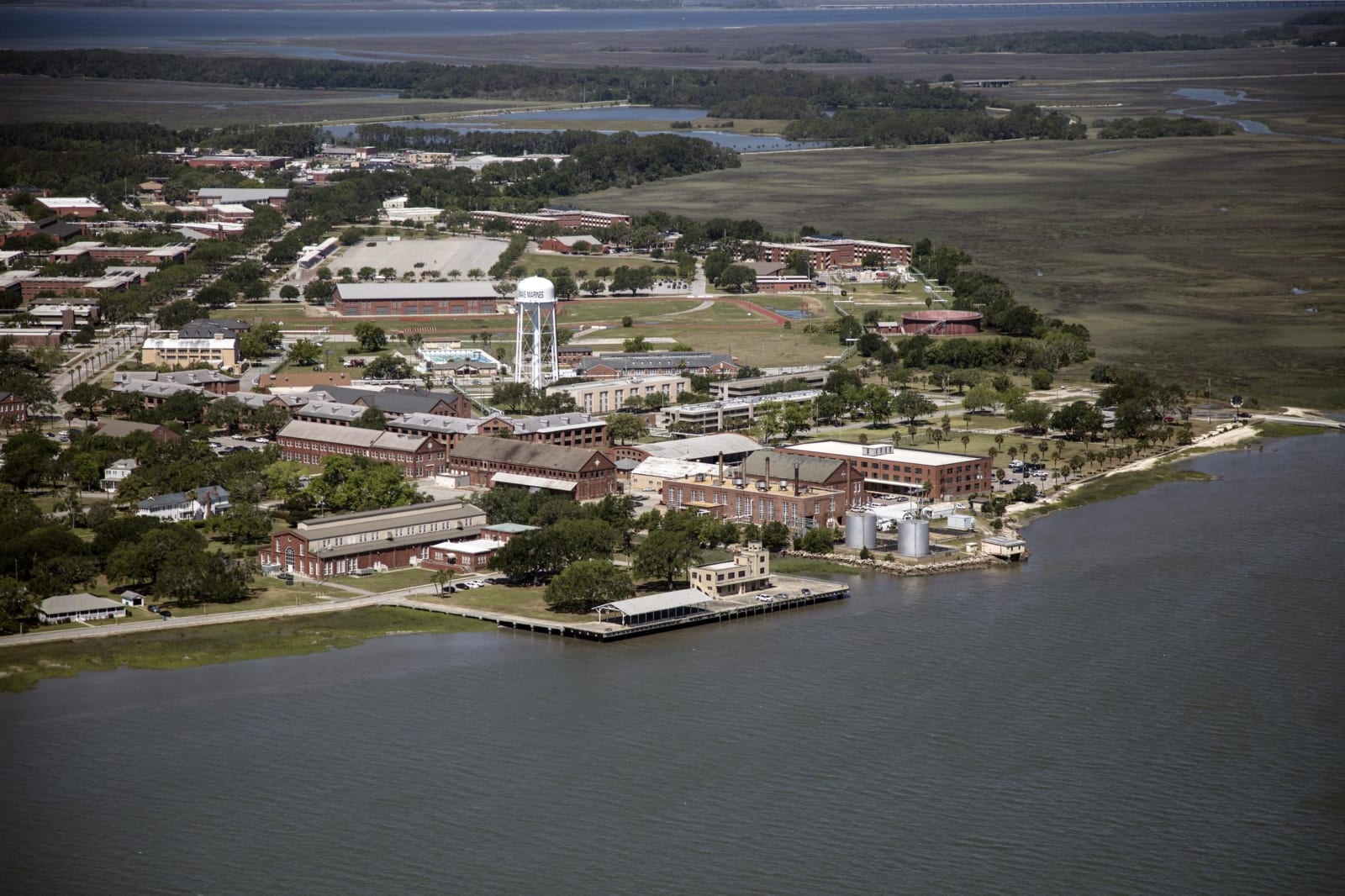
The island became a naval station in 1891 and passed to the Marine Corps in 1915, and recruits have trained here through every war since. The museum covers the Spanish and French settlements, the depot and the 1956 Ribbon Creek drownings of six recruits. Civilians can visit: tell the gate you are going to the museum, and bring a REAL ID-compliant license, vehicle registration and proof of insurance.
Visitor Info
On the Map
Nearby
The closest stops worth working into your route
Historical markers nearby
Roadside plaques and monuments within a short detour