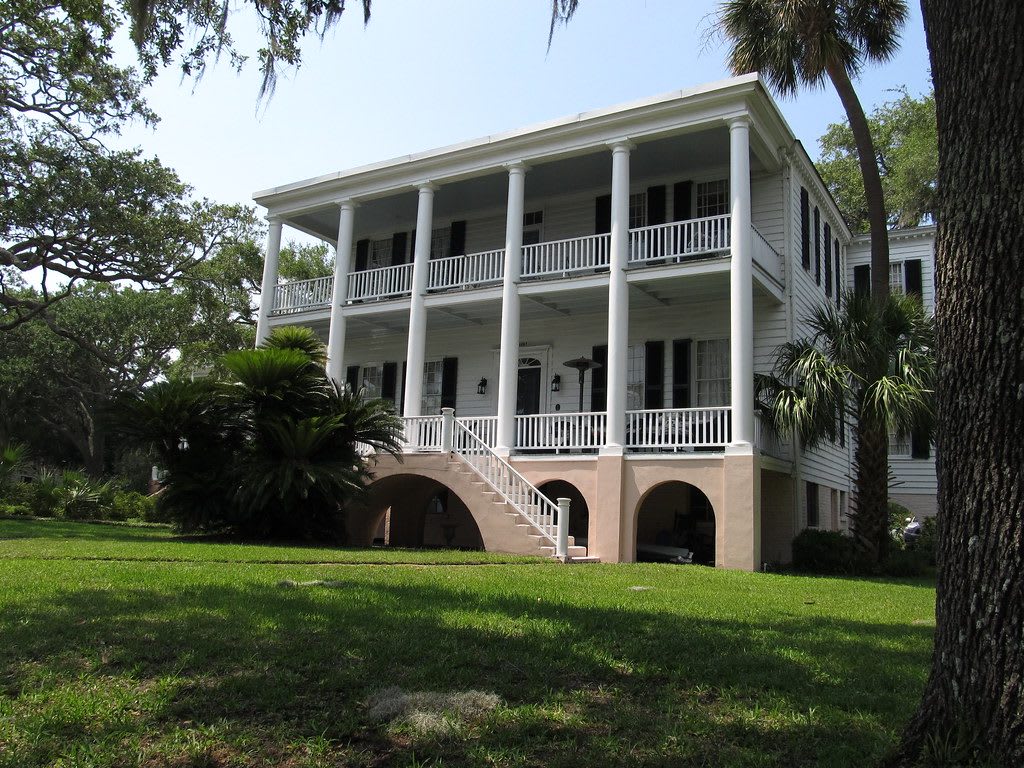
 Ken Lund / CC BY-SA 2.0 via Flickr
The Story
Robert Smalls was born enslaved in Beaufort on April 5, 1839, in the household of Henry McKee, who may have been his father. Hired out to Charleston at twelve, he became a skilled pilot, and in May 1862 he led the enslaved crew of the steamer Planter in taking the ship past the harbor forts to the Union fleet. After the war he came home and bought the McKee house on Prince Street. He helped found the state's Republican Party, wrote the public school provision of the 1868 constitution, served in the legislature and in Congress, and in 1895 was one of six Black delegates who fought disfranchisement at the constitutional convention. He is buried in the Tabernacle Baptist churchyard on Craven Street.
The town he came back to had been chartered in 1711, burned by the Yamasee in 1715, and grown rich on rice and Sea Island cotton raised by enslaved people. By 1860 it was a center of the secession movement. When the Union Navy took Port Royal Sound on November 7, 1861, the planters fled, and Beaufort became the Army's headquarters for the Department of the South, its houses turned into hospitals. Under the Direct Tax Act most Sea Island plantations were seized, and freedpeople bought about a third of the 101,930 acres taken.
Start at the Reconstruction Era National Historical Park visitor center on Craven Street, then walk the Point and Bay Street. The Smalls house is a private home, seen from the sidewalk. The park's grounds are free and open daily.
Visitor Info
On the Map
Nearby
The closest stops worth working into your route
Historical markers nearby
Roadside plaques and monuments within a short detour