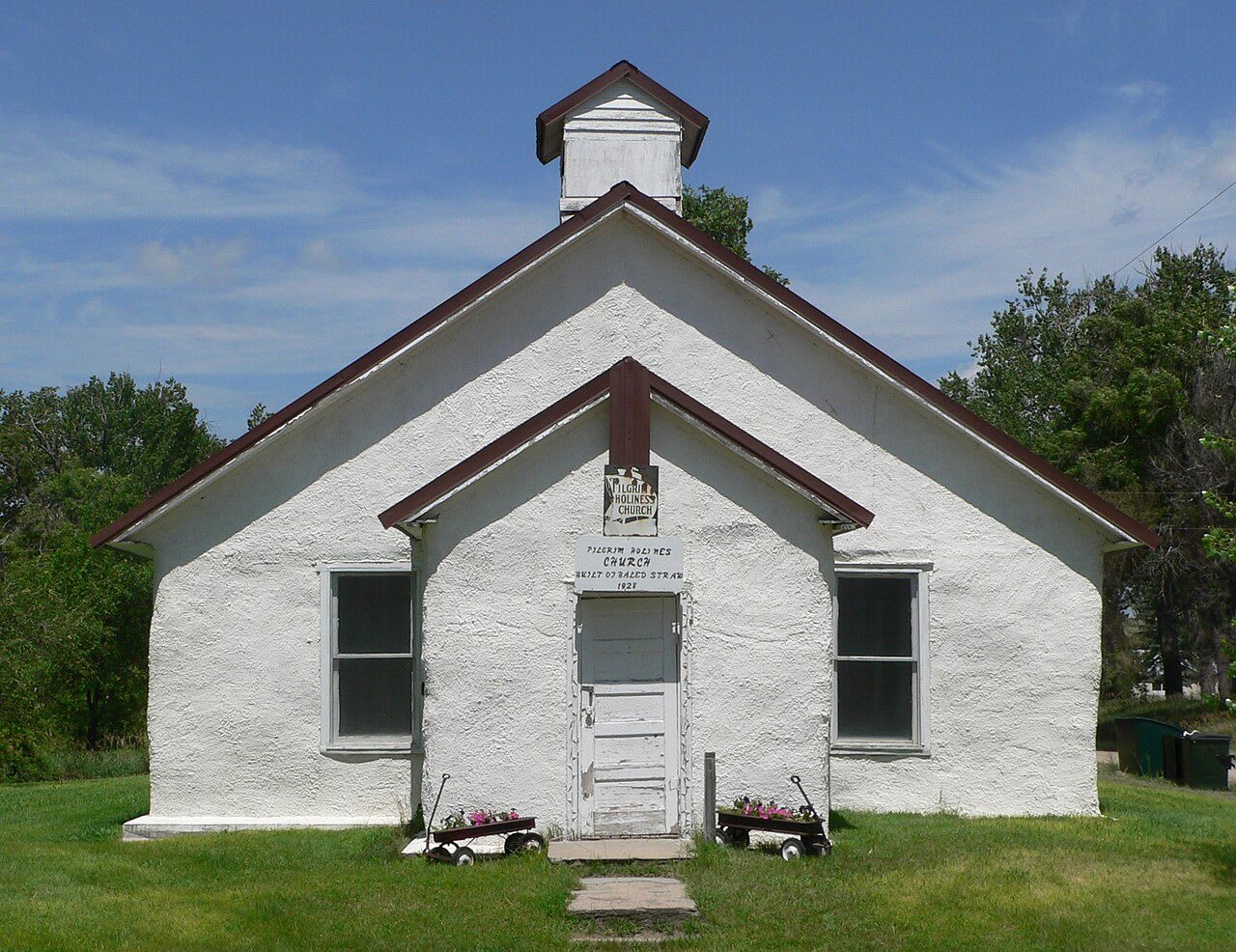
 Ammodramus / public domain via Wikimedia Commons
The Story
Arthur County had no timber to speak of and few people. The county was organized in 1913, and the 1920 census counted 1,412 residents. When a group of Congregationalists in Arthur began planning a church in 1927, they built it from bales, a method used in this part of the Sandhills, where a 1990 survey found nine bale buildings still standing in Arthur and Logan counties. Volunteers baled and hand-tied rye straw north of town and mules hauled it in. In 1928 the bales went up on edge, pinned together with lath driven through them, into load-bearing walls two feet thick. A restoration in 1976 found the first plaster had been local gumbo mud.
The building is 28 by 50 feet, a one-and-a-half-story front-gabled hall with the pastor's quarters at the back: a kitchen, a parlor and a stairway to two small bedrooms. It served as a Pilgrim Holiness church, and nineteen preachers' families lived in those rooms over 35 years. Services ended in 1967, and the building stood empty for several years.
It is the oldest known straw-bale church in North America. It stands at Cedar and Heath streets, stuccoed outside, plastered inside and roofed in metal now, and it was listed on the National Register of Historic Places in 1979. The Arthur County Historical Society owns it, has looked after its restoration since the 1970s, and gives guided tours; the details are posted on the church door.
Visitor Info
On the Map
Nearby
The closest stops worth working into your route
Historical markers nearby
Roadside plaques and monuments within a short detour