 Coemgenus / CC BY-SA 3.0 via Wikimedia Commons
The Story
Four towns have carried the name, all within a few miles of each other on the South Platte. The first grew around the trading post Jules Beni opened at the Upper California Crossing in the late 1850s, which became a stage station when the Overland line came through; Beni was later driven out and, in 1861, killed by the stage company's division agent Jack Slade. That Julesburg was burned to the ground in February 1865.
The second Julesburg went up a few miles east, just outside the boundary of the new Fort Sedgwick military reservation, and lasted as a stage stop until the Union Pacific laid its rails along the north bank of the river in June 1867. The town crossed the river to the railhead. That third Julesburg was an end-of-track town, its population swelling by some estimates to several thousand while the crews were near, and it earned the name of the wickedest city in the West before the railroad moved on and left it to fade.
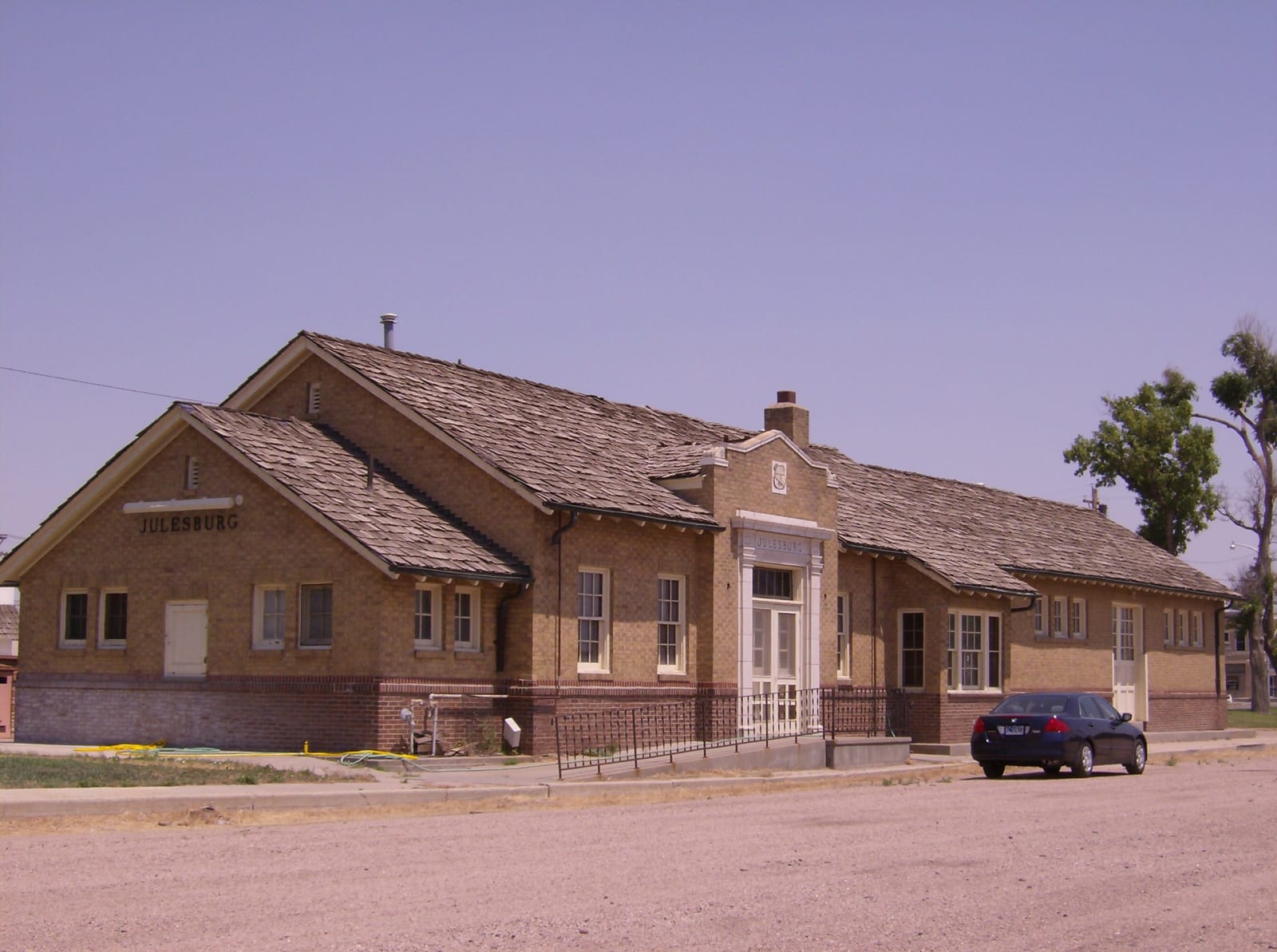
In the early 1880s the Union Pacific built its branch to Denver, joining the main line at a point called Denver Junction a few miles east. The settlement there took the old name, and that fourth Julesburg is the town on the map now. Union Pacific built it a brick depot in 1930; when the railroad announced in 1973 that it would tear it down, the town and the Fort Sedgwick Historical Society moved it 110 feet north and turned it into the Depot Museum. The society's Fort Sedgwick Museum is in town as well; nothing stands of the fort itself.
Visitor Info
On the Map
Nearby
The closest stops worth working into your route
Historical markers nearby
Roadside plaques and monuments within a short detour