Home / Nebraska / North Platte & the Great Platte River Road / Buffalo Bill Ranch State Historical Park
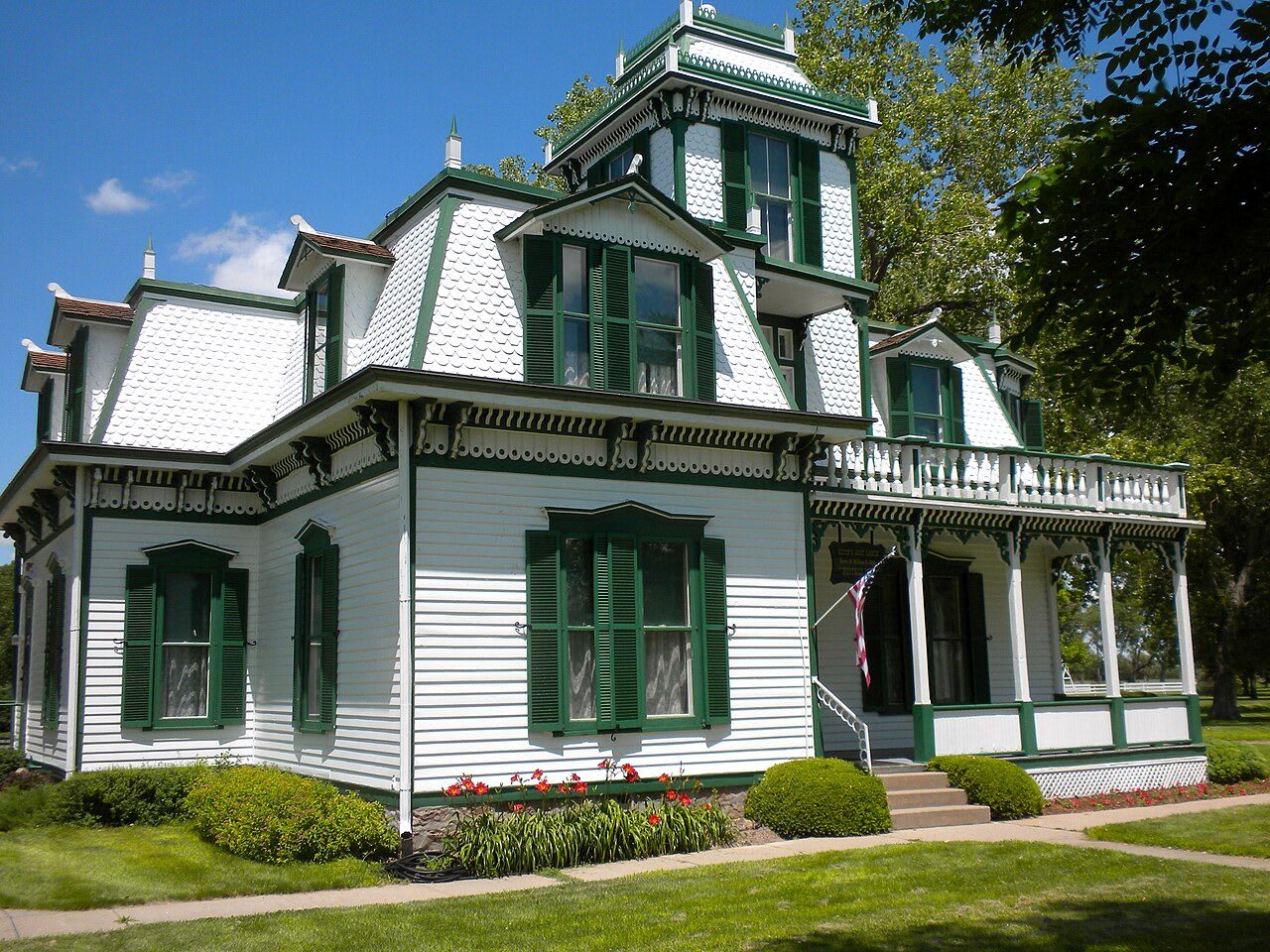
The white Second Empire house at Scout's Rest, with green shutters and a cupola, stands behind flower beds in North Platte.Smallbones / public domain via Wikimedia Commons
🏛️Historical

Buffalo Bill Ranch State Historical Park

Part ofNorth Platte & the Great Platte River Road

Scout's Rest, the North Platte ranch house and barn of William F. Cody, in the town where his Old Glory Blowout of July 4, 1882 became the first act of the Wild West.

⏱
Duration
One to two hours.
🎟
Admission
$5 adults 13 and up, $1 ages 3 to 12, free under 3, plus a Nebraska park entry permit.
📅
Best Season
May 1 to October 31, Wednesday through Sunday, 9 a.m. to 4:30 p.m., for the house; grounds open year-round, 8 a.m. to sunset.

The Story

William F. Cody was already a stage performer and a dime-novel hero when he made North Platte home. Louisa Cody and their daughters moved here in February 1878, and he bought 160 acres south of the Union Pacific tracks; with the North brothers he also ran cattle on the Dismal River, sixty-five miles north, until 1882. That year the town wanted a Fourth of July to remember, and Cody organized it. The Old Glory Blowout of July 4, 1882, put roping, bronc riding and buffalo riding in front of a crowd at a privately owned racetrack in town. It is counted as the first spectator rodeo and the beginning of Buffalo Bill's Wild West, which was on the road by 1883.

The ranch he called Scout's Rest grew to 4,000 acres. Patrick Walsh of North Platte built the house in 1886 for $3,900, a Second Empire house with a mansard roof and a three-story tower, the largest house in town at the time. Cody's sister Julia and her husband Al Goodman lived in it and managed the ranch. The barn followed in 1887, with Scout's Rest Ranch painted on its roof, and the Union Pacific at the door let the show move by train.

Cody sold the ranch in 1911. The Game and Parks Commission bought the house in 1964 and restored it and the barn, which now holds Wild West show memorabilia, and in January 2021 the ranch was designated a National Historic Landmark.

Visitor Info

⏱
Time Needed
One to two hours.
🎟
Admission
$5 adults 13 and up, $1 ages 3 to 12, free under 3, plus a Nebraska park entry permit.
📅
Best Season
May 1 to October 31, Wednesday through Sunday, 9 a.m. to 4:30 p.m., for the house; grounds open year-round, 8 a.m. to sunset.
🛣️
Highway
US-30

On the Map

Nearby

The closest stops worth working into your route

industrial2.1 mi away
Golden Spike Tower and Bailey Yard
A tower with seventh- and eighth-floor decks over Union Pacific's Bailey Yard in North Platte, the world's largest railroad classification yard, in a town the railroad laid out and fed troops from.
recreational45 mi away
Lake McConaughy and Kingsley Dam
Nebraska's largest reservoir, 22 miles of North Platte water and white sand beaches behind a 1941 hydraulic-fill dam, built so farms far downstream could water their crops.
architectural54 mi away
Pilgrim Holiness Church (Baled Hay Church)
A church raised in 1928 from bales of hand-tied rye straw in treeless Arthur, the oldest known straw-bale church in North America and a survivor of a Sandhills building habit.
natural57 mi away
Nebraska National Forest, Bessey Ranger District
A pine forest planted by hand on the Sandhills from 1902 to prove a botanist's theory, still raising seedlings at its nursery and still recovering from the Bovee Fire of 2022.
historical67 mi away
Massacre Canyon Monument
A granite shaft east of Trenton above the canyon where Lakota warriors attacked a Pawnee buffalo-hunting camp on August 5, 1873, a year before the Pawnee left Nebraska.
historical67 mi away
Senator George Norris State Historic Site
The McCook house George W. Norris kept as his home base for forty-two years, given to the state with its furniture by his wife Ellie, by the senator who wrote the lame-duck amendment.