 Tim Brown Architecture / CC BY 2.0 via Flickr
The Story
In April 1862 Laura Towne, an abolitionist from Philadelphia, came to St. Helena Island, five months after the Union Navy took Port Royal Sound and the planters fled inland, leaving nearly ten thousand enslaved people on the Sea Island plantations. Ellen Murray joined her in June. They began teaching in a one-room schoolhouse on the Oaks Plantation and soon moved into the Brick Baptist Church, built in 1855 by enslaved people for the planters who worshipped there. Charlotte Forten, a free Black woman from Philadelphia, became the school's first African American teacher. In 1864 a prefabricated building arrived from Pennsylvania and went up on fifty acres bought from a freedman named Hastings Gantt.
The Penn School outlived the Port Royal Experiment that produced it. Chartered in 1901 as the Penn Normal, Industrial, and Agricultural School, it taught carpentry, basket making, midwifery and teacher training alongside reading and arithmetic, and graduated its last class in 1953. As Penn Community Center it turned to the islanders' land and welfare, and in the 1960s Martin Luther King Jr. and the Southern Christian Leadership Conference met here, at the Frissell Community House, while planning the March on Washington and the Poor People's Campaign.
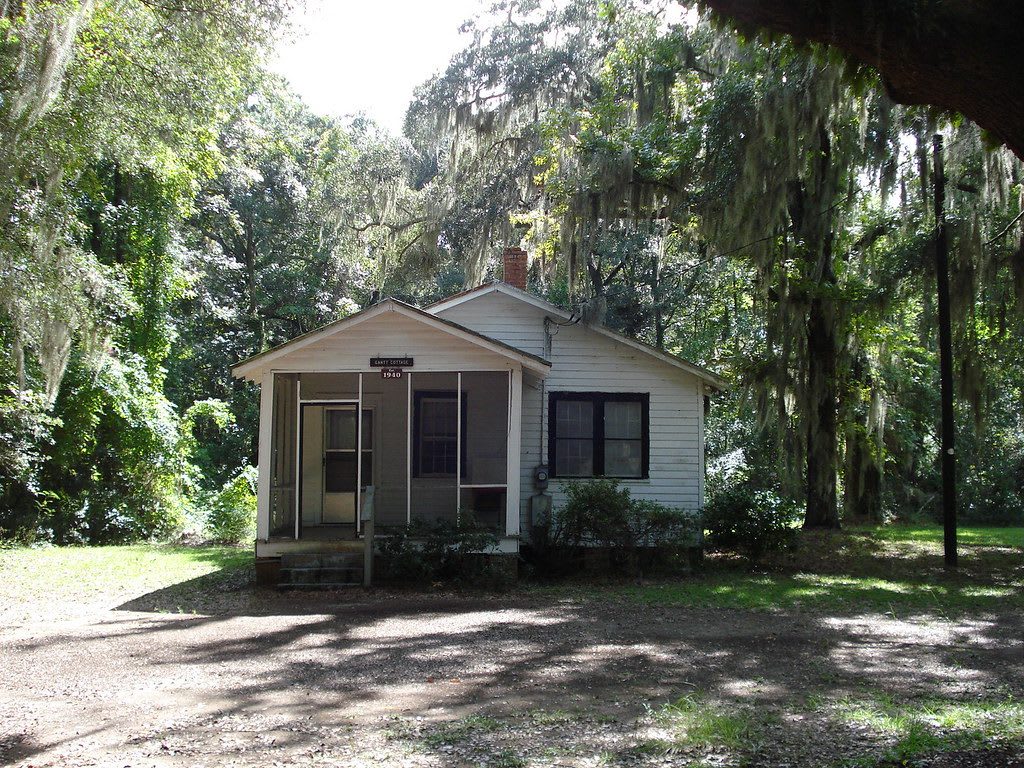
The campus holds about two dozen historic buildings on fifty acres under the oaks. Start at the welcome center beside the York W. Bailey Museum, where the Penn School collection and the island's Gullah Geechee history are shown, then walk to Darrah Hall's park exhibits and on to the Brick Baptist Church, still a working congregation, so its interior is usually closed.
Visitor Info
On the Map
Nearby
The closest stops worth working into your route
Historical markers nearby
Roadside plaques and monuments within a short detour