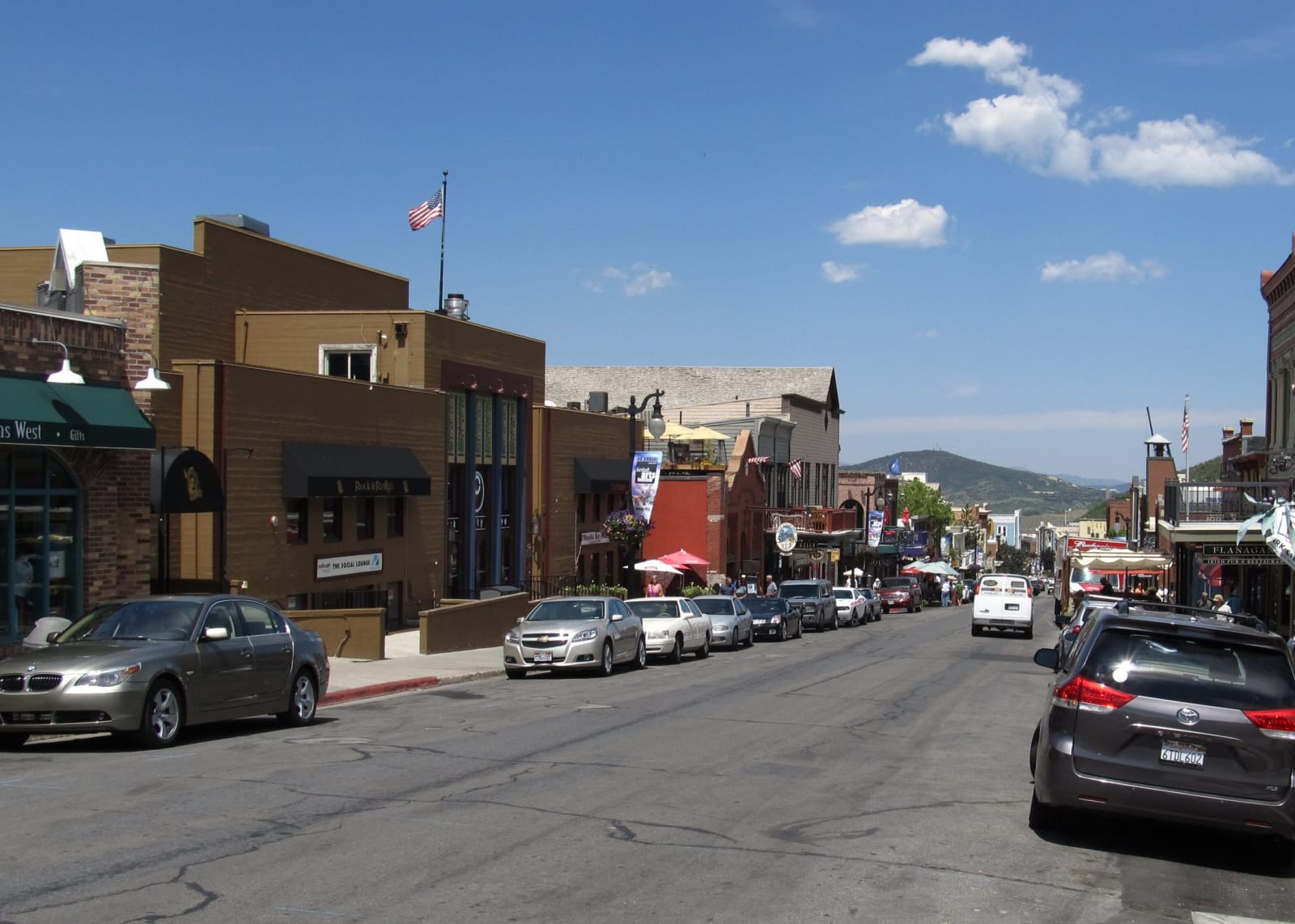
 Ken Lund / CC BY-SA 2.0
The Story
Park City Main Street has reinvented itself so many times that reinvention has become its defining characteristic. In the 1880s it was a rough silver mining boomtown with 27 saloons, a red-light district, and a population of miners who worked brutal shifts underground and spent their wages above ground with matching intensity. By the mid-twentieth century the silver was gone, the mines were closed, and Main Street was a near-ghost town of empty storefronts and sagging Victorian facades. Then skiing arrived, and everything changed again. Today the same street that once served whiskey to miners serves craft cocktails to film executives during the Sundance Film Festival every January, and the buildings that housed brothels now house galleries, boutiques, and restaurants with wine lists longer than the original mining claims.
The physical street is steep — it drops roughly 200 feet over its half-mile length — and that grade gives it a visual drama that flat main streets lack. Standing at the top and looking down, the historic buildings line both sides in a colorful jumble of Victorian, Edwardian, and early twentieth-century commercial architecture, their facades painted in blues, reds, greens, and yellows that pop against the mountain backdrop. The buildings are genuine — most date from the 1880s through the early 1900s — and the town has enforced strict historic preservation standards that prevent the kind of demolish-and-rebuild cycle that has erased the character of so many Western mining towns.
The mining history is not hidden or sanitized. The Park City Museum, housed in the original 1885 City Hall and Territorial Jail, preserves the cells where drunken miners spent the night and tells the story of the town's boom-and-bust cycles with impressive honesty. The exhibits cover the Chinese immigrants who worked the mines and laundries, the labor disputes that turned violent, the fires that destroyed much of Main Street in 1898, and the slow economic decline that followed the collapse of silver prices. The jail cells in the basement are original, complete with graffiti scratched into the walls by former occupants.
The Sundance Film Festival transformed Park City from a ski town into an international cultural destination. It began in 1978 as the Utah/US Film Festival down in Salt Lake City, moved up to Park City in 1981, and came under Robert Redford's Sundance Institute in 1985 — taking the Sundance name in 1991. Every January, roughly 120,000 people descend on a town with a permanent population of about 8,500, filling every hotel room, restaurant seat, and sidewalk with filmmakers, actors, journalists, and film enthusiasts. Main Street becomes the festival's social center — screenings happen in venues up and down the street, pop-up lounges appear in empty storefronts, and the odds of standing in line for coffee behind someone famous are genuinely high. The festival has launched careers, changed the independent film industry, and given Park City a cultural identity that extends far beyond skiing.
The skiing itself is world-class. Park City Mountain Resort, accessible by a town lift that departs from the base of Main Street, is one of the largest ski areas in the United States. Deer Valley Resort, a few miles east, is consistently ranked among the top ski destinations in North America. The combination of two major resorts, a historic downtown, and a food and arts scene that punches well above its weight class makes Park City one of the most complete mountain towns in the American West.
The restaurant scene has evolved far beyond the steakhouses and pizza joints that once dominated. Main Street now hosts establishments ranging from Japanese omakase to elevated Mexican cuisine to farm-driven American cooking that draws on the agricultural resources of the surrounding Wasatch Back. The dining options are disproportionate to the town's size — a reflection of the wealth that skiing and Sundance have brought to the community and the culinary talent that has followed.
In summer, Main Street transforms again. The ski crowds leave, the pace slows, and the town becomes a base for mountain biking, hiking, fly fishing, and trail running in the surrounding Wasatch Mountains. The mountain bike trail system is extensive and well-maintained, and the town lift converts to a bike haul in summer, carrying riders and their bikes to the top of the resort for downhill runs back to Main Street. The free trolley runs the length of the street and connects to the resort base areas, making car-free exploration easy.
The tension between Park City's mining past and its resort present is visible everywhere on Main Street. Historic buildings house luxury retailers. Former miners' cottages sell for millions of dollars. The same street where Chinese immigrants once ran laundries and faced open hostility now caters to an international film crowd every winter. The town does not always handle these contradictions gracefully, but it handles them honestly, and the result is a place that feels layered and lived-in rather than manufactured.
Park City Main Street is 30 minutes from Salt Lake City via Interstate 80 and Highways 224 or 248, making it one of the most accessible mountain towns in the West. The drive climbs through Parley's Canyon, crests at the summit, and drops into the Snyderville Basin with the Wasatch peaks rising on all sides. In winter, the road can be icy and chains or snow tires are recommended. In any season, the arrival — descending into a valley framed by mountains, with Main Street's colorful buildings visible below — feels like arriving somewhere that matters.
Visitor Info
On the Map
Nearby
The closest stops worth working into your route
Historical markers nearby
Roadside plaques and monuments within a short detour