 Larry D. Moore / CC BY 4.0 via Wikimedia Commons
The Story
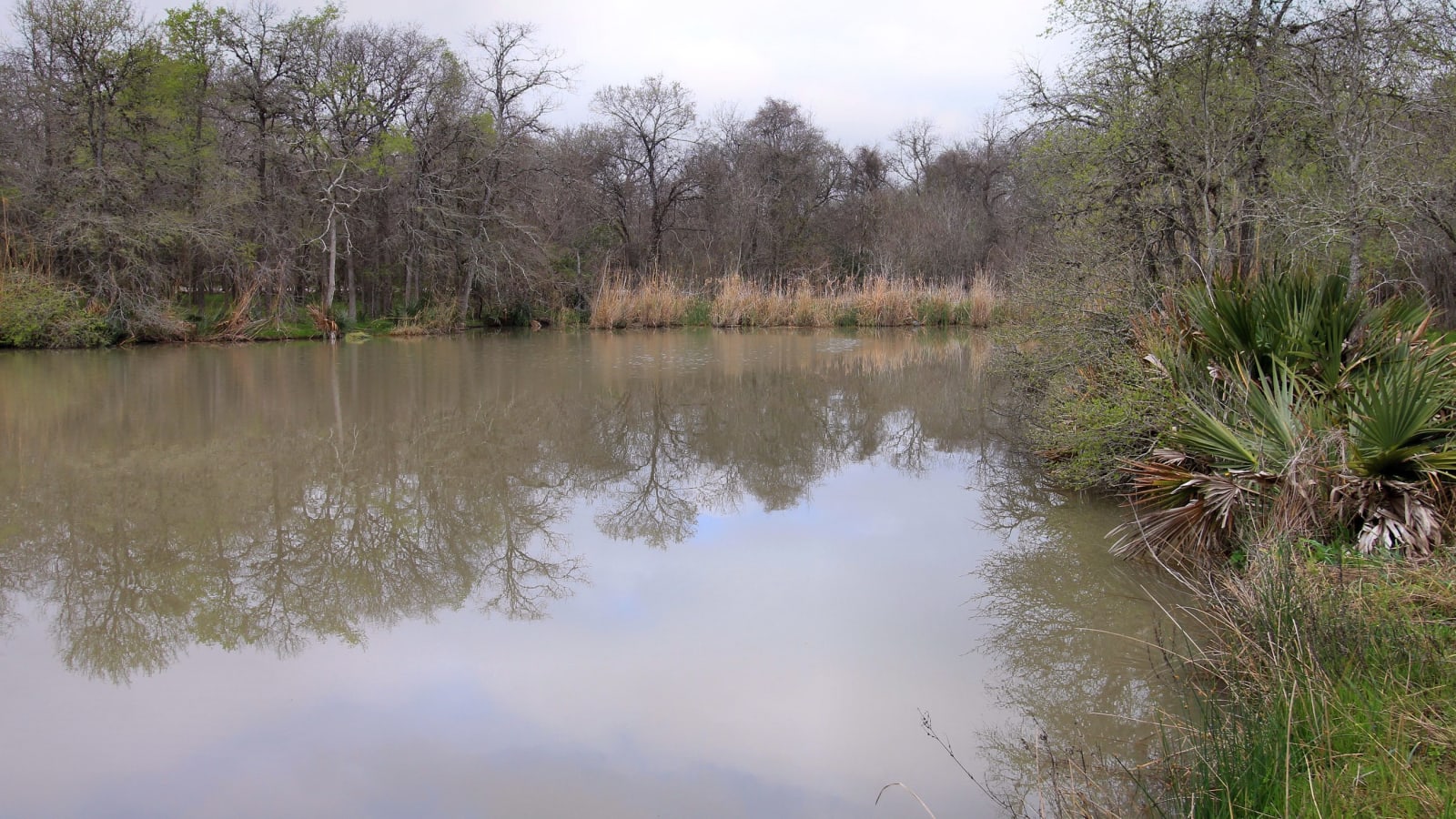
Palmetto State Park takes its name from the dwarf palmetto, which grows thick under the trees here. The San Marcos River runs through the park, and its old channel left a four-acre oxbow lake, first cut by floodwater and now cut off from the river and fed by springs. Bogs and swamps scattered through the bottomland, with an artesian well, give the woods a wet, jungle-like feel, and the bird list passes 240 species, prothonotary warblers and red-shouldered hawks among them.
The land came from private owners and the City of Gonzales between 1934 and 1936, and the park opened in 1936. Civilian Conservation Corps Companies 873 and 886 built it between 1934 and 1937: Park Road 11, a low-water crossing, the water tower, the refectory, the residence that is now headquarters, picnic tables and two sets of entrance portals. Their picnic pavilion now has an air-conditioned kitchen.
The Palmetto Trail winds through a stand of the palmettos. The river has a steady current and no rapids; experienced paddlers can put in at Luling City Park for a six- to seven-hour run to the park, arranging their own shuttle, since private land lines the banks. The park no longer rents boats. Rain upstream can bring flash floods, and the oxbow has a fishing pier.
Visitor Info
On the Map
Nearby
The closest stops worth working into your route
Historical markers nearby
Roadside plaques and monuments within a short detour