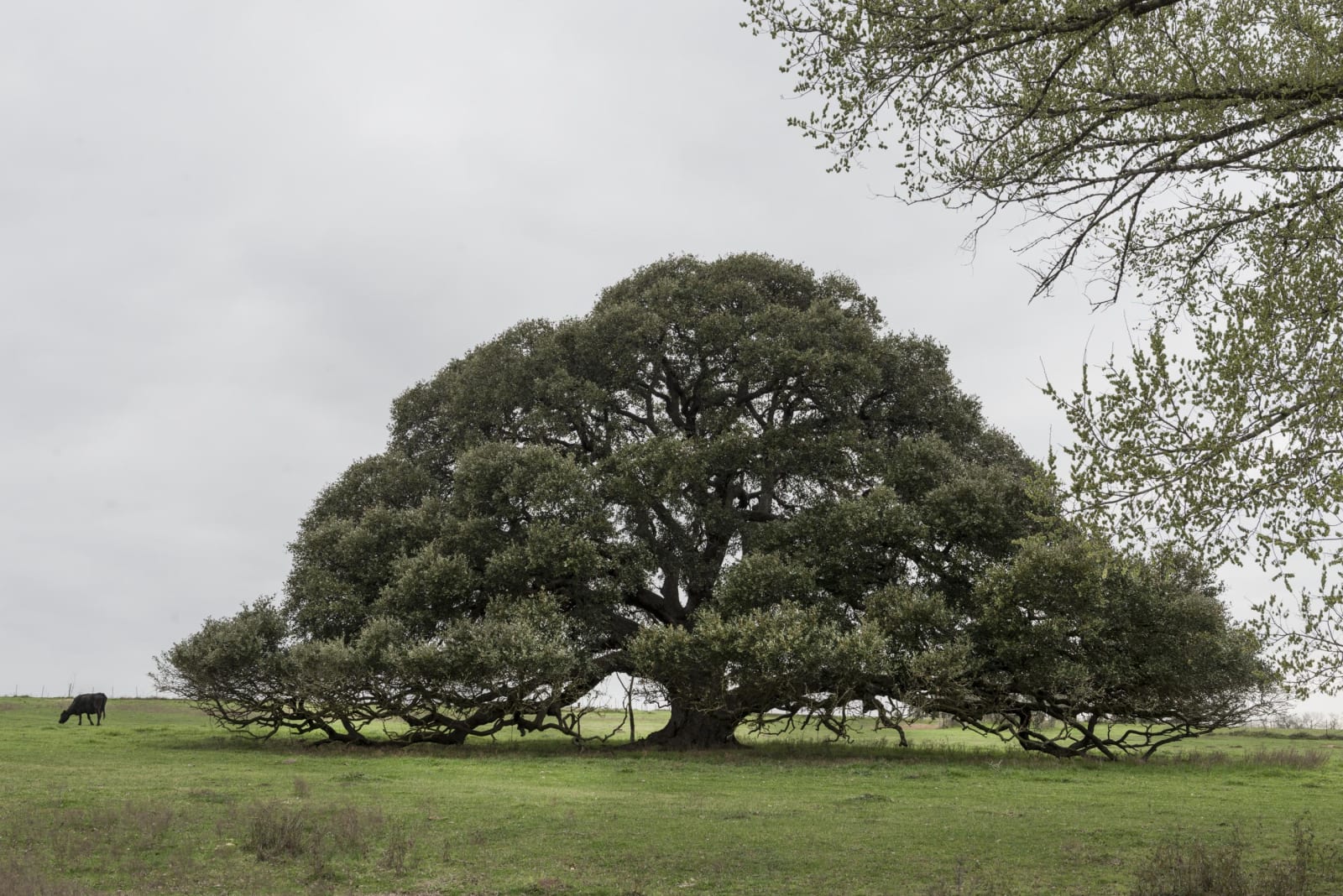
La Grange, Gonzales & the Painted Churches
San Felipe de Austin, the Gonzales cannon, Monument Hill and the Kreische Brewery, the painted churches of Schulenburg, Round Top's Festival Hill and Columbus.
Stephen F. Austin made San Felipe de Austin the capital of his colony in 1824, on a bluff where the Old San Antonio Road crossed the Brazos. The Consultation met there in November 1835, and on March 30, 1836, its own garrison burned it to keep it from Santa Anna. Industry, settled by Friedrich Ernst's family in 1831, was the first permanent German settlement in Texas, and Germans and Czechs filled the rolling country to the west.
Gonzales was the westernmost town of the American colonies. On October 2, 1835, its settlers refused to hand over a small cannon and fought Mexican dragoons beside the Guadalupe, the first skirmish of the Revolution, and on March 6, 1836, thirty-two Gonzales men died at the Alamo. On a bluff above La Grange, Monument Hill holds the common tomb of the men who died in the Dawson fight and the Mier expedition of 1842, beside the brewery Heinrich Kreische opened in 1860.
The painted churches are in the farm towns around Schulenburg: Ammannsville, Dubina, High Hill, Praha, Moravia and St. John. They look plain from the road and are richly painted inside, and all are working parishes. Dubina, settled in 1856, was the first Czech settlement in Texas. Round Top's Festival Hill has housed the International Festival-Institute since 1971, and Sam Houston's army camped at Columbus in March 1836.
La Grange, Gonzales & the Painted Churches rewards the unhurried. Pick a base, fan out, and let the country between the headline stops surprise you.
← Explore more of Open Road Guide