 Carol M. Highsmith / public domain via the Library of Congress
The Story
Gruene was a cotton town. Ernst Gruene and his wife Antoinette reached New Braunfels in 1845, found farmland scarce, and bought land down the Guadalupe. In 1872 the family purchased 6,000 acres north of the river, and their son Henry D. Gruene planted it in cotton, bringing 20 to 30 sharecropping families onto his land. He built a mercantile store in 1878, a cotton gin powered by the river, a dance hall and saloon, and houses in several styles. After the International-Great Northern Railroad came through in the 1880s, the place took his name. By 1900 it was the banking, ginning and shipping center for the area's growers, and a new mercantile building went up in 1904.
Henry Gruene died in 1920, the gin burned in 1922, and the boll weevil finished the rest: late in the 1920s the family's 8,000 acres reportedly failed to produce a single bale. The Depression closed the store and depots, and by 1950 Gruene was a ghost town.
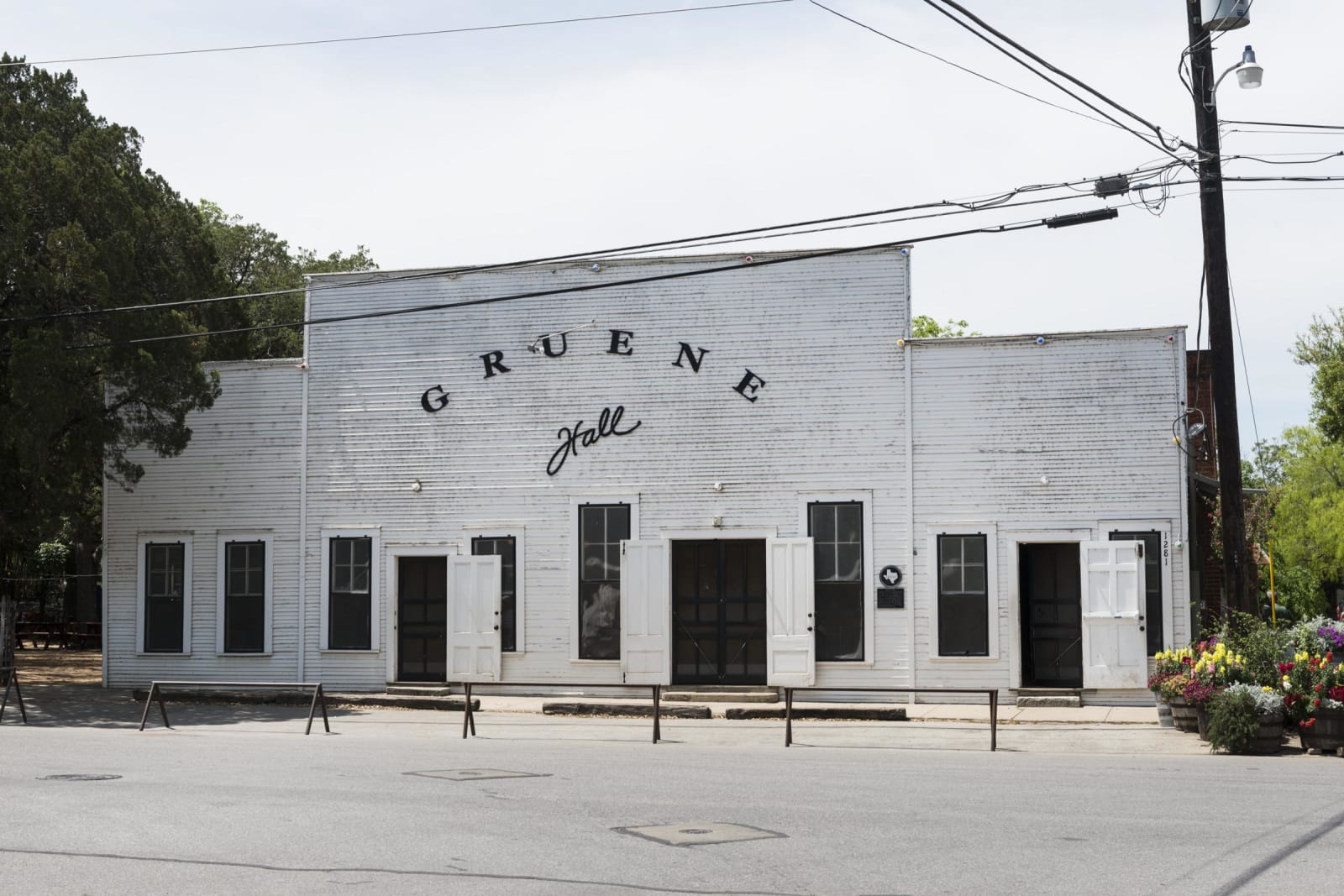
In 1974 Chip Kaufman, a University of Texas architecture student paddling the Guadalupe, spotted a water tower above the trees, found the old buildings and learned that developers planned condominiums on the bluff. He persuaded them to keep the town and had it listed on the National Register in 1975. Pat Molak bought Gruene Hall that year. The 6,000-square-foot hall, built in 1878 with side flaps for open-air dancing, says it is the oldest continually operating dance hall in Texas, and it has live music every day.
Visitor Info
On the Map
Nearby
The closest stops worth working into your route
Historical markers nearby
Roadside plaques and monuments within a short detour