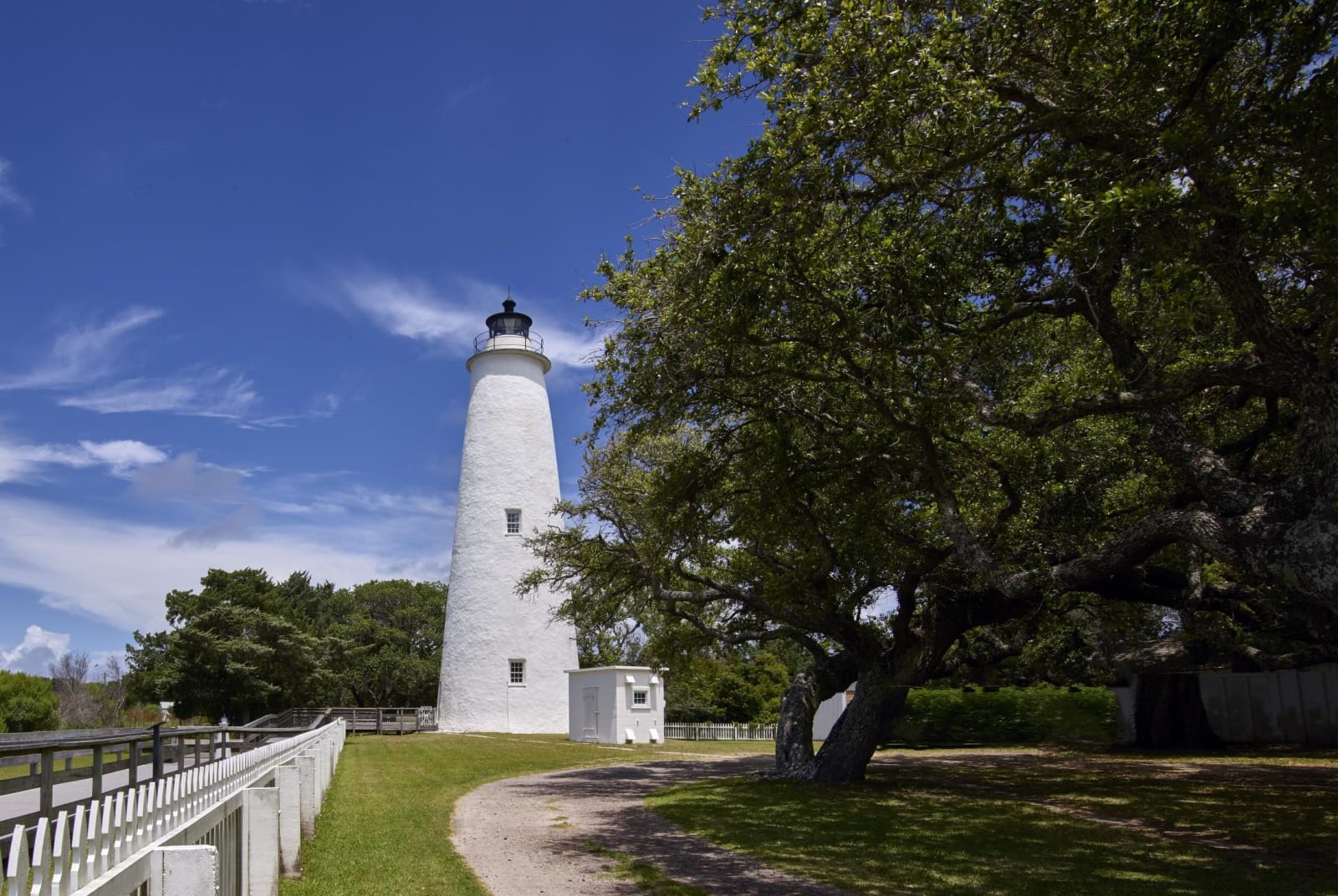
 Carol M. Highsmith / public domain via Library of Congress
The Story
On the earliest English maps the island is Wokokon or Wococon, a name taken from the Algonquian people who lived and fished along this part of the Banks, and settlers wore it down over time into Ocracoke. In 1585 the English flagship Tiger ran aground in Ocracoke Inlet and had to be patched on the island before the voyage could go on to Roanoke. The inlet was the main door into Pamlico Sound for ships bound for the mainland ports, and pirates liked it too. Edward Teach, called Blackbeard, often anchored here, and on November 22, 1718, he was killed in a fight with men sent from Virginia.
The island was not settled for good until about 1750. The lighthouse came in 1823, built by Noah Porter of Massachusetts to guide ships through the inlet: 75 feet of whitewashed brick, 25 feet across at the base and 12 at the top. Confederate troops took its Fresnel lens out in 1864 and Union forces put a light back. Automated in 1955, it is the oldest light station still working in North Carolina.
The tower stands at the edge of the village, a short walk from the harbor. Its base opens in summer when a ranger is on duty. Ocracoke people still speak the Banks brogue sometimes written hoi toider, though younger islanders use it less. During the Second World War German submarines sank British ships offshore, HMT Bedfordshire among them, and four sailors who washed ashore lie in a small British cemetery in the village, honored each year in a joint ceremony.
Visitor Info
On the Map
Nearby
The closest stops worth working into your route
Historical markers nearby
Roadside plaques and monuments within a short detour