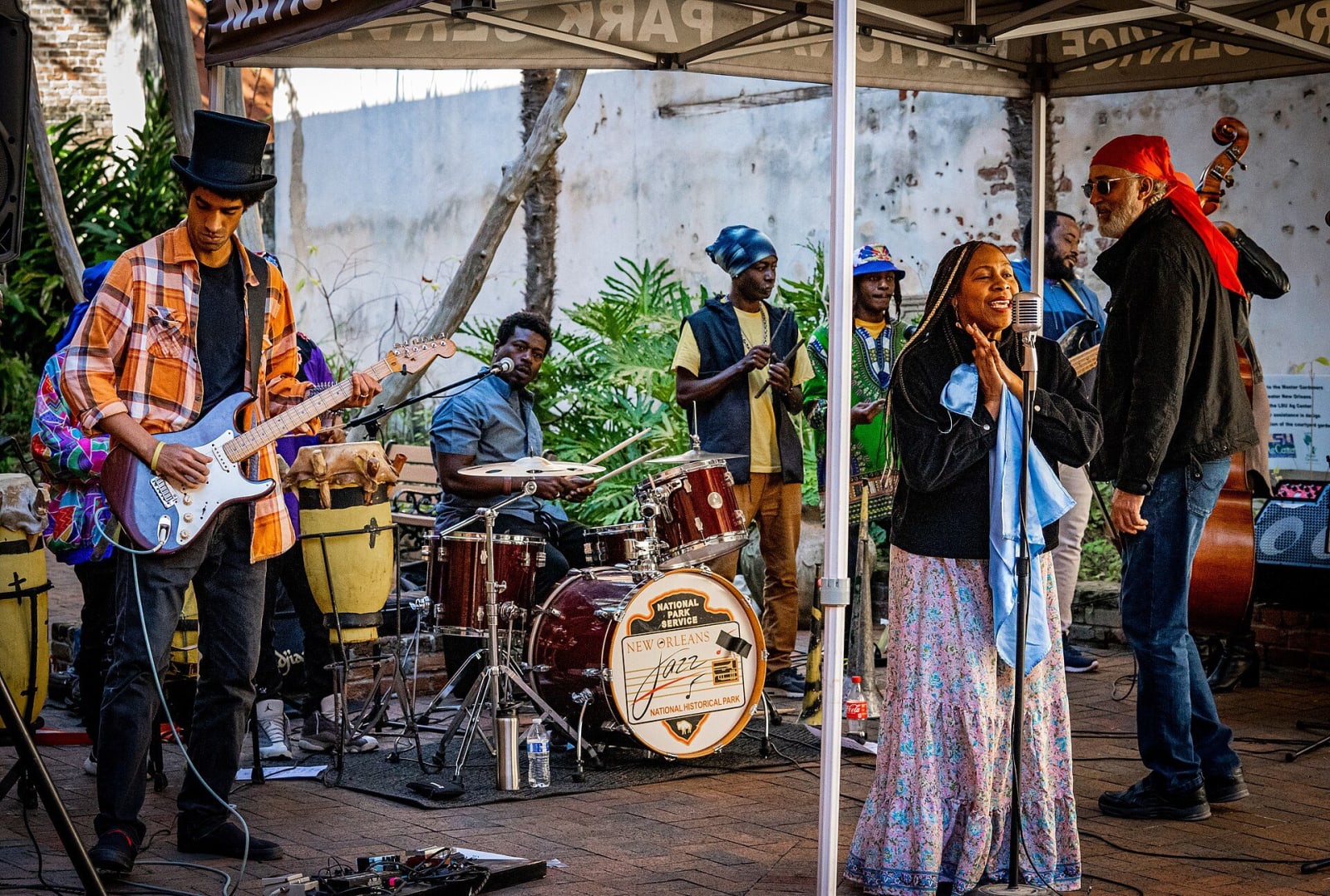
 Hunter Miles Davis for NPS / Public domain via Wikimedia Commons
The Story
New Orleans Jazz National Historical Park is a park of programs and places rather than one gate. Congress created it in 1994 to honor jazz, which the Park Service calls a uniquely American invention. There is no admission fee. The French Quarter Visitor Center is at 419 Decatur Street and serves Jean Lafitte National Historical Park as well; Dutch Alley, at 916 North Peters Street, opens only for special events, and the park holds concerts in a space at the Old U.S. Mint.
Most of the park's land lies in Louis Armstrong Park, leased by the National Park Service, and its centerpiece is Perseverance Hall. Built in 1819 and 1820 as a Masonic lodge, it is the oldest Masonic temple in Louisiana. The park's own account begins at Congo Square, a Sunday gathering place for African Americans from the 1780s, where American Indians, enslaved people and free people of color traded goods and drummed, danced and played.
The music grew from Black New Orleans institutions. After slavery ended, funerals with brass bands became common, and by the early twentieth century they were forums for a new style later called jazz. The Louisiana State Museum's exhibit at the Old U.S. Mint names Buddy Bolden, Freddie Keppard, Kid Ory and King Oliver, and says segregation and limited opportunity pushed Louis Armstrong, Jelly Roll Morton and Baby Dodds, among others, to leave for Chicago and New York in the 1910s. Hours and events change, so check the park calendar.
Visitor Info
On the Map
Nearby
The closest stops worth working into your route
Historical markers nearby
Roadside plaques and monuments within a short detour