Home / Louisiana / New Orleans & the River Parishes / Lafayette Cemetery No. 1
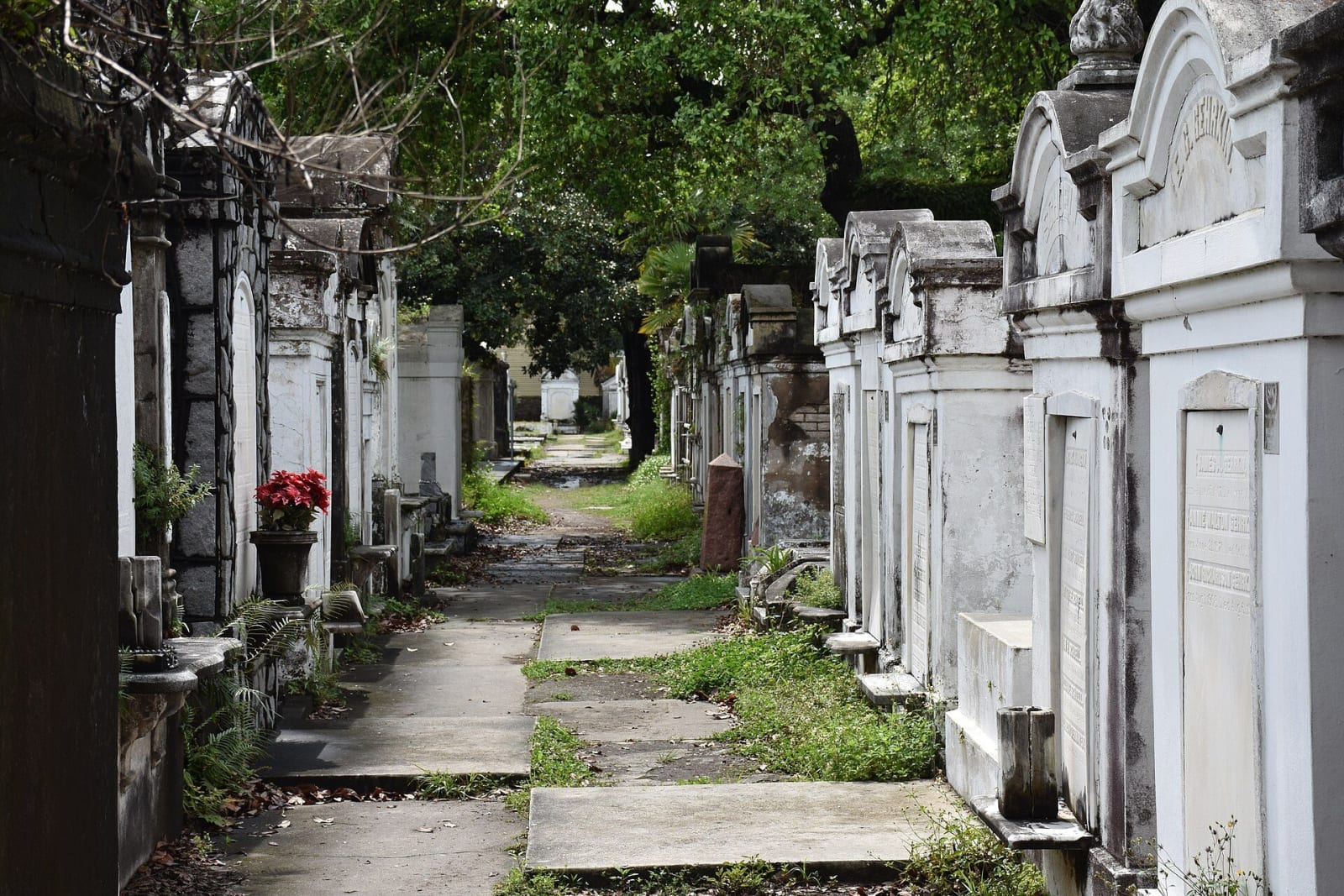
A narrow path runs between rows of white above-ground family tombs under shade trees at Lafayette Cemetery No. 1.MusikAnimal / CC BY-SA 4.0 via Wikimedia Commons
🏛️Historical

Lafayette Cemetery No. 1

Part ofNew Orleans & the River Parishes

The Garden District's 1833 cemetery of about 1,100 family tombs, closed to visitors in 2019 and reopened on October 1, 2026 for small guided tours run by the Preservation Resource Center.

⏱
Duration
75 to 90 minutes on the tour.
🎟
Admission
Guided tours only, booked through the Preservation Resource Center; prices were not published in the reopening coverage (check prcno.org).
📅
Best Season
Reopened to visitors on October 1, 2026 after seven years; tours only, in groups of 16 or fewer, and walk-ups without a booking are turned away. Confirm the live calendar.

The Story

Lafayette Cemetery No. 1 opened in 1833 in what is now the Garden District and takes its name from the City of Lafayette, a suburb New Orleans annexed in 1852. The World Monuments Fund calls it the city's first planned cemetery, with intersecting avenues laid out for funeral processions, and it served as a model for the more than thirty above-ground cemeteries built in the city in the nineteenth century. It holds about 1,100 family tombs with roughly 7,000 people, and it is still in use.

Its survival has been work. The World Monuments Fund put it on its Watch in 1996 because of deterioration, vandalism and unmanaged tourism, and again in 2006 after Hurricane Katrina damaged walls and tombs. Save Our Cemeteries and the Preservation Trades Network ran repair field schools here in 2006 and 2009. The city closed the cemetery to visitors in September 2019, citing vandalism, restoration needs and crowding from large tours.

It reopened on October 1, 2026, and the Preservation Resource Center is the only public tour provider. Groups are capped at 16, tours run 75 to 90 minutes and keep to documented history, and six sessions a day were reported at the opening. Guides pause or reroute when a family is at a tomb, and funerals come first. The restoration included an 1866 society tomb of 20 vaults, which will be used again for burials of people in need. Relatives of the buried arrange access through the city cemetery office.

Visitor Info

⏱
Time Needed
75 to 90 minutes on the tour.
🎟
Admission
Guided tours only, booked through the Preservation Resource Center; prices were not published in the reopening coverage (check prcno.org).
📅
Best Season
Reopened to visitors on October 1, 2026 after seven years; tours only, in groups of 16 or fewer, and walk-ups without a booking are turned away. Confirm the live calendar.
🛣️
Highway
Washington Avenue

On the Map

Nearby

The closest stops worth working into your route

cultural2.2 mi away
New Orleans Jazz National Historical Park
A National Park Service unit created in 1994 to tell where jazz came from, with free programs and a visitor center in the French Quarter and park land inside Louis Armstrong Park.
cultural2.3 mi away
The Historic New Orleans Collection
A French Quarter museum and research center founded in 1966, whose 2015 Purchased Lives exhibition took on New Orleans' place as the largest slave market in antebellum America.
historical2.3 mi away
St. Louis Cemetery No. 1
New Orleans' oldest surviving city of the dead, opened in 1789 after the fire of 1788 and the burial place of Homer Plessy, reachable only on a guided tour since March 2015.
historical2.4 mi away
The Cabildo
The Spanish town hall on Jackson Square, finished in 1799, where Louisiana changed flags in 1803 and where the state Supreme Court sat in the same room until 1910, Plessy v. Ferguson among its cases.
cultural2.5 mi away
Congo Square
The 2.35-acre corner of Louis Armstrong Park where, from 1817, New Orleans confined Sunday dancing by enslaved people to one place, and where crowds of hundreds gathered to drum, dance and trade.
historical5.8 mi away
Chalmette Battlefield
The ground of the January 8, 1815 Battle of New Orleans, beside Chalmette National Cemetery and the site of Fazendeville, a freedpeople's community founded in 1867 and bought out in the 1960s.

Historical markers nearby

Roadside plaques and monuments within a short detour

Marker0.9 mi away
Mass Lynching in New Orleans / Racial Violence in America
New Orleans
Marker1.3 mi away
Confederate Memorial Hall
New Orleans
Marker1.5 mi away
Touro Infirmary
New Orleans
Marker1.8 mi away
Bank's Arcade
New Orleans
Marker1.8 mi away
The Pythian Temple
New Orleans
Marker1.9 mi away
New Orleans Slave Depot
New Orleans