 aecole2010 / CC BY 2.0 via Flickr
The Story
Myrtle Beach began as a timber company's railroad terminus, where in 1901 Burroughs & Collins built a small hotel and sold oceanfront lots. In 1934 the company's successor, Myrtle Beach Farms, gave the state this tract south of town, and young men of the Civilian Conservation Corps built the park. It opened in 1936, the first in South Carolina's state park system and one of sixteen the Corps developed. Several of their buildings are still in use, including six cabins near the beach. The grandest, a bathhouse with a massive portico in plantation style, is gone.
For its first three decades the park, like every state park in South Carolina, was segregated. The separate parks the state provided for Black citizens were never equal. A class-action suit to integrate the system was filed in 1961, and when a court ordered the parks opened to all in 1963, the state closed every one of them rather than comply. Public demand reopened them, desegregated, by 1966. Black families who wanted the ocean in those years went up the coast to Atlantic Beach.
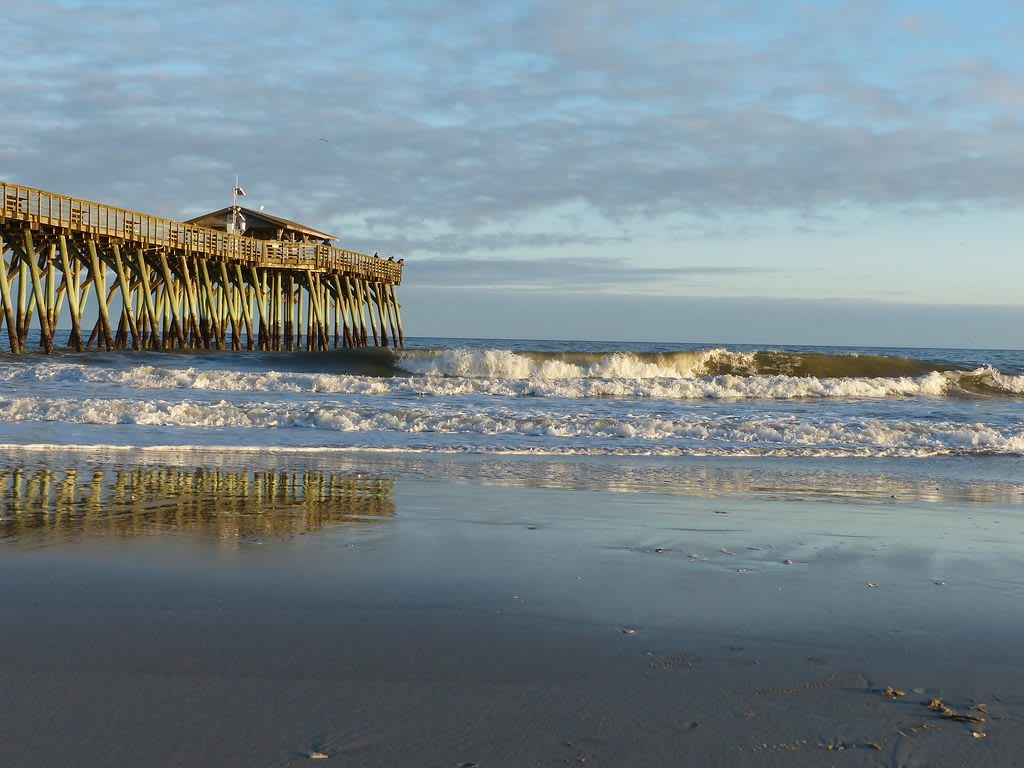
Today the park's 312 acres hold one mile of undeveloped beach in a county otherwise lined with towers, behind it a maritime forest of live oak and magnolia protected as a Heritage Trust site. The Sculptured Oak and Yaupon nature trails wind through the woods, the fishing pier reaches into the Atlantic, and a nature center has aquariums and live animals. The campground is one of the busiest on the coast.
Visitor Info
On the Map
Nearby
The closest stops worth working into your route
Historical markers nearby
Roadside plaques and monuments within a short detour