 Carol M. Highsmith / public domain via Library of Congress
The Story
Before it was a garden this was four rice plantations, The Oaks, Brookgreen, Springfield and Laurel Hill, strung between the Waccamaw River and the sea. Brookgreen belonged to Joshua John Ward, who held more than a thousand people in slavery before his death in 1853; in 1860 his estate was the largest slaveholder in the United States. Many enslaved Africans on this coast came from rice-growing regions of West Africa, and their knowledge and labor built the fields. The Lowcountry Trail, a boardwalk on the hillside above Mainfield, a restored rice field, follows the ground between the fields and the slave village that stood beyond the crest. Archaeologists have found the overseer's house, kitchen and smokehouse there, and panels tell of the year's planting and harvest.
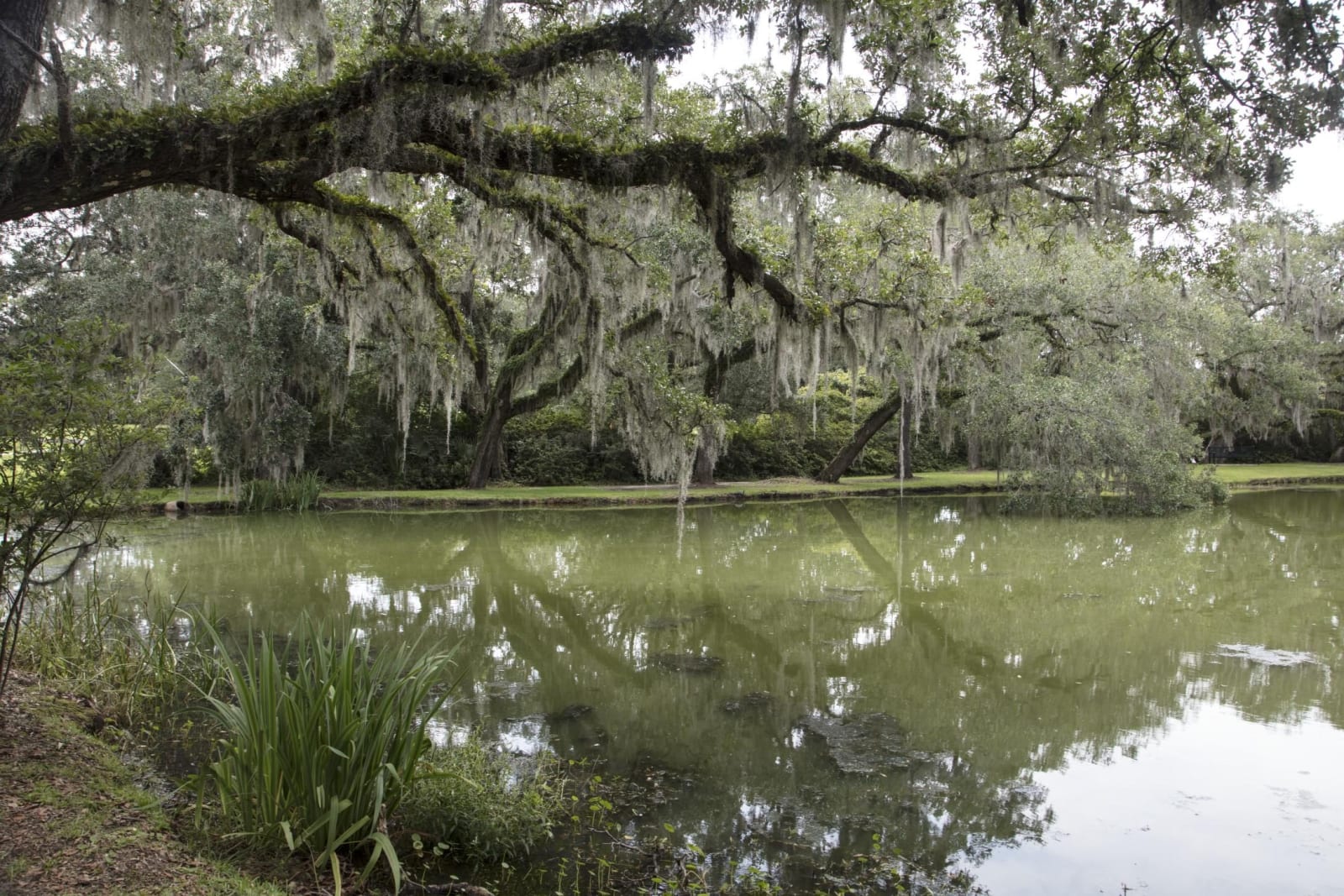
Archer and Anna Hyatt Huntington bought the plantations after a 1929 visit and opened the land in 1932 as the country's first public sculpture garden, to show her work and that of other American sculptors. It holds the largest outdoor collection of American figurative sculpture anywhere, set among live oaks, ponds and garden rooms, and is a National Historic Landmark. A small zoo keeps native animals.
Give it most of a day. Besides the gardens, the Gullah Geechee Gaardin pairs plants with the recorded voices of Georgetown County's Gullah Geechee residents, and guided excursions go out to the grounds of a slave village at The Oaks and to the rice mill chimney and Civil War earthwork at Laurel Hill. A ticket is good for seven days.
Visitor Info
On the Map
Nearby
The closest stops worth working into your route
Historical markers nearby
Roadside plaques and monuments within a short detour