Home / South Carolina / Myrtle Beach, Georgetown & the Grand Strand / Conway Downtown Historic District
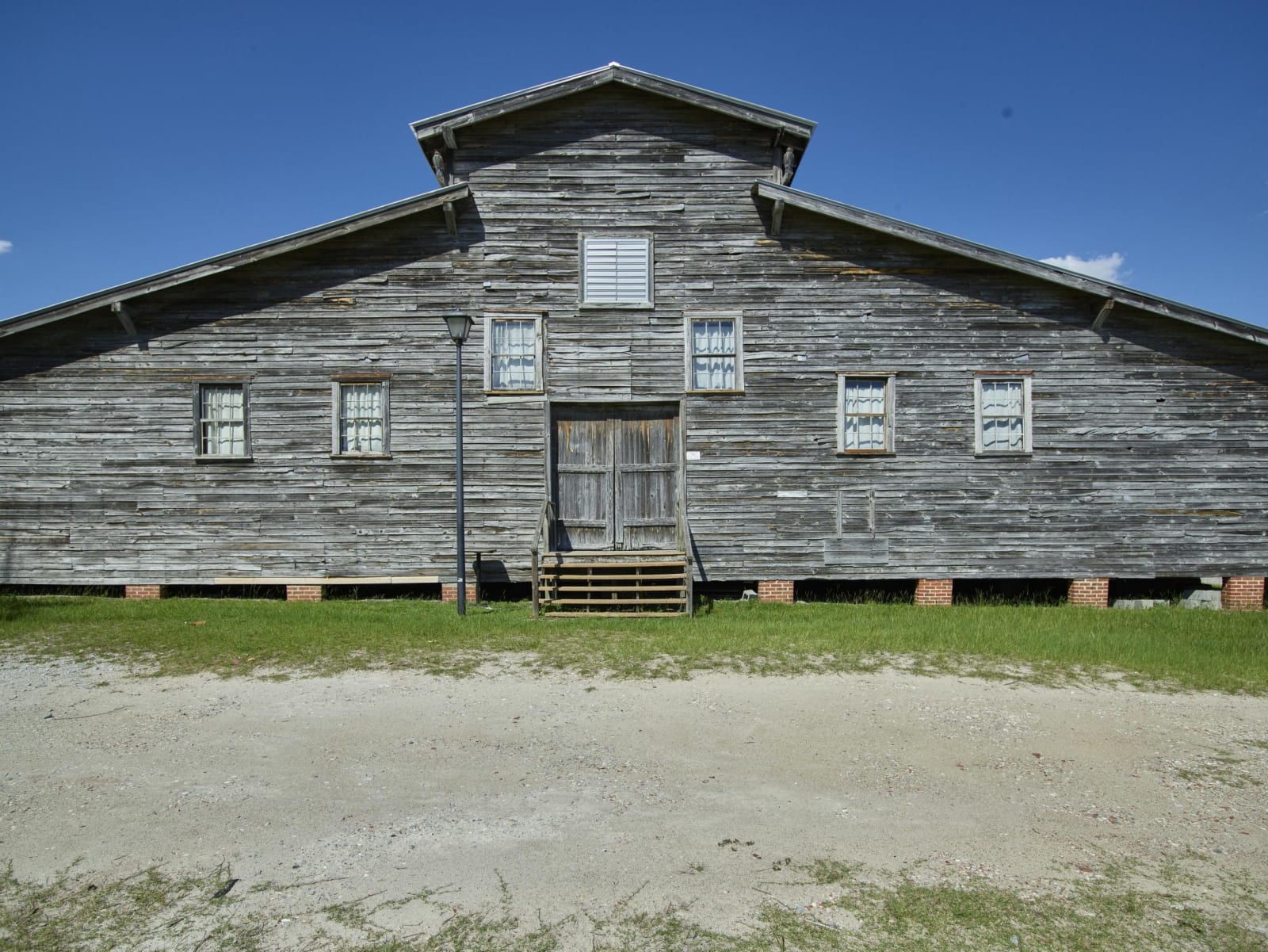
The weathered gray board front of Conway's old peanut warehouse, a long gabled building on brick piers, under a blue sky.Carol M. Highsmith / public domain via Library of Congress
🏛️Historical

Conway Downtown Historic District

Part ofMyrtle Beach, Georgetown & the Grand Strand

Horry County's river town on a Waccamaw bluff: the 1735 Kingston village, the tobacco boom, a Riverwalk and the free county museum.

⏱
Duration
Two to three hours.
🎟
Admission
Free; the Horry County Museum is free and open weekdays 8 a.m. to 5 p.m. (Horry County, 2026).
📅
Best Season
Spring and fall; the Riverwalk is shaded in summer.

The Story

The Waccamaw River takes its name from the Waccamaw nation, whose country ran along it before colonists came. In 1735 the colony laid out Kingston Township on the river's north bank, and a village grew on this bluff. It became Conwayborough in 1801, when the district was renamed for the Revolutionary officer Peter Horry, and plain Conway in 1883. Today the Waccamaw Indian People, recognized in 2005 as South Carolina's first state-recognized tribe, are based in Horry County.

Ocean on one side and the Pee Dee swamps on the other cut Horry off from the rest of the state, and by the 1840s it was nicknamed the Independent Republic. The land was too far inland for tidal rice and poor for cotton. Some settlers brought enslaved people with them, but most farms were small, and in 1860 Horry was counted the poorest county in South Carolina, with one of its largest white majorities. Many here opposed secession. The railroad arrived in 1887, bright leaf tobacco followed in the 1890s, and a tobacco market opened in Conway in 1899; the town's population quadrupled by 1940.

The historic district holds 32 contributing buildings from about 1824 to 1950, including the Robert Mills-designed courthouse of 1825, later City Hall, and the Art Deco Holliday Theater. Walk the Riverwalk boardwalk along the Waccamaw, then stop at the Horry County Museum on Main Street, which is free and covers the county's prehistory, natural history and farm life.

Visitor Info

⏱
Time Needed
Two to three hours.
🎟
Admission
Free; the Horry County Museum is free and open weekdays 8 a.m. to 5 p.m. (Horry County, 2026).
📅
Best Season
Spring and fall; the Riverwalk is shaded in summer.
🛣️
Highway
US 501 Business

On the Map

Nearby

The closest stops worth working into your route

natural8.9 mi away
Lewis Ocean Bay Heritage Preserve
More than ten thousand acres of Carolina bays, pine savanna and swamp behind Myrtle Beach, home to South Carolina's last strong stand of wild Venus flytraps.
historical13 mi away
Charlie's Place
Charlie and Sarah Fitzgerald's Carver Street supper club, a Chitlin' Circuit stop shot up by the Klan in 1950, with their restored motel.
natural14 mi away
Myrtle Beach State Park
South Carolina's first state park, opened in 1936 and built by the Civilian Conservation Corps: a mile of undeveloped beach and maritime forest.
natural14 mi away
Waccamaw National Wildlife Refuge
Old tidal rice fields and blackwater swamp where the Waccamaw and Great Pee Dee rivers run side by side, with a visitor center at Yauhannah.
historical19 mi away
Atlantic Beach
The Black Pearl of the Grand Strand: the oceanfront town Black families built in the 1930s, when segregation barred them from every other beach nearby.
natural22 mi away
Huntington Beach State Park
Three miles of undeveloped beach, salt marsh and the Huntingtons' Moorish-style winter house, Atalaya, across the highway from Brookgreen.

Historical markers nearby

Roadside plaques and monuments within a short detour

Marker0.4 mi away
Horry County
Conway
Marker0.5 mi away
Kingston Church
Conway
Marker0.6 mi away
First Methodist Church
Conway
Marker1.1 mi away
Conway High School
Conway
Marker1.6 mi away
Whittemore School
Conway
Marker3.1 mi away
Coastal Carolina University
Conway