 watts_photos / CC BY 2.0 via Flickr
The Story
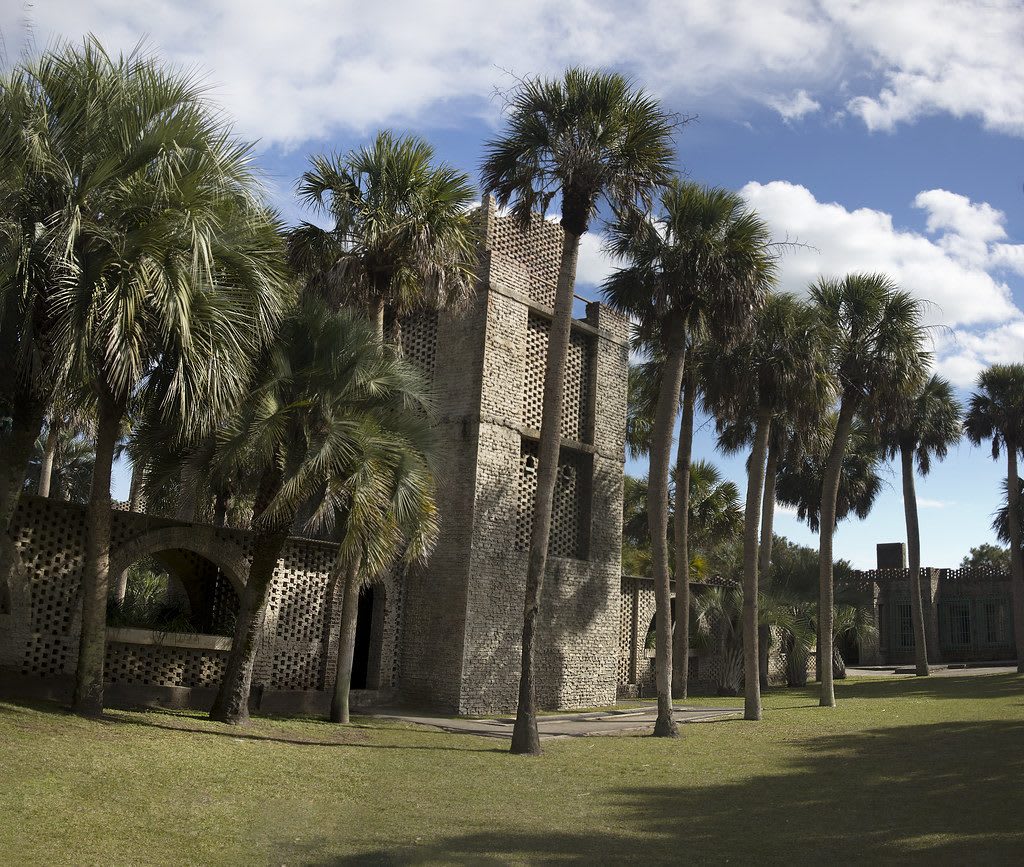
The ocean side of the Huntingtons' Waccamaw Neck purchase, once the beachfront of rice plantations, became this park when the Brookgreen trustees leased it to the state in 1960. Its centerpiece is Atalaya, the winter home Archer Huntington designed in the Moorish style of Spain's Mediterranean coast; he was a scholar of Spanish culture and art. Local workers built it during the Depression, designed to stand up to hurricanes, with a studio where Anna Hyatt Huntington worked on her sculpture. Atalaya and Brookgreen were named a National Historic Landmark together in 1984.
Most visitors come for the wildlife. More than three hundred bird species have been recorded, giving the park a reputation among the best birding spots on the East Coast. From the causeway on the way in you can scan the salt marsh on one side and a freshwater lake with alligators on the other, and pelicans, spoonbills and the occasional mink turn up. In winter, gannets, loons and scoters gather off the jetty at the north end, and in summer loggerhead turtles nest on the beach.
The three miles of beach stay quieter than anything to the north. Atalaya is open daily for self-guided visits for a small extra fee, and the juried Atalaya Arts and Crafts Festival has been held there every September for more than forty years. The nature center, rebuilt after a 2016 lightning fire, has live animals. Dogs are allowed only on the south end of the beach.
Visitor Info
On the Map
Nearby
The closest stops worth working into your route
Historical markers nearby
Roadside plaques and monuments within a short detour