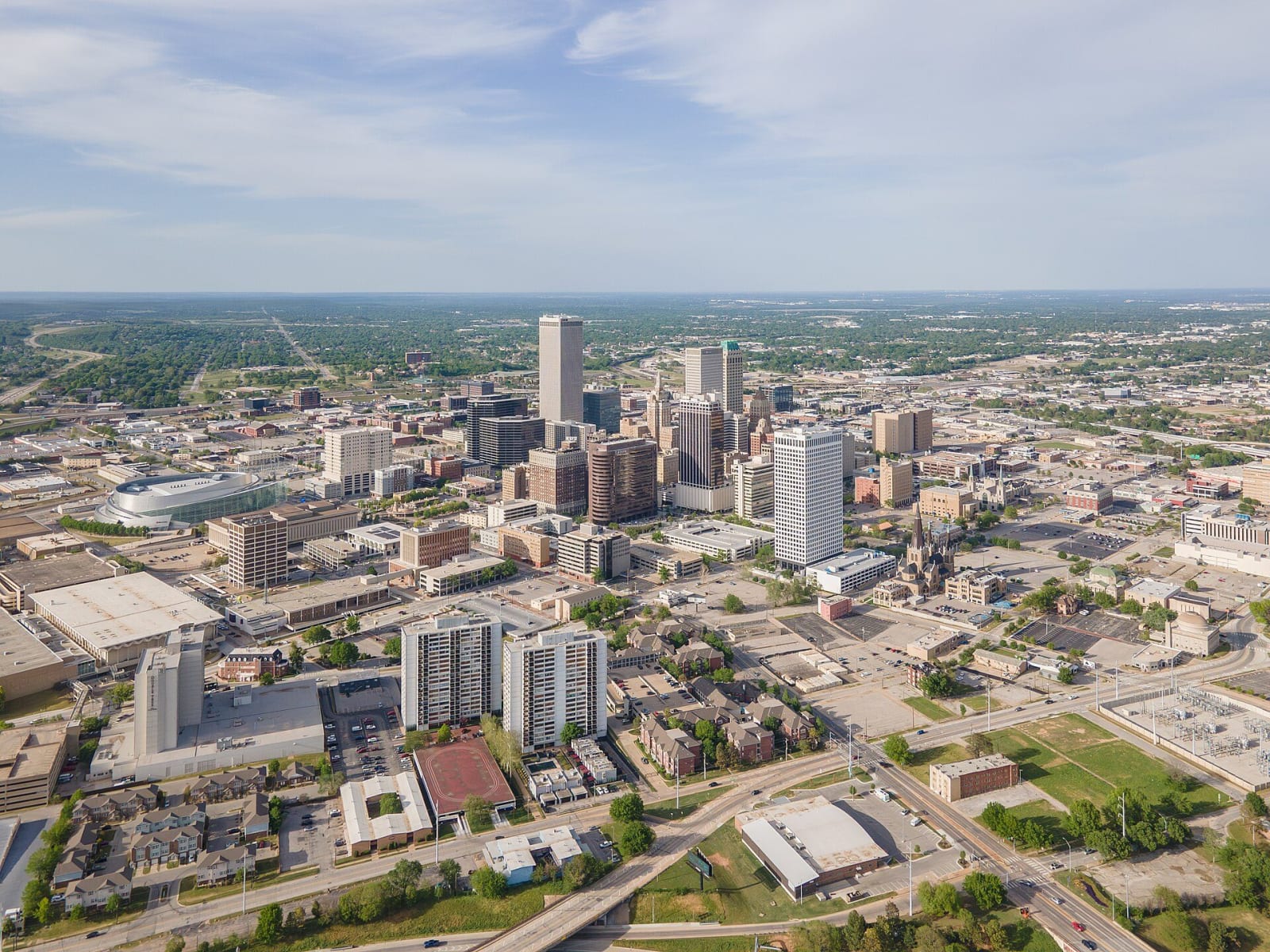
An aerial view of downtown Tulsa and its towers spreading toward the horizon.
Nils Huenerfuerst / CC BY-SA 4.0 via Wikimedia Commons
Oklahoma · Region

Tulsa & Bartlesville

The Lochapoka council oak where Tulsa began, Greenwood and the 1921 massacre, Philbrook and the Phillips house, Okmulgee's capitol and Will Rogers.

6 places to explore

Tulsa started as a Muscogee town. Its name comes from Tallasi, the town the Lochapoka made after removal from Alabama, and their council oak still stands in a park south of downtown. The Muscogee (Creek) Nation's 1878 capitol is an hour south, on the square in Okmulgee. In July 2020 the Supreme Court held that the Nation's reservation was never disestablished and still stands for purposes of federal criminal law.

Oil came in after 1901, and its money paid for the city's showpieces. Waite Phillips's villa is now Philbrook, and in Bartlesville his brother Frank's house is open almost as the family left it. Gilcrease, the other great Tulsa museum, is closed until March 2027. North of downtown is Greenwood, the Black district that white mobs burned on May 31 and June 1, 1921. Greenwood Rising tells that story at Greenwood and Archer.

Route 66 crosses the region on the diagonal. It runs past the concrete Blue Whale in its pond at Catoosa, and in Claremore the Will Rogers Memorial stands on the hill where the Cherokee humorist meant to retire. Bartlesville, an oil town since 1897, is the seat of the Delaware Tribe of Indians.

What to See in Tulsa & Bartlesville

6 places across the region, grouped by what they are.

Historic Sites
Creek Nation Council Oak Park

Tulsa

The oak on a south Tulsa hill where the Lochapoka Muscogee lit their fire in 1836 after removal from Alabama, the ceremonial ground from which Tulsa took its name.

View details →

Greenwood Rising

Tulsa

The history center at Greenwood and Archer that tells how Tulsa's Black Wall Street was built, how white mobs burned it in 1921, and how its people rebuilt it.

View details →
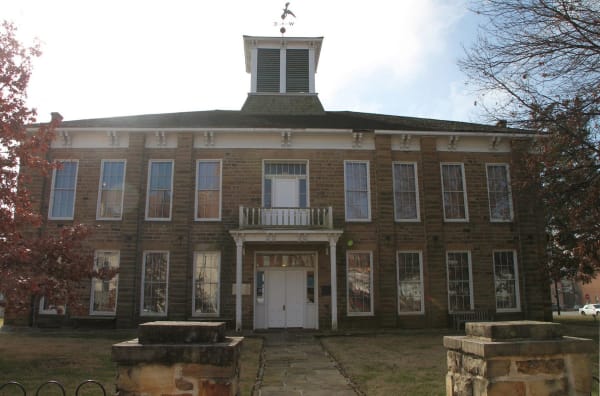
The two-story stone Muscogee (Creek) Nation Council House in Okmulgee with its cupola.

Muscogee (Creek) Nation Council House

Okmulgee

The Muscogee (Creek) Nation's 1878 stone capitol on the Okmulgee square, where the House of Kings and House of Warriors met, lost at statehood and bought back by the Nation in 2010.

View details →
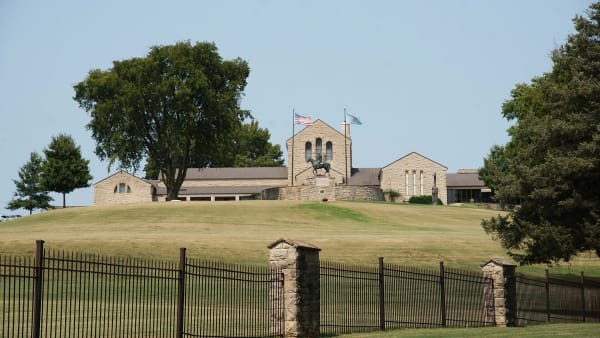
The low limestone Will Rogers Memorial Museum on its Claremore hilltop behind an iron fence.

Will Rogers Memorial Museum

Claremore

The limestone memorial and museum on the Claremore hilltop Will Rogers bought for his retirement, opened on his birthday in 1938 and holding his papers, his films and his tomb.

View details →

Towns & Gateways

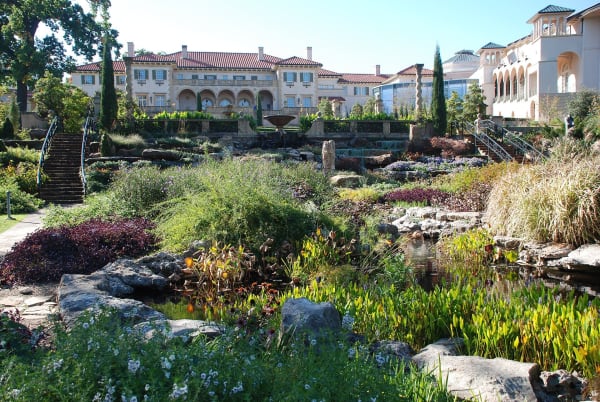
Terraced gardens and plantings below the Philbrook villa in Tulsa.

Philbrook Museum of Art

Tulsa

Waite Phillips's 1927 Italian villa and its Villa Lante-inspired gardens, given to Tulsa in 1938 and open as an art museum since October 1939, strong in Native American art.

View details →

Architecture

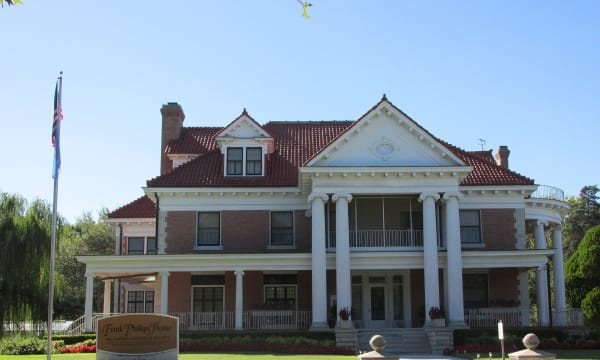
The columned Neo-Classical front of the Frank Phillips Home in Bartlesville.

Frank Phillips Home

Bartlesville

The 26-room Neo-Classical house in Bartlesville that the founder of Phillips Petroleum built in 1909, kept almost as the family left it, furniture and all.

View details →

Scenic Drives through Tulsa & Bartlesville

Scenic Byway

Route 66 Across Oklahoma: Quapaw to Texola

About 376 miles of Route 66 from the Kansas line at Quapaw through Miami, Claremore, Tulsa, Chandler, Oklahoma City, Clinton, Elk City and Sayre to Texola.

376 mi · 8.5 hrs

Stories from Tulsa & Bartlesville

History

The Law Office in a Tent

Five days after Greenwood burned, B. C. Franklin was seeing clients in a Red Cross tent, and the suit he and his partners brought kept Tulsa from zoning the district out of Black hands.

3 min read

Tulsa & Bartlesville rewards the unhurried. Pick a base, fan out, and let the country between the headline stops surprise you.

← Explore more of Open Road Guide