 CrunchySkies / CC BY-SA 3.0 via Wikimedia Commons
The Story
Loess, said luss, is fine silt the wind laid down after the last glacial period. Along the east edge of the Missouri River floodplain it built a line of steep hills that runs from about 30 miles south of St. Joseph to the far north of Iowa, and some of the last remnants of the region's native prairie survive on them: Indian grass, big bluestem, blazing star, yucca, beard-tongue and skeleton plant. On the bottoms below, President Franklin D. Roosevelt established a refuge and breeding ground for migratory birds on August 23, 1935. Civilian Conservation Corps crews built its roads, levees, water controls, bridges and buildings from 1937 to 1942, and laid by hand the 200 stone steps of the Loess Bluff Trail behind the visitor station.
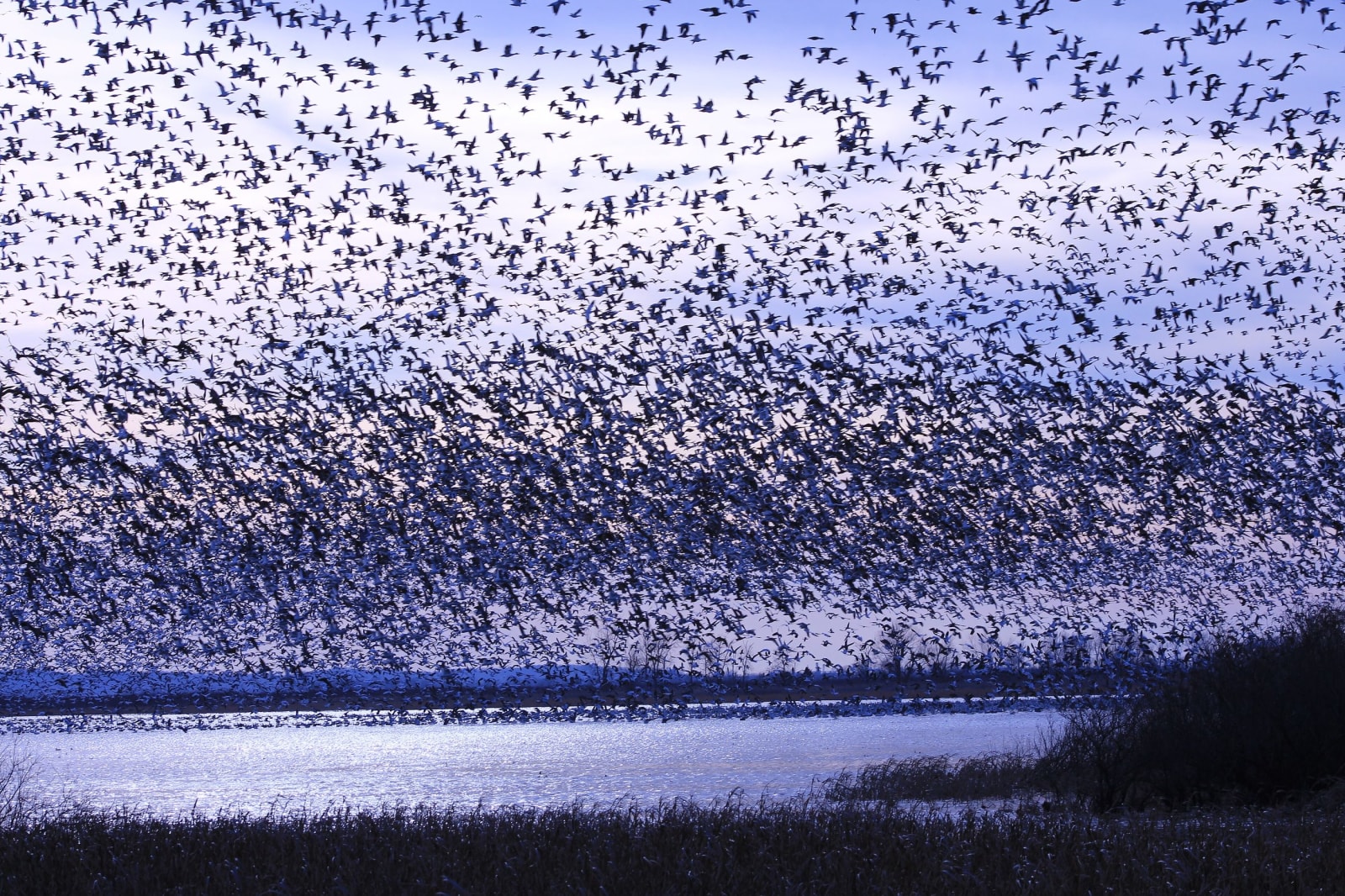
In an average year the refuge holds up to 200,000 ducks in fall and winter and upwards of a million snow geese, and staff count the birds weekly from fall through spring. October through December brings the waterfowl south, and the spring snow goose migration usually peaks in mid-March. More than 310 bird species use the refuge, along with 41 mammal and 37 reptile species, among them the state-endangered massasauga rattlesnake. Audubon named it a Globally Important Bird Area in 2001.
Until January 11, 2017, it was Squaw Creek National Wildlife Refuge; the Fish and Wildlife Service changed the name to remove a slur. The one-way 10-mile auto tour circles the pools, and spotting scopes stand at the visitor station, along the trails and on the drive.
Visitor Info
On the Map
Nearby
The closest stops worth working into your route
Historical markers nearby
Roadside plaques and monuments within a short detour