Home / Missouri / St. Joseph & the Grand River Country / Glore Psychiatric Museum
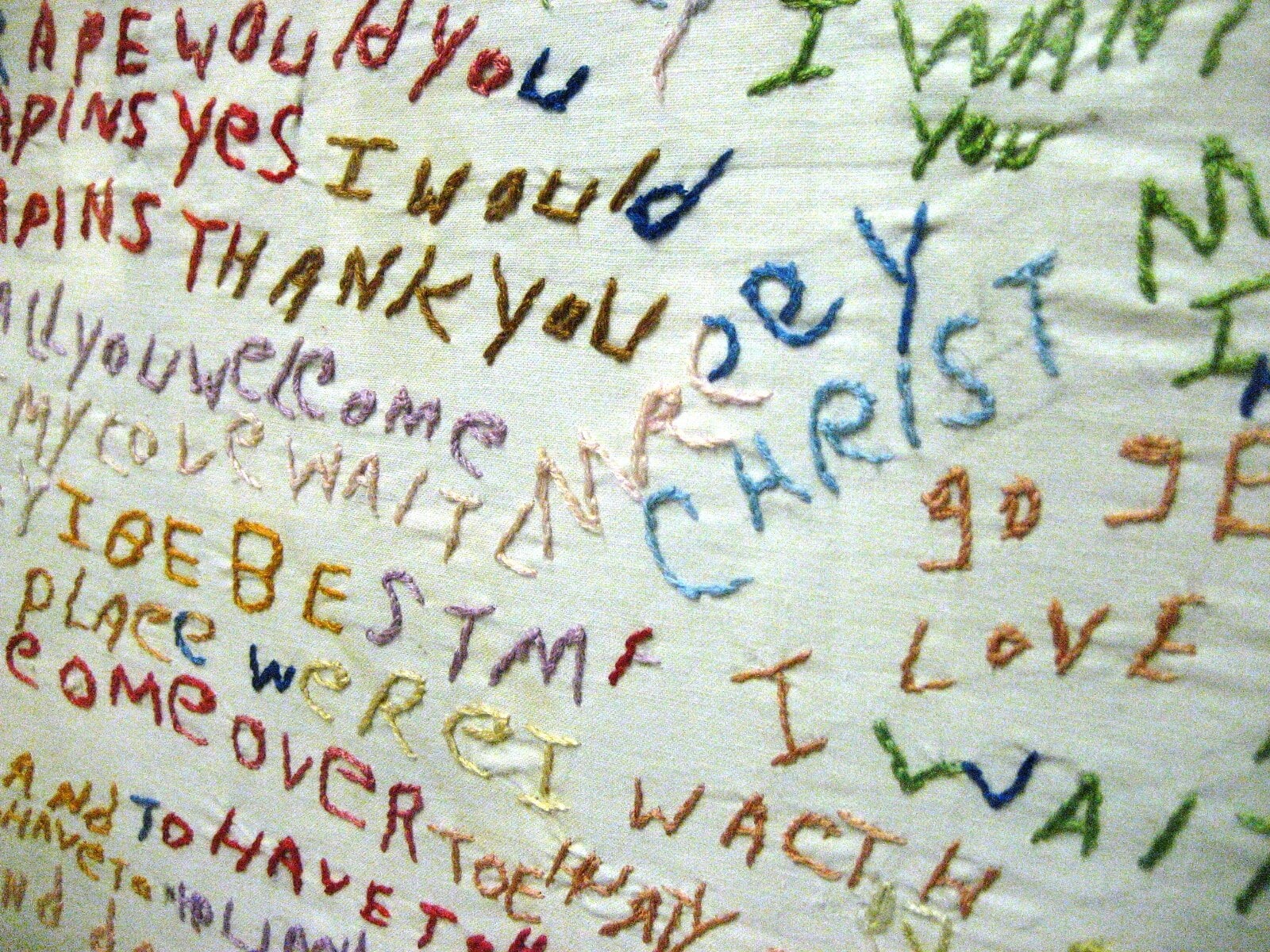
A cloth embroidered by a patient with words and phrases in many colors of thread, displayed at the Glore Psychiatric Museum.cometstarmoon / CC BY 2.0 via Wikimedia Commons
🏛️Historical

Glore Psychiatric Museum

Part ofSt. Joseph & the Grand River Country

The history of State Lunatic Asylum No. 2 and of mental health treatment, told in the old hospital's surgery building beside a prison, with the Black Archives Museum under the same roof.

⏱
Duration
About an hour and a half.
🎟
Admission
One ticket covers the four museums in the complex: adults $12, seniors 62 and over $10, students $8, ages 4 to 6 $4, 3 and under free.
📅
Best Season
Year round, 10 a.m. to 5 p.m. daily, except listed holidays; call ahead in bad weather.

The Story

Missouri's State Lunatic Asylum No. 2 opened east of St. Joseph in November 1874 with 250 patients. The Glore Psychiatric Museum tells the history of that hospital, and of mental health treatment generally, from the hospital's former surgery and outpatient building. It began in 1968, when George Glore, a hospital employee, built full-size replicas of 17th-, 18th- and 19th-century treatment devices for a Mental Health Awareness Week open house. They became the start of the museum, and his replicas are still at its center, along with patient artwork, the history of therapies and the case of a patient who swallowed 453 nails.

The razor wire next door belongs to a prison. In 1997 mental health services moved to a new center across the street and the old grounds went to the Department of Corrections, which opened the Western Reception, Diagnostic and Correctional Center in many of the original hospital buildings in 1999. Progress Hall, the white building with broken windows, went up in 1893 for the chapel, barbershop and patient library.

One admission also covers the Black Archives Museum in the same complex. Jewell Robinson, a teacher at Bartlett High School, founded it in 1991 as the Knea-Von Black Archives, and his wife, Geraldine, kept it going until it joined St. Joseph Museums in 2002. It honors Coleman Hawkins, born in St. Joseph in 1904, whose 1939 recording of Body and Soul set a standard for the tenor saxophone, and remembers Lloyd Warner, a young Black man killed by a mob in St. Joseph in 1933.

Visitor Info

⏱
Time Needed
About an hour and a half.
🎟
Admission
One ticket covers the four museums in the complex: adults $12, seniors 62 and over $10, students $8, ages 4 to 6 $4, 3 and under free.
📅
Best Season
Year round, 10 a.m. to 5 p.m. daily, except listed holidays; call ahead in bad weather.
🛣️
Highway
I-29 Business

On the Map

Nearby

The closest stops worth working into your route

historical2.4 mi away
Patee House Museum and Jesse James Home
An 1858 St. Joseph hotel that held the Pony Express office, a Union provost marshal and two women's colleges, with the house where Jesse James was killed moved onto its lot.
historical2.6 mi away
Pony Express National Museum
The St. Joseph stables where the Pony Express began on April 3, 1860, now a museum that also tells how the venture was paid for and why it lasted eighteen months.
historical23 mi away
Iowa and Sac & Fox Mission Museum
The surviving part of an 1846 Presbyterian mission school near Highland, built largely with the tribes' own annuity money and returned to the Iowa Tribe of Kansas and Nebraska in 2021. Closed during remodeling.
attraction24 mi away
Amelia Earhart Hangar Museum
A hangar at Atchison's airport built around Muriel, a 1935 Lockheed Electra 10-E of the model Earhart vanished in, saved from scrap, restored over three decades and brought to her birthplace in 2016.
natural30 mi away
Loess Bluffs National Wildlife Refuge
A 7,440-acre Missouri River marsh below the loess hills near Mound City, where up to a million snow geese stop in a typical year and 661 bald eagles were counted in December 2020.
industrial39 mi away
Watkins Woolen Mill State Historic Site
A three-story 1860 woolen mill in the Clay County hills that still holds nearly all its original machinery, at the center of the 3,660-acre Watkins farm called Bethany.

Historical markers nearby

Roadside plaques and monuments within a short detour

Marker2.6 mi away
Saint Joseph
Marker3.7 mi away
Elwood
Kansas
Marker12 mi away
Andrew County
Marker13 mi away
Troy
Kansas
Marker21 mi away
Platte County
Marker23 mi away
Holt County