 SharonPapierdreams / CC BY-SA 4.0 via Wikimedia Commons
The Story
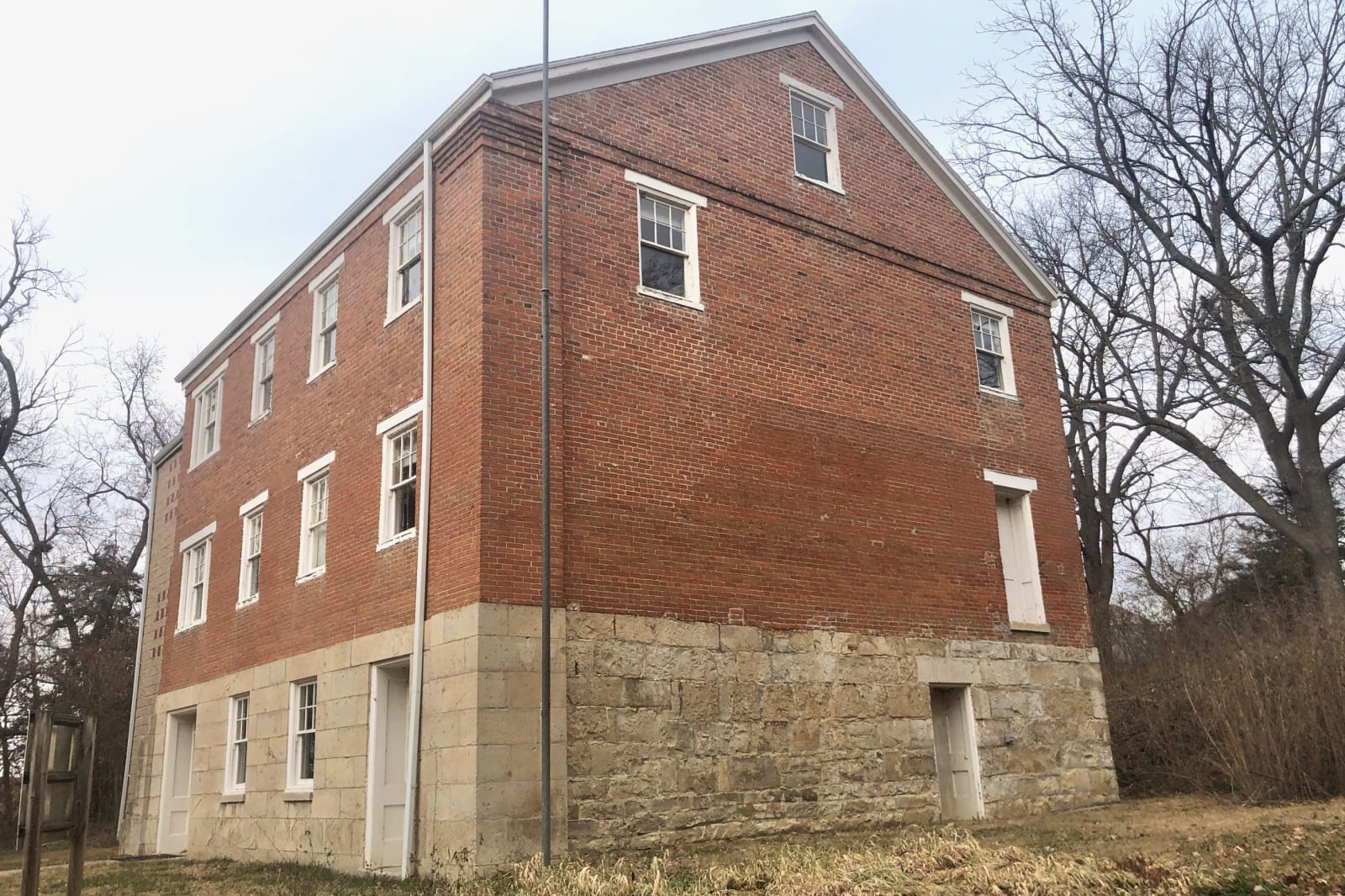
In 1836 William Clark negotiated a treaty at Fort Leavenworth by which the Iowas and the Missouri Sacs and Foxes gave up their lands between the state of Missouri and the Missouri River for $7,500 and promises of houses, plowed fields and a teacher. Both had removed west of the river by the fall of 1837. That November Samuel and Eliza Irvin started a Presbyterian mission on the southern edge of the Iowa reservation, joined that December by the Hamiltons. The permanent building was finished in 1846: three stories, 107 feet long, limestone below and brick made on the grounds above, with a belfry 52 feet high. Of its $8,000 cost, $6,000 came from the tribes' annuities.
The mission's aim, in the Park Service's words, was to discourage tribal ways while teaching Christianity and farm and household work. From 1843 a press on the grounds printed a hymnal and grammars in the Iowa language. After the 1854 treaty shrank the reservations the school was too far for children to reach. It closed in 1863, then was an orphanage until 1866. About 1868 the west part was torn down, and the remaining 46 feet served as a residence until about 1905.
The state owned the building from 1941. On October 7, 2021, after 153 years in others' hands, it and ten acres went back to the Iowa Tribe, through the work of its preservation officer Lance Foster (1960-2025) and others. In October 2026 the Tribe says the museum is not open regular hours while the interior is remodeled.
Visitor Info
On the Map
Nearby
The closest stops worth working into your route
Historical markers nearby
Roadside plaques and monuments within a short detour