 TheCatalyst31 / CC0 via Wikimedia Commons
The Story
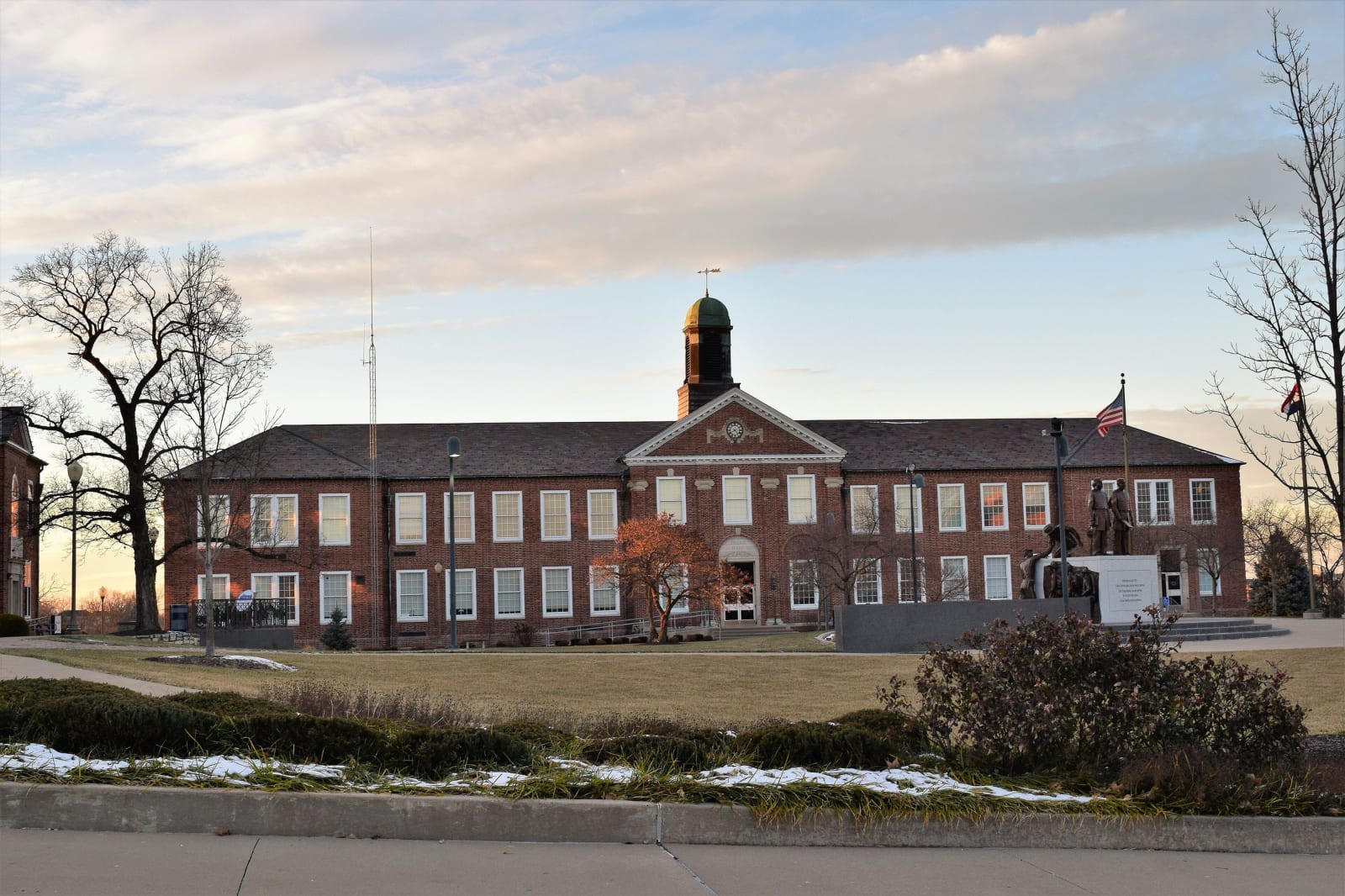
At the end of the Civil War two regiments of Black soldiers from Missouri, the 62nd and 65th United States Colored Infantry, were stationed at Fort McIntosh, Texas. Many of the men had learned to read and write in the army, in a state where teaching an enslaved person to read had been against the law, and they resolved to start a school for freed people when they went home. On pay that averaged thirteen dollars a month, the 62nd raised $5,000, and the 65th added $1,400. A committee founded Lincoln Institute in Jefferson City on January 14, 1866, for the special benefit, in its founders' words, of emancipated African Americans. Richard Baxter Foster, a white former lieutenant of the 62nd, became its first principal, and on September 17, 1866, it opened in an old frame building with two students.
The school moved to its present campus in 1871, began college courses in 1877 and became a state institution in 1879. Inman E. Page, its first president, led it from 1880 to 1898. Missouri made it a land-grant college in 1890 and a university in 1921. In 1954, after Brown v. Board of Education, it opened its doors to students of every race, and enrollment rose from 400 to more than a thousand. In 1953 Thomas Hart Benton painted a Lincoln for the university.
The Soldiers' Memorial Plaza on the quadrangle honors the men of the two regiments. Lincoln is a working campus of about 1,800 students, so building visits follow the university's schedule.
Visitor Info
On the Map
Nearby
The closest stops worth working into your route
Historical markers nearby
Roadside plaques and monuments within a short detour