 Warren LeMay / CC0 via Flickr
The Story
By the 1940s R. J. Reynolds ran the largest tobacco manufacturing works in the world east of downtown Winston-Salem, and much of the hardest work in it, stemming leaf by hand, was done by Black women for low wages under strict segregation. On June 17, 1943, in Plant 65 on Chestnut Street, about two hundred of them led by Theodosia Simpson stopped work. James McCardell, a worker in the casing room next door, stood with them and that day collapsed and died after trying again and again to get help from the company nurse. Within three days thousands had stopped work.
Out of the strike came Local 22 of the Food, Tobacco, Agricultural and Allied Workers, CIO, which won recognition in December 1943 and a first contract in 1944 with raises, seniority and a grievance system. It grew to about 10,000 members, most of them Black women, with leaders such as Velma Hopkins and Moranda Smith. Barred from public buildings, it met in churches whose ministers paid for the heat and lights, ran a newspaper and radio program, and with the NAACP registered thousands of Black voters. "It wasn't just wages we wanted, but freedom," Hopkins said. Red-baiting, the CIO's expulsion of the union and a 1950 labor board ruling ended it.
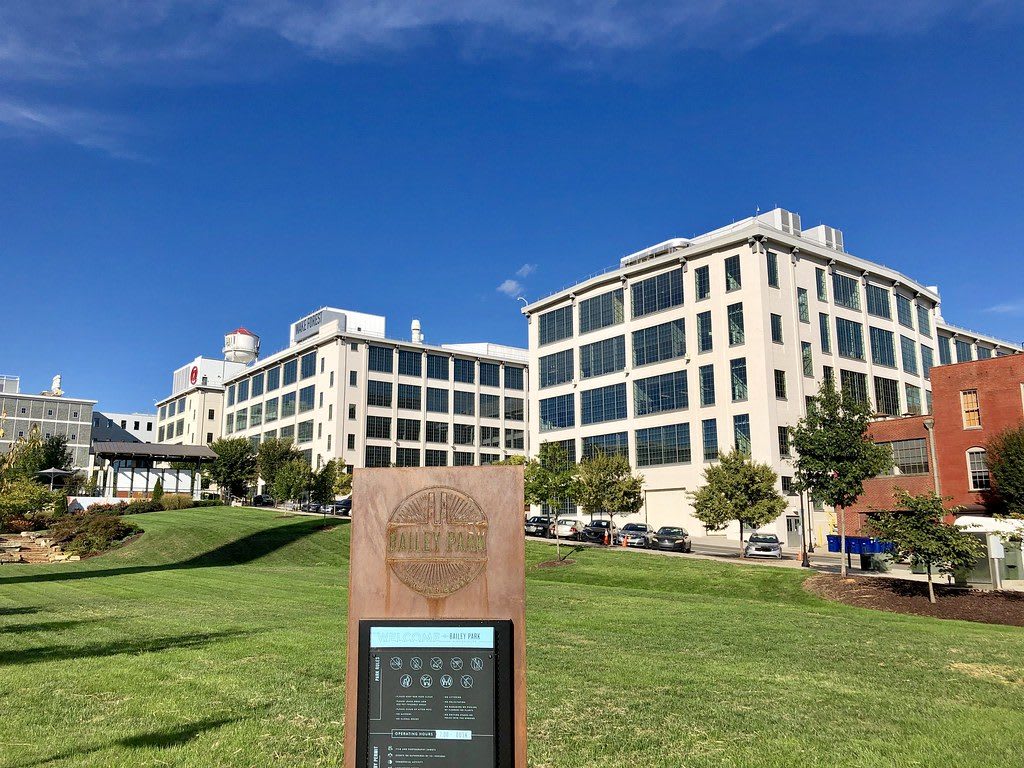
Reynolds stopped making cigarettes downtown in 1990. The factories and the Bailey power plant are now the Innovation Quarter's labs, offices and apartments, with Bailey Park among them. The state marker for tobacco unionism stands at Martin Luther King Jr. Drive and Fourth Street.
Visitor Info
On the Map
Nearby
The closest stops worth working into your route
Historical markers nearby
Roadside plaques and monuments within a short detour