Home / Arkansas / Helena & the Lower Delta / Lakeport Plantation
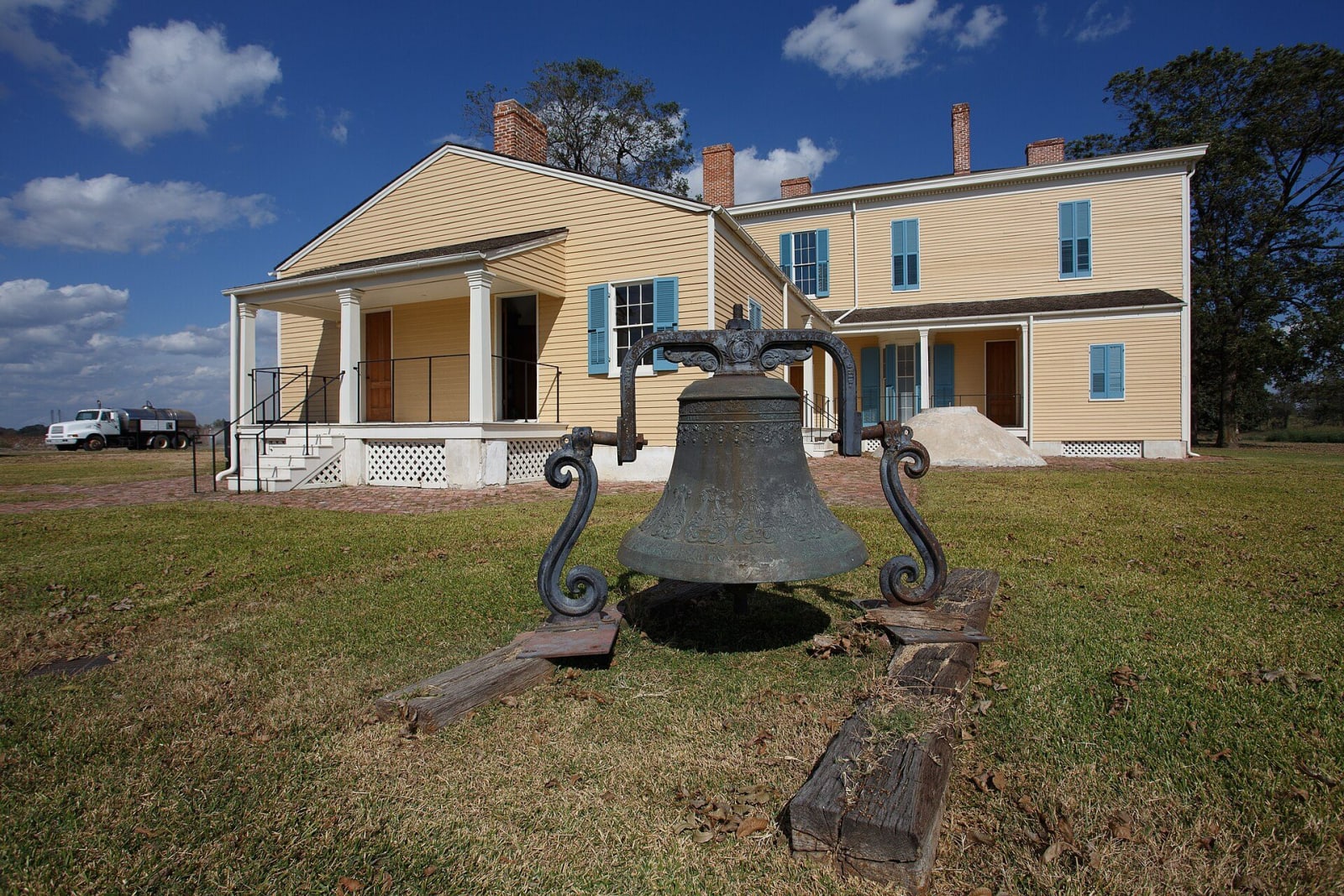
A large iron plantation bell on the lawn in front of the straw-colored Lakeport Plantation house, with its blue-green shutters, brick chimneys and two-story wing under a deep blue sky.Kenneth C. Zirkel / CC BY-SA 4.0 via Wikimedia Commons
🏛️Historical

Lakeport Plantation

Part ofHelena & the Lower Delta

Arkansas's grandest surviving Greek Revival plantation house, built about 1858 by a planter who held 155 enslaved people in 1860, now an Arkansas State University museum.

⏱
Duration
About one hour for a guided tour.
🎟
Admission
Adults $10; seniors, school-age children and groups of six or more $5 (2020 figures; credit cards were not accepted).
📅
Best Season
Year round; tours run on the hour and Saturday hours are added in the warm months. Check the museum's site for the current schedule.

The Story

Lakeport Plantation, southeast of Lake Village in Chicot County, holds the grandest surviving antebellum Greek Revival house in Arkansas. Joel Johnson of Kentucky founded the plantation about 1831 on the Mississippi River's American Bend. When he died in 1846 he owned more than 3,700 acres and ninety-five enslaved people. His eldest son, Lycurgus Johnson, built the seventeen-room house, largely of cypress, in 1858 or 1859, and by 1860 he held more than 4,400 acres and 155 enslaved people.

The Civil War left Chicot County devastated, but Lycurgus Johnson contracted with many of the people he had once enslaved, and in 1870 Lakeport led the county in cotton, with 600 bales. His son Victor sold it in 1927 to Sam Epstein, a Jewish immigrant from Russia who had started out as a clothing peddler. The family gave the house to Arkansas State University in 2001, and it opened as a museum on September 29, 2007.

The museum tells the story of the enslaved people who worked the land, of sharecropping, and of the Johnson family. Guided tours run on the hour, with self-guided tours also offered, and the commissary at the back still holds the goods locals could buy there into the 1980s. The museum's site advises avoiding the levee when using GPS.

Visitor Info

⏱
Time Needed
About one hour for a guided tour.
🎟
Admission
Adults $10; seniors, school-age children and groups of six or more $5 (2020 figures; credit cards were not accepted).
📅
Best Season
Year round; tours run on the hour and Saturday hours are added in the warm months. Check the museum's site for the current schedule.
🛣️
Highway
AR-142

On the Map

Nearby

The closest stops worth working into your route

recreational8.3 mi away
Lake Chicot State Park
A state park on the largest natural lake in Arkansas, a 20-mile oxbow of the Mississippi River that was cleaned up and reopened after decades of silt.
cultural29 mi away
Japanese American Internment Museum
A museum in the McGehee train depot on the two Arkansas camps, Rohwer and Jerome, where about 16,000 Japanese Americans were held from 1942 to 1945.
historical36 mi away
Rohwer Relocation Center Memorial Cemetery
A National Historic Landmark cemetery built by Japanese Americans incarcerated at Rohwer from 1942 to 1945, with monuments they made and audio panels narrated by George Takei.
historical54 mi away
Arkansas Post National Memorial
The site of Arkansas's first European trading post, opened in 1686 beside the Quapaw town of Osotouy, later a territorial capital and the scene of a January 1863 Union victory.
recreational69 mi away
Moro Bay State Park
A 117-acre park where Moro Bay and Raymond Lake meet the Ouachita River, home to the old Moro Bay Ferry, a cable ferry that ran from 1828 until bridges replaced it in 1992.
historical87 mi away
El Dorado Commercial Historic District
The courthouse square and brick blocks of a town that jumped from 4,000 people to nearly 30,000 after the 1921 Busey well, listed on the National Register in 2003.