 Andrea Wright / CC BY 2.0 via Flickr
The Story
Most of Graham County's big timber was cut by the 1930s. From 1915 the Babcock Lumber Company ran a logging railroad here and cut about two-thirds of the Slickrock Creek watershed, until Calderwood Dam threatened to flood its lower line and Depression lumber prices fell. In 1934 a New York post of the Veterans of Foreign Wars asked the government to set aside a forest as a living memorial to Joyce Kilmer, the poet of "Trees," killed in action in France in the First World War. The Forest Service chose an uncut 3,800 acres along Little Santeetlah Creek and dedicated it on July 30, 1936.
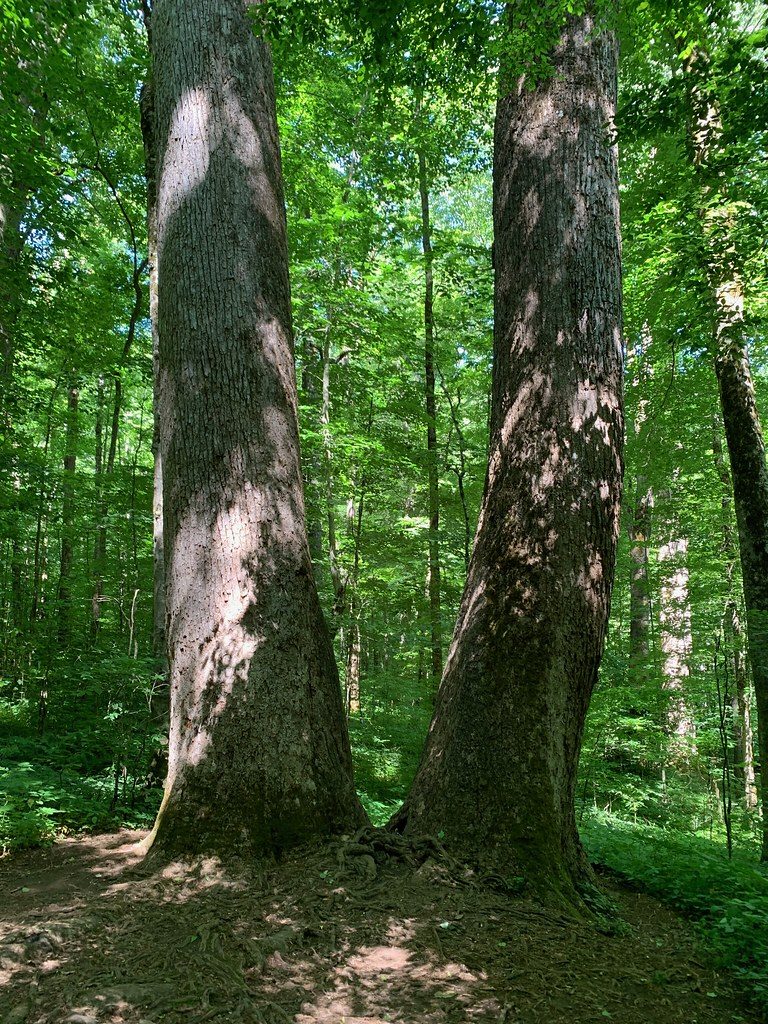
This is cove hardwood forest, the rich mixed forest of sheltered Appalachian hollows, with more than 100 tree species. Yellow poplar, oak, basswood, beech and sycamore lead, some trees are over 400 years old, and the largest poplars are more than 20 feet around and 100 feet tall. The American chestnut that once ruled these slopes was dead of blight by the late 1930s, but its rot-resistant trunks still lie on the forest floor. The great hemlocks fell to the woolly adelgid; in 2010 the Forest Service blasted down dead ones near the trail to protect walkers.
The only way in is on foot. A two-mile figure-eight trail starts at the parking area, with restrooms and picnic tables, and reaches the Kilmer memorial plaque where its loops meet. The Forest Service warns that some map services misdirect drivers; its route runs from Robbinsville by NC 143 and Kilmer Road.
Visitor Info
On the Map
Nearby
The closest stops worth working into your route
Historical markers nearby
Roadside plaques and monuments within a short detour