 Warren LeMay / CC0 via Flickr
The Story
John C. Campbell and his wife, Olive Dame Campbell, spent 1908 and 1909 traveling the southern mountains in a wagon outfitted as a home, he studying farming and social conditions, she collecting old ballads and studying handicrafts. They talked of a school for the rural South on the model of the Danish folk high schools. After John died in 1919, Olive and her friend Marguerite Butler studied folk schools in Denmark, Sweden and elsewhere in Europe and came home meaning to start one in Appalachia.
Butler put the idea to Fred O. Scroggs, the Brasstown storekeeper, and when she came back weeks later more than 200 people were waiting at the church. Residents of Cherokee and Clay counties pledged labor and materials, the Scroggs family gave land, and in 1925 the school began. It has never given grades or credits. Local lore has Olive Campbell watching men whittle on the porch of Scroggs's store and handing them blocks of wood; under Murrial Decker Martin, hired in 1935, the Brasstown Carvers' farm animals became known nationally, and one couple, Hayden and Bonnie Hensley, bought what they called "the house that carving built."
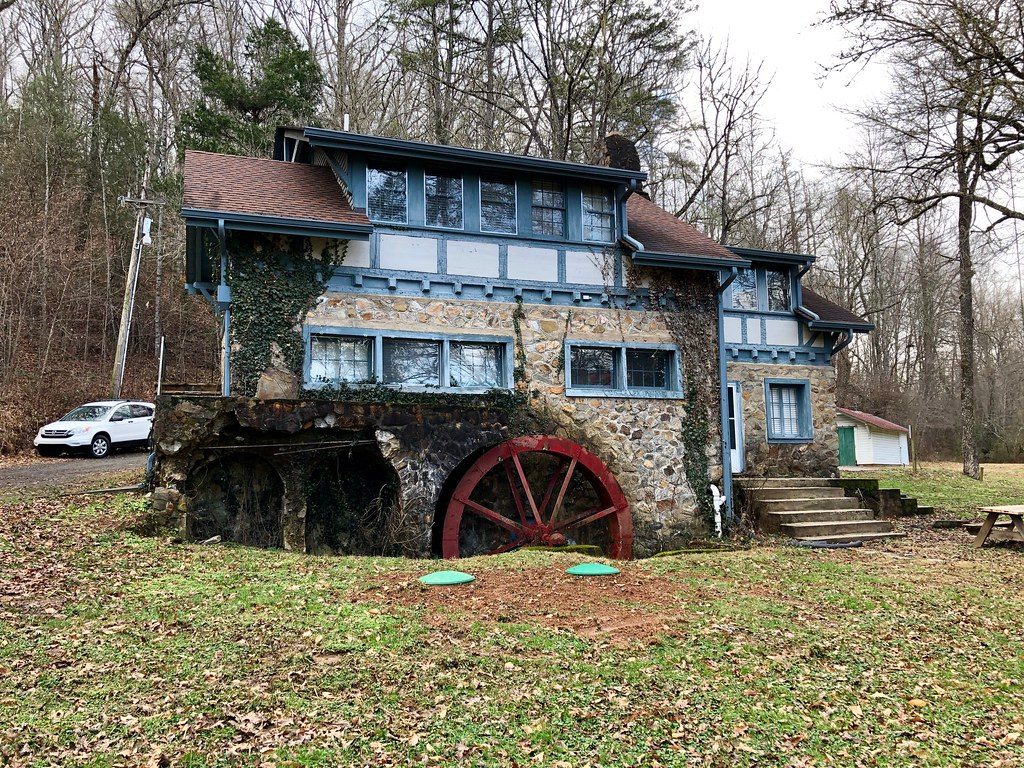
The campus was listed on the National Register as a historic district in 1983. Its History Center, free and open six days a week, keeps the carvers' old bench and Doris Ulmann's photographs of the founders and early carvers. The Craft Shop on the bottom floor of the dining hall sells work by today's Brasstown Carvers, nature trails wind through the grounds, and classes run all year in more than fifty subjects.
Visitor Info
On the Map
Nearby
The closest stops worth working into your route
Historical markers nearby
Roadside plaques and monuments within a short detour