 MT_Image / CC BY 2.0 via Flickr
The Story
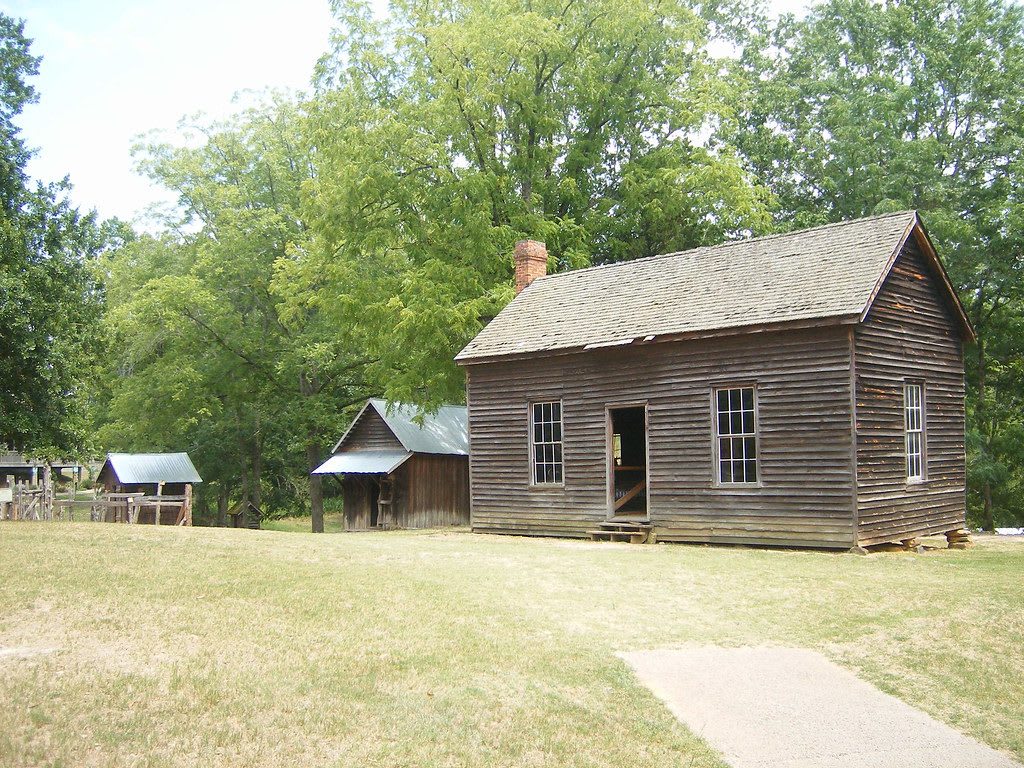
Georgia took the land that became Jones County from the Muscogee (Creek) in 1806 and gave it out by lottery in 1807. Forty years later John Fitz Jarrell built a plain heart pine house here and made much of its furniture himself; many of those pieces are still in it. By 1863 his 600-acre cotton plantation was worked by 42 enslaved people. Their houses did not survive, and nothing of where they lived stands today, which is worth holding in mind on a walk through the buildings that did.
The farm came through Sherman's march, typhoid fever and the boll weevil. After the war John Jarrell expanded to nearly 1,000 acres, farmed by freedpeople, but as he aged most of the workers left. His son Dick gave up teaching to come home and in 1895 built a second house for a family that grew to twelve children. Dick turned the place toward machines and timber, running a sawmill, cotton gin, gristmill, shingle mill, planer, cane press and syrup evaporator off steam engines. The Jarrells held the farm for more than 140 years, and in 1974 his descendants gave the buildings to the state.
The site staff also look after Griswoldville Battlefield, an unstaffed 17-acre site in the south of the county where the one major battle of the march to Savannah was fought on November 22, 1864. Leashed dogs may walk the trails but not enter buildings.
Visitor Info
On the Map
Nearby
The closest stops worth working into your route
Historical markers nearby
Roadside plaques and monuments within a short detour