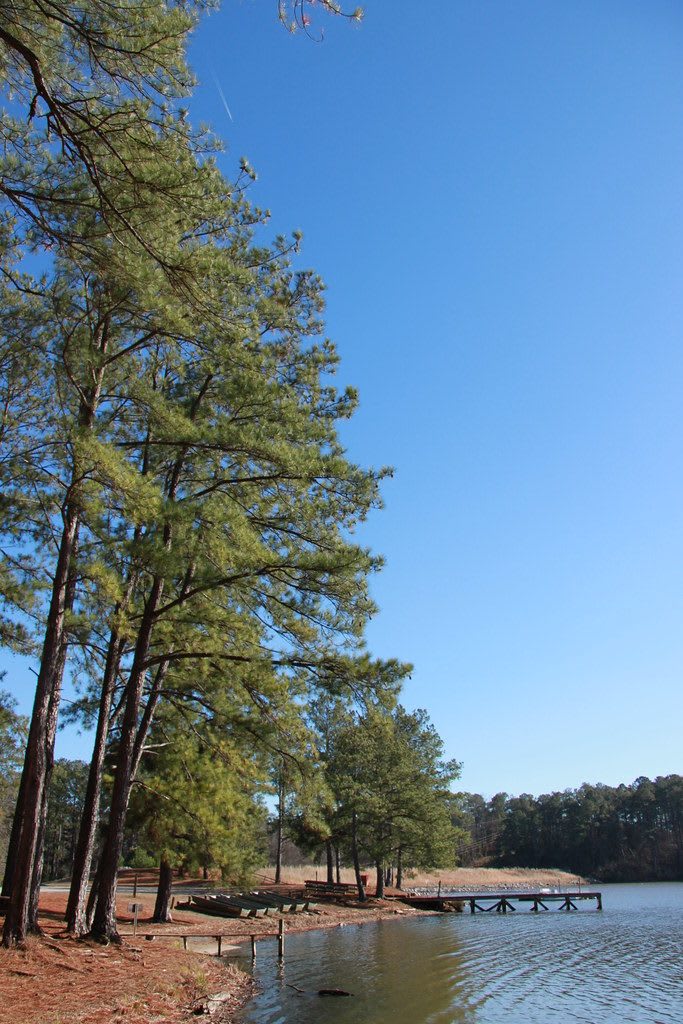
 muffinn / CC BY 2.0 via Flickr
The Story
For centuries the Muscogee (Creek) came to this spring for water they valued for healing. After the Creek War of 1813-14 left them hungry and in debt, William McIntosh, a Lower Muscogee chief raised between Muscogee and Georgian worlds, helped negotiate the first Treaty of Indian Springs in 1821, which gave up land including this spring. He received 1,000 acres here, held enslaved laborers on his plantation, and built the hotel that still stands across the road from the park entrance.
On February 12, 1825, McIntosh and a handful of mostly Lower Muscogee chiefs, six in all, signed a second treaty at Indian Springs that sold virtually all remaining Muscogee land in Georgia for $200,000. Many Muscogee, above all the Upper towns, fiercely opposed it. Under a Muscogee law McIntosh had himself supported, ceding land without the consent of the whole nation carried a sentence of death. Before dawn on April 30, 1825, the Upper Muscogee leader Menawa and about 200 warriors carried it out at McIntosh's home in what is now Carroll County. Under heavy pressure the Muscogee signed the Treaty of Washington in 1826, and Georgia kept the land around the spring as public ground.
From the mid-1800s resort hotels, some with as many as 700 rooms, grew up around the spring, and the state made the land a park in 1927. The Civilian Conservation Corps built the stone Spring House in the 1930s, where people still fill jugs with sulfur-smelling water. A small seasonal museum covers the Muscogee, the resort era and the CCC.
Visitor Info
On the Map
Nearby
The closest stops worth working into your route
Historical markers nearby
Roadside plaques and monuments within a short detour