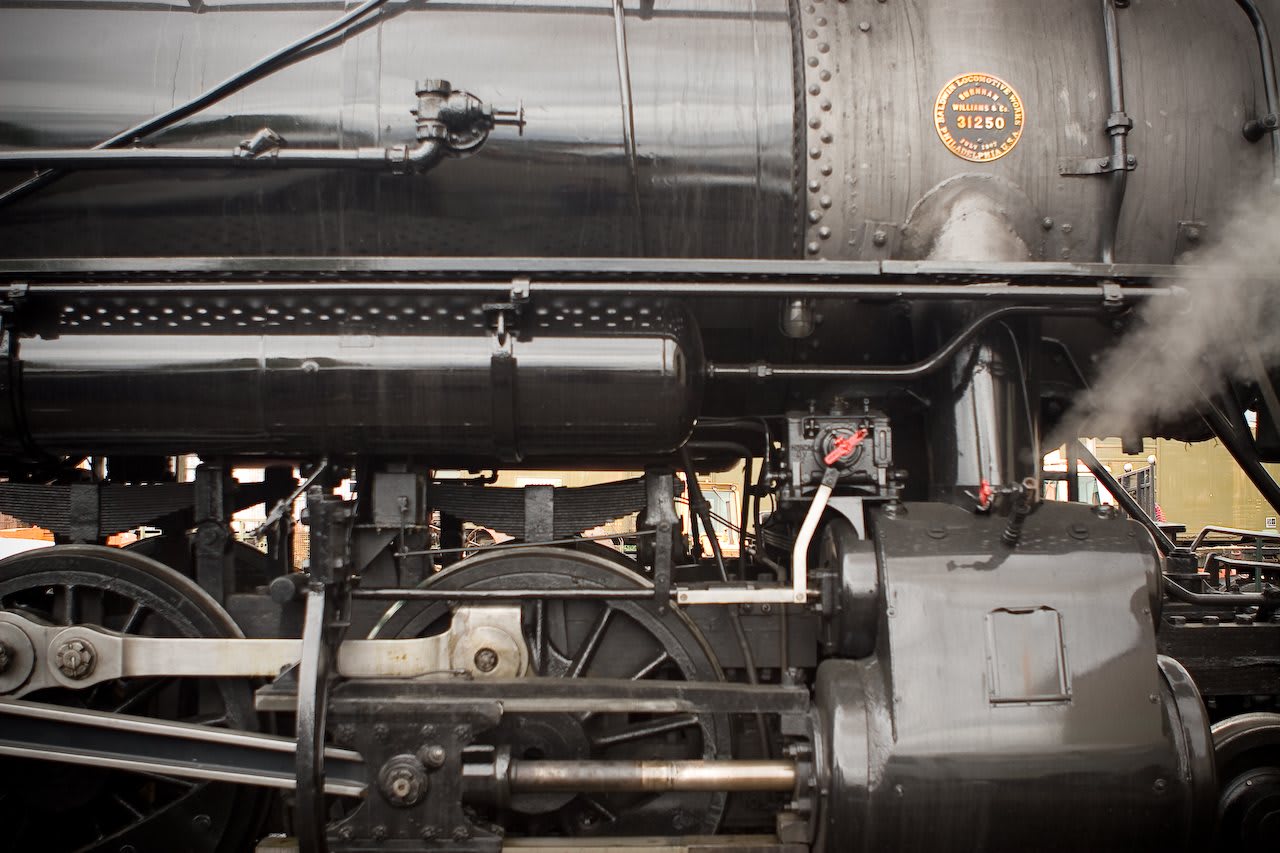
 Jared Eberhardt / CC BY-SA 2.0
The Story
The Heber Valley Railroad does something that almost no modern transportation experience can do: it slows you down to a speed where the landscape becomes the entertainment. The vintage steam and diesel locomotives pull restored passenger cars through Heber Valley and into Provo Canyon at roughly 15 miles per hour, and at that pace the scenery — the Wasatch Mountains rising on both sides, the Provo River winding through the canyon below, deer browsing in meadows that have not changed in a century — unfolds with a deliberate, unhurried richness that driving at highway speed obliterates.
Known locally as the Heber Creeper, the railroad has been running since the early 1900s, when the Denver and Rio Grande Western Railway built the line to connect Heber City to the main line in Provo Canyon. The railroad served the agricultural communities of the Heber Valley, hauling livestock, timber, and dairy products to market and bringing supplies back. As roads improved and trucks replaced rail freight, the line's commercial purpose faded, and by the 1960s the railroad was at risk of abandonment. A group of local preservationists stepped in, formed the Heber Valley Historic Railroad, and converted the line into a heritage tourist operation that has been running ever since.
The locomotives are the stars. The railroad operates both steam and diesel engines, and the steam runs are the ones that draw the enthusiasts. A working steam locomotive is a sensory experience that no other machine can match — the hiss of pressurized steam, the rhythmic chuffing of the pistons, the sharp whistle cutting through the valley, and the coal-smoke smell that settles into your clothes and stays there as a souvenir you did not plan on bringing home. The engines are maintained by a small crew of dedicated engineers and volunteers who keep machines built in the mid-twentieth century running with a combination of mechanical skill and genuine affection.
The main route runs from the Heber City depot south into Provo Canyon, following the Provo River through a landscape that is inaccessible by car. The train passes through sections of the canyon that have no roads, no buildings, and no evidence of the twenty-first century — just river, rock, forest, and track. Deer and moose sightings are common, especially on early morning and evening runs. The river is visible for most of the journey, its clear water running over gravel beds and through pools where trout hold in the current, and the reflections of the surrounding mountains in the calm sections create scenes that look like calendar photographs brought to life.
The railroad offers several themed experiences throughout the year, and the variety keeps it from feeling like a single-trick attraction. The standard excursion runs year-round and covers the basic Provo Canyon route. The Polar Express train, running in November and December, has become one of the most popular holiday experiences in the state — children wear pajamas, drink hot chocolate, and listen to the story read aloud as the train rolls through a winter landscape dusted with snow. The experience is unapologetically sentimental and wildly popular, selling out weeks in advance. Summer murder mystery dinners, autumn color runs through the canyon when the maples are turning, and special event charters round out the calendar.
The Heber City depot is a modest but well-maintained station with a gift shop, ticket office, and outdoor platform where passengers can watch the locomotive being prepared before departure. The town of Heber City itself has grown considerably in recent years — the Heber Valley has become an increasingly popular residential area for people working in Park City and the Wasatch Front — but the depot retains a small-town charm that the surrounding development has not yet overtaken.
The ride takes between 90 minutes and three hours depending on the route and experience selected, and the pacing is part of the appeal. There is no hurry. The train moves at walking speed through the most scenic sections, the conductor narrates points of interest, and passengers are free to move between cars, stand on the open-air platforms, and take photographs from angles that no road provides. Children press against the windows. Adults settle into the rhythm of the rails. And the landscape rolls past at a pace that allows you to actually see it — not as a blur through a windshield but as a sequence of scenes, each one lingering long enough to register before the next one arrives.
Heritage railroads exist across the country, and many of them are charming but forgettable. The Heber Creeper is neither. The canyon scenery is genuinely spectacular, the locomotives are authentically maintained, and the experience of traveling by rail through a landscape that has not been altered since the tracks were laid creates a connection to place and time that few tourist experiences can match. The train does not take you anywhere you need to go. It takes you somewhere you want to be, at a speed that lets you appreciate being there. That is the entire value proposition, and it is more than enough.
Visitor Info
On the Map
Nearby
The closest stops worth working into your route
Historical markers nearby
Roadside plaques and monuments within a short detour