Home / Arkansas / Crowley's Ridge & the Upper Delta / Hampson Archeological Museum State Park
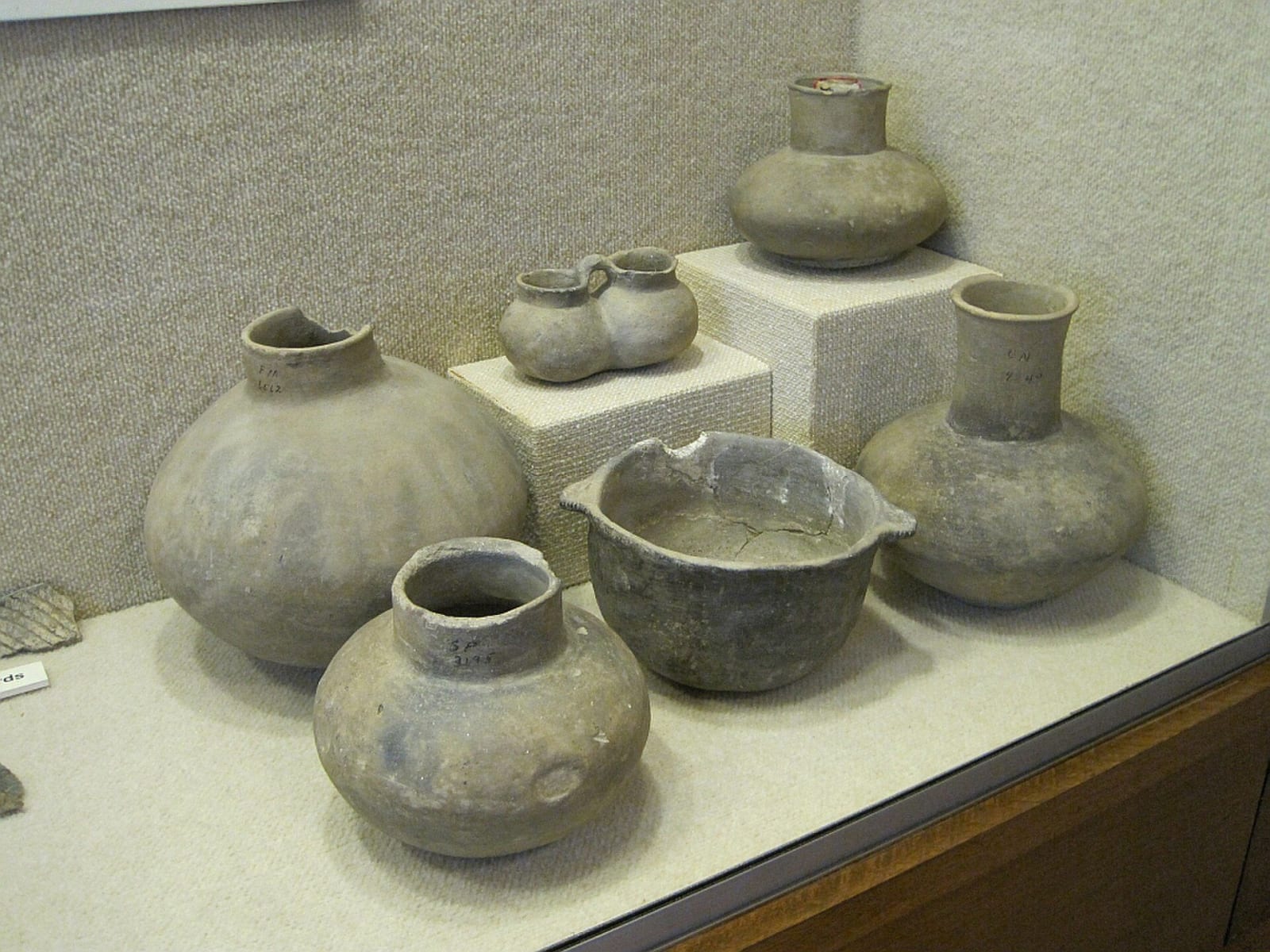
Six gray Mississippian ceramic jars, bottles and a two-handled bowl on white display blocks inside a museum case at Hampson Museum State Park.Thomas R Machnitzki / CC BY 3.0 via Wikimedia Commons
๐ŸŽญCultural

Hampson Archeological Museum State Park

Part ofCrowley's Ridge & the Upper Delta

A free state museum on the town square in Wilson that holds the Nodena collection, one of the best Late Mississippian pottery collections known, from a palisaded village on the Mississippi occupied from A.D. 1400 to 1650.

โฑ
Duration
One to two hours.
๐ŸŽŸ
Admission
Free.
๐Ÿ“…
Best Season
Year round. Wednesday to Saturday 8 a.m. to 5 p.m., Sunday 1 p.m. to 5 p.m. (2026 park page); closed Monday and Tuesday and on major holidays.

The Story

The Hampson Archeological Museum State Park, on the town square in Wilson, holds the collection from the Nodena site, a village of about fifteen acres inside a palisade on a bend of the Mississippi River. People lived there from A.D. 1400 to 1650. A plaza for ceremonies lay between two mounds, and the Encyclopedia of Arkansas estimates that 1,100 to 1,650 people could have lived in the village. They grew corn, beans and squash, hunted and fished, and made pottery from backswamp clay, including the Nodena Red and White ware. Stone came from the north, shells from the Gulf of Mexico and salt from Missouri. The same source names the Quapaw (Ogรกxpa) as the historical tribe that most likely descended from them, and many archaeologists think Upper Nodena is the Pacaha that the de Soto expedition described in 1541.

Dr. James K. Hampson (1877-1956) inherited the Nodena plantation and went back to practice medicine in the 1920s. From 1927 he, his wife and his children excavated and documented the site, and the work drew the University of Arkansas and the Alabama Museum of Natural History. About 800 burials were investigated there. His collection passed 40,000 artifacts, and after a fire next door the family offered it to the state; the park was approved in 1957 and dedicated in 1961. The first museum was named for his son Henry Clay Hampson, killed flying over Burma in the Second World War. The old museum closed in 2017 for a new complex on the square.

The museum is at 33 Park Avenue, a few miles off I-55.

Visitor Info

โฑ
Time Needed
One to two hours.
๐ŸŽŸ
Admission
Free.
๐Ÿ“…
Best Season
Year round. Wednesday to Saturday 8 a.m. to 5 p.m., Sunday 1 p.m. to 5 p.m. (2026 park page); closed Monday and Tuesday and on major holidays.
๐Ÿ›ฃ๏ธ
Highway
Park Avenue

On the Map

Nearby

The closest stops worth working into your route

historical9.9 mi away
Johnny Cash Boyhood Home
A restored five-room farmhouse in the Dyess Colony, the New Deal resettlement town where Johnny Cash grew up from 1935, with the colony's Administration Building as its museum.
historical19 mi away
Southern Tenant Farmers Museum
A museum in the 1930s dry cleaner and filling station where leaders of the Southern Tenant Farmers Union met, telling the story of cotton tenancy and the Black and white union it produced.
historical22 mi away
Herman Davis State Park
A one-acre state park in Manila around the grave and memorial of Pvt. Herman Davis, a duck-hunting guide who became a scout and sharpshooter in the First World War and was fourth on Pershing's list of heroes.
historical35 mi away
Parkin Archeological State Park
A National Historic Landmark on the St. Francis River preserving a 17-acre Mississippian village, AD 1000 to 1550, that many archeologists think was Casqui in the Hernando de Soto accounts.
cultural40 mi away
Arkansas State University Museum
A free university museum in the Dean B. Ellis Library, with a mastodon cast, an Old Town Arkansas street, Native American and Rockabilly galleries and a tinkering studio, and the hub of the university heritage sites.
recreational48 mi away
Crowley's Ridge State Park
A 1933 state park on the loess hills of Crowley's Ridge, built around Benjamin Crowley's homestead spring and the stone-and-log pavilion, dam and cabins of the Civilian Conservation Corps.