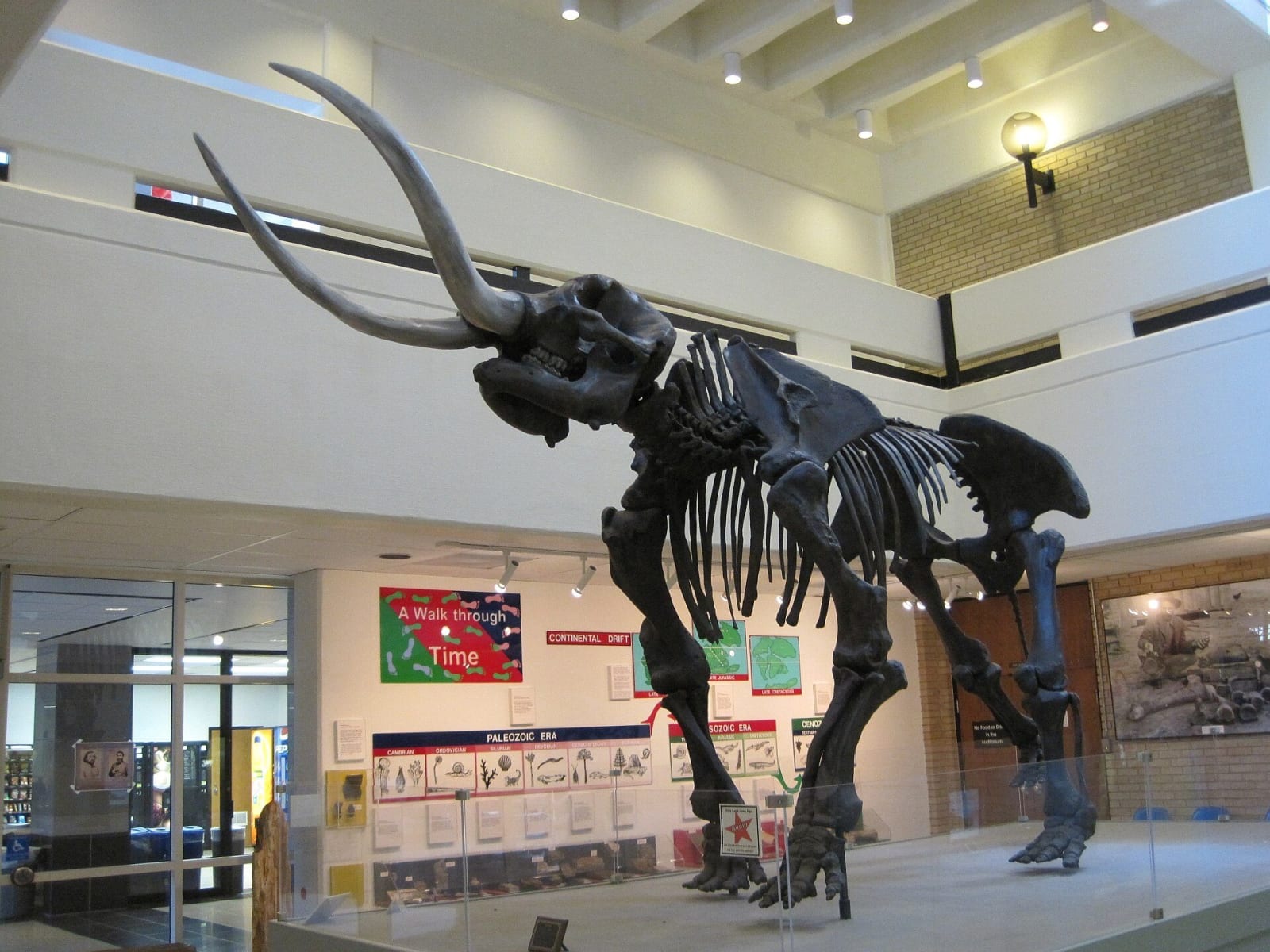
 Thomas R Machnitzki / CC BY 3.0 via Wikimedia Commons
The Story
The Arkansas State University Museum, on the campus in Jonesboro, is, in the Encyclopedia of Arkansas's words, the largest and most comprehensive museum in northeastern Arkansas, with historic, archaeological and natural history collections from Arkansas. It began in 1933 as the Arkansas State College Historical Museum, a project of the college History Club, with four wooden cases in Wilson Hall. It was incorporated in 1948 and has been in the west wing of the Dean B. Ellis Library since 1976. Eugene Wittlake, a botany professor who directed it for two decades, won accreditation from the American Alliance of Museums in 1973. The museum nearly closed in the years around its move, and Larry Ball argued it through.
The galleries are over two floors. Old Town Arkansas, Living Off the Land and A Walk Through Time are permanent exhibits, and The Arkansas Frontier and an earthquake-readiness exhibit are hands-on. The animal gallery installed under Wittlake remains popular, and a full-size cast of a mastodon skeleton stands in the museum. Newer additions include Native American and Rockabilly galleries, a Tinkering Studio and an annual juried children's art show, Through a Child's Eyes.
Ruth Hawkins, who led the museum from 2001, built the university's system of Arkansas Heritage Sites: the Hemingway-Pfeiffer Museum in Piggott, the Southern Tenant Farmers Museum in Tyronza, Lakeport Plantation and the Dyess Colony. Admission is free at 320 University Loop.
Visitor Info
On the Map
Nearby
The closest stops worth working into your route