 Carol M. Highsmith / public domain via the Library of Congress
The Story
The Alamo began as Mission San Antonio de Valero, founded by the Franciscan Antonio de San Buenaventura y Olivares on May 1, 1718, west of San Pedro Springs. After a hurricane in 1724 it moved to its present site on the east bank of the San Antonio River. Its residents came from more than a hundred groups, among them Payaya, Tacame, Karankawa and Apache people, and they built the convento, acequia and workshops. The church begun in the 1750s was never finished in mission times, and Valero was secularized in 1793.
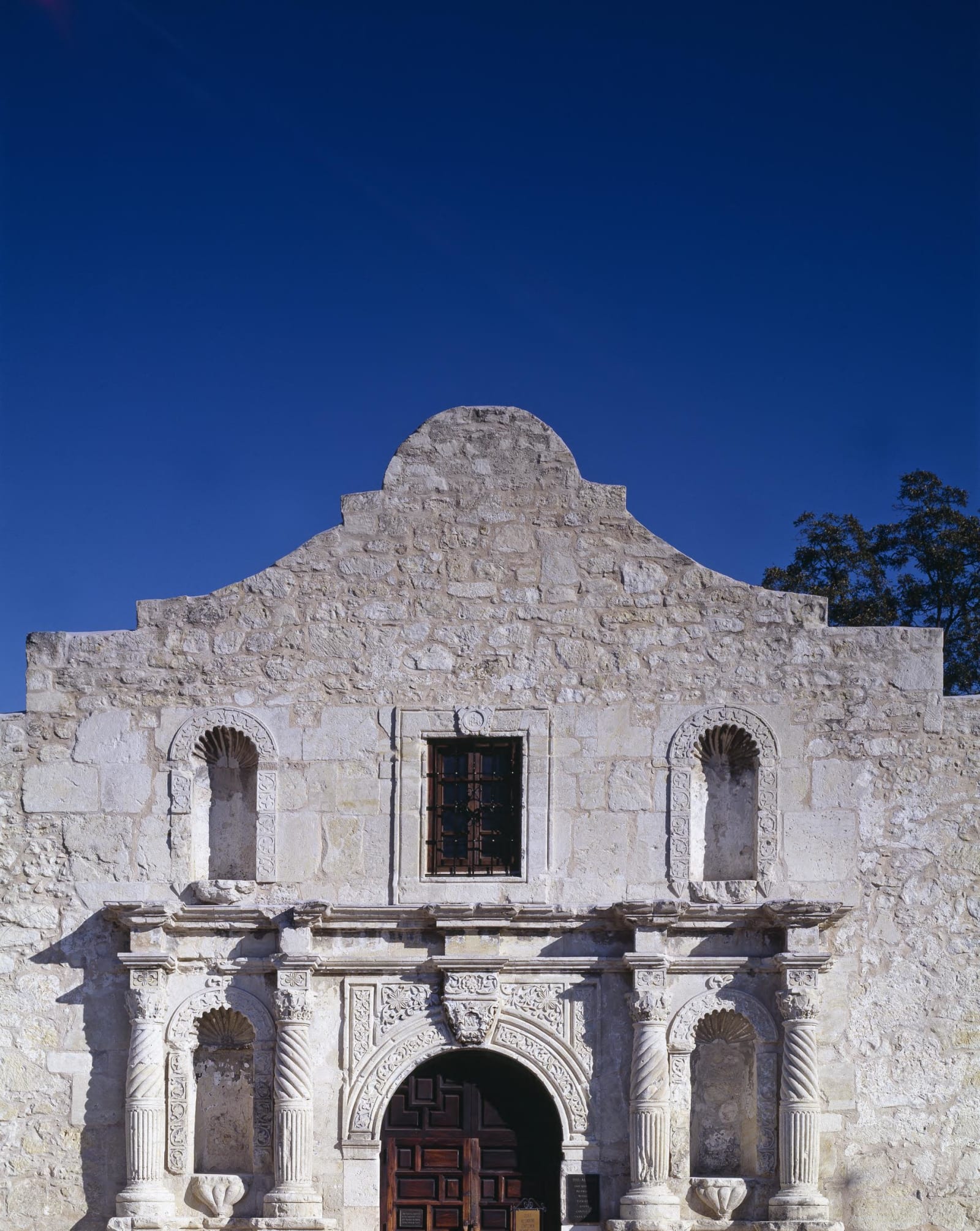
Texan volunteers and their Tejano allies took San Antonio in December 1835, and Santa Anna's army arrived on February 23, 1836. After a thirteen-day siege the assault came at about 5 a.m. on Sunday, March 6. The official list holds 189 defenders; research may raise it to 257. U.S. Army engineers finished the roofless church between 1850 and 1852 as a depot, adding the curved gable that became the Alamo's emblem. The state bought the church in 1883.
Much of the mission lies under streets and the plaza. Residents were buried at the church, and in 2019 archaeologists working in its nave and the Monks Burial Room found the remains of three people, an infant, a young adult and an adult. Church entry is free with a reserved ticket. The Ralston Family Collections Center, opened behind it on March 3, 2023, shows more than 500 artifacts, including the Phil Collins Collection; a museum and visitor center are planned for spring 2028.
Visitor Info
On the Map
Nearby
The closest stops worth working into your route
Historical markers nearby
Roadside plaques and monuments within a short detour