 Michael Barera / CC BY-SA 4.0 via Wikimedia Commons
The Story
Hood County was carved from Johnson and Erath counties in 1866 and named for the Confederate general John Bell Hood; its seat was named for another, Hiram Granbury. The Handbook of Texas says it took three elections to beat Glen Rose and Fort Spunky for the courthouse. The first courthouse, a log building of 1867, was replaced by a stone one that burned on March 5, 1875, with the county records. No arsonist was ever identified, and a poorly built replacement stood until it was torn down for the present courthouse.
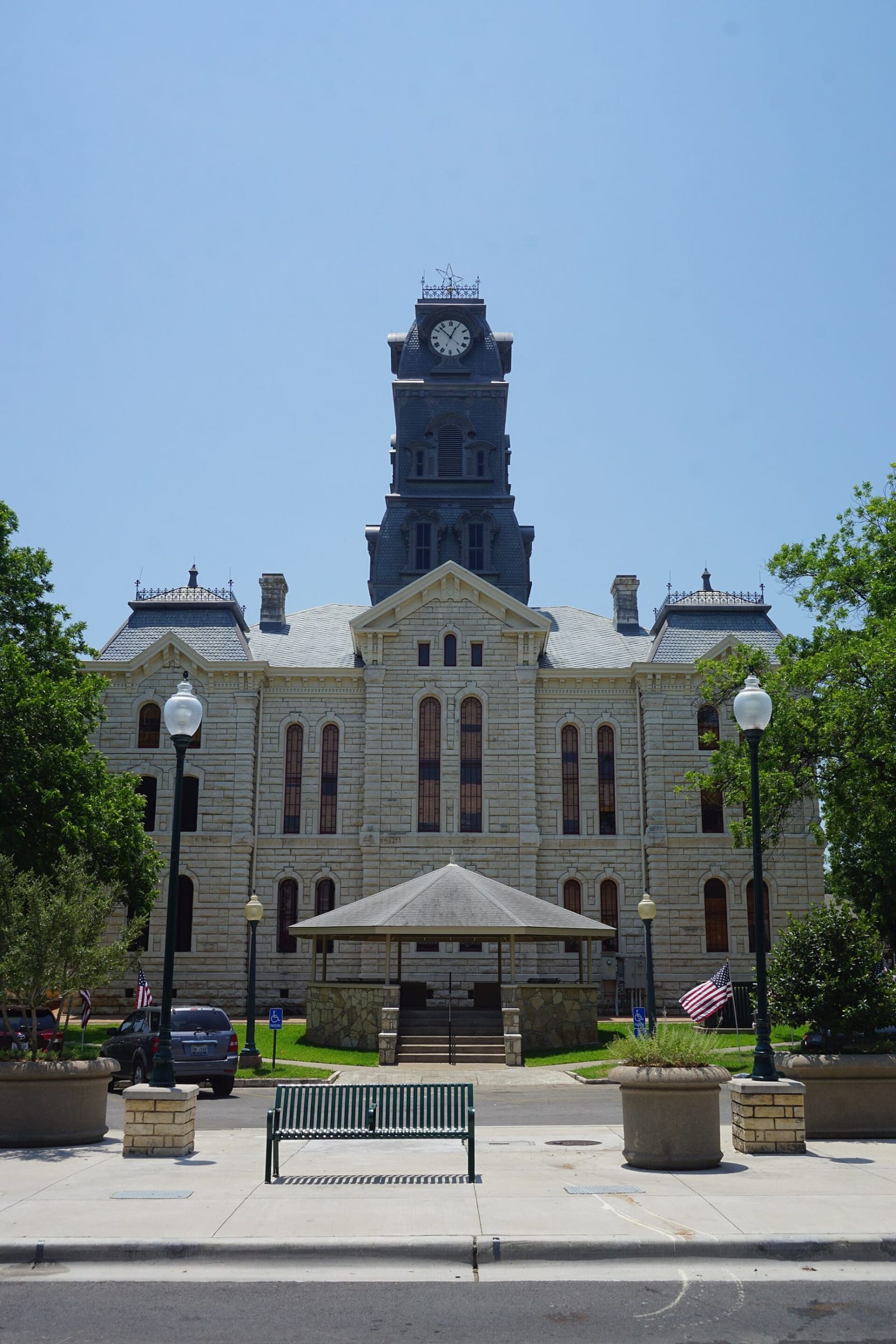
W. C. Dodson, a Waco architect, designed the three-story limestone courthouse in Second Empire style, finished in 1891. Its Seth Thomas clockworks, dating from 1890, are still wound by hand. A tornado in 1968 damaged the clock tower, and the commissioners proposed removing it. Norma Crawford, publisher of the Hood County News Tablet, led a successful campaign to save it, which Texas Time Travel calls perhaps the first act of preservation in the square's revival. A restoration was complete by 2012.
The square joined the National Register of Historic Places on June 5, 1974, and Visit Granbury calls it the first in Texas to be listed. The 1886 Opera House and the limestone storefronts date mostly from the 1880s and 1890s. The 1885 jail was built with an indoor gallows; the nomination says no one was ever hanged. Hood County voted dry in 1876, yet the nomination records as many as five saloons on the square at one time.
Visitor Info
On the Map
Nearby
The closest stops worth working into your route
Historical markers nearby
Roadside plaques and monuments within a short detour