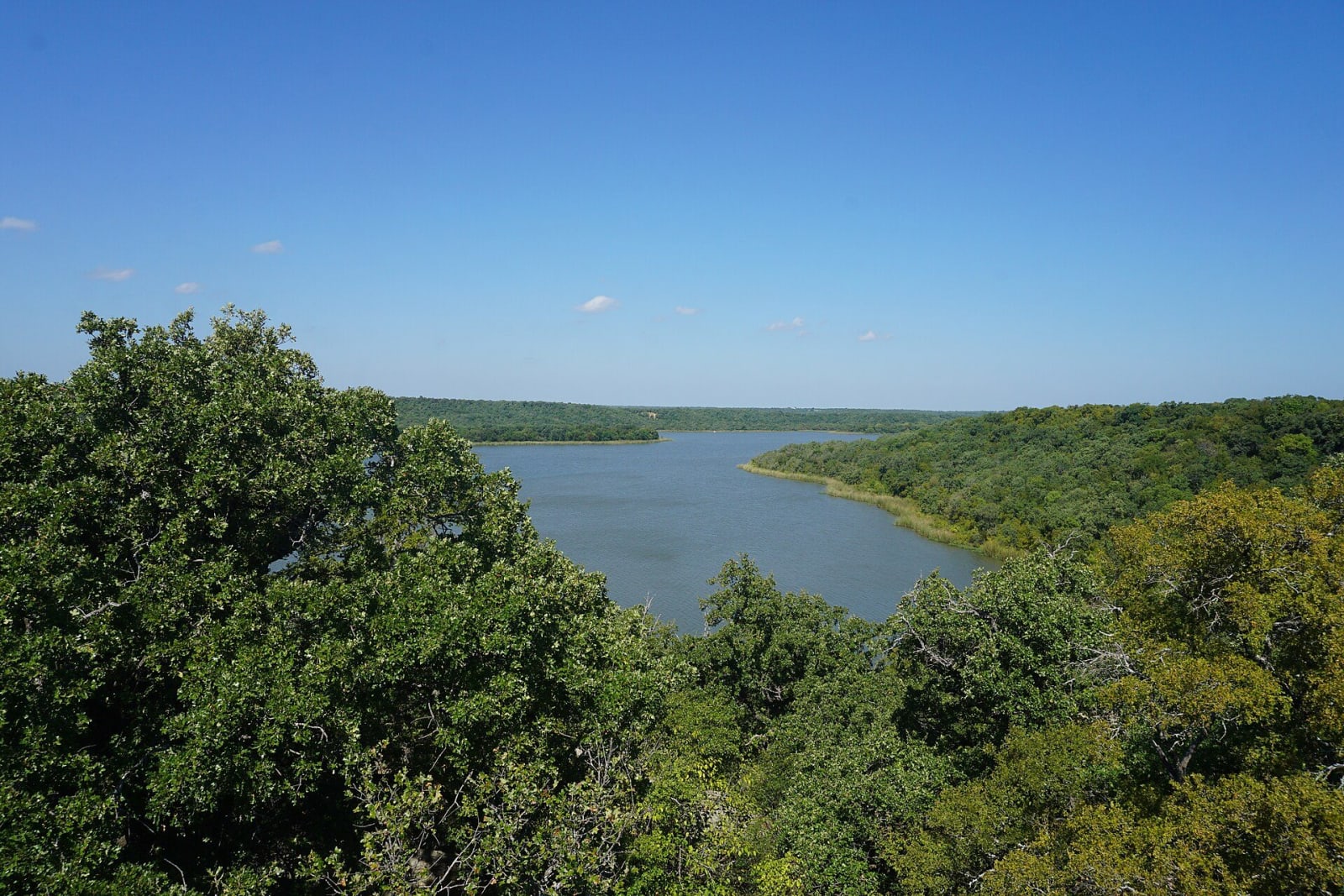
 Michael Barera / CC BY-SA 4.0 via Wikimedia Commons
The Story
Lake Mineral Wells State Park sits along Rock Creek, a tributary of the Brazos. Texas Parks and Wildlife says several Native tribes, including the Comanche, lived here before settlers began arriving in the early 1850s, and that intermittent warfare lasted until the late 1870s. Charles Goodnight, Oliver Loving and C. C. Slaughter ran longhorn herds on the grass.
The town's story is water. James Alvis Lynch settled in what is now Mineral Wells in 1877 and drilled a well in 1880; the park's history says his wife's rheumatism disappeared after she drank from it, and the city grew into a health resort where people came to "take the cure." Lake Pinto could not supply the growing city, so it finished Lake Mineral Wells in 1922. The Handbook of Texas adds that the park land was once part of Camp Wolters, begun in 1926 as a Texas National Guard training ground, an infantry training center in World War II and, as Fort Wolters, a helicopter school until 1974.
The city stopped using the lake as its main supply in 1963, and in 1975 the city and Fort Wolters gave the lake and land to the state. The park opened on July 1, 1981. It has 12.8 miles of trails, some through Cross Timbers woods, and the 20-mile trailway runs between two towns for hikers, bikers and riders. Penitentiary Hollow is one of the few natural rock-climbing places in North Texas; climbers must check in at headquarters. A fishing license is not required.
Visitor Info
On the Map
Nearby
The closest stops worth working into your route
Historical markers nearby
Roadside plaques and monuments within a short detour