 Michael Barera / CC BY-SA 4.0 via Wikimedia Commons
The Story
Texas Parks and Wildlife says the springs and woods here drew Native foragers for thousands of years, with nomadic peoples passing through later. Settlers founded the town of Kimball in the early 1850s at a crossing of the Brazos. After the Civil War, South Texas ranchers drove herds over that crossing on the Chisholm Trail, and the land around the present park made a convenient camp for drovers. Kimball faded after the cattle drives ended.
In 1934, during the Depression, area residents offered the valley as a park site. The Handbook of Texas says a group of Cleburne businessmen bought a few hundred acres and turned them over to the State Parks Board. A Civilian Conservation Corps company arrived the next year. Men of CCC Company 3804 built an earthen dam with a three-level masonry spillway to hold the 116-acre lake, a three-mile road around it, a concession building, a boathouse and a bathhouse, and they kept adding structures through 1940. The Camp Creek Bridge shows their masonry and carpentry.
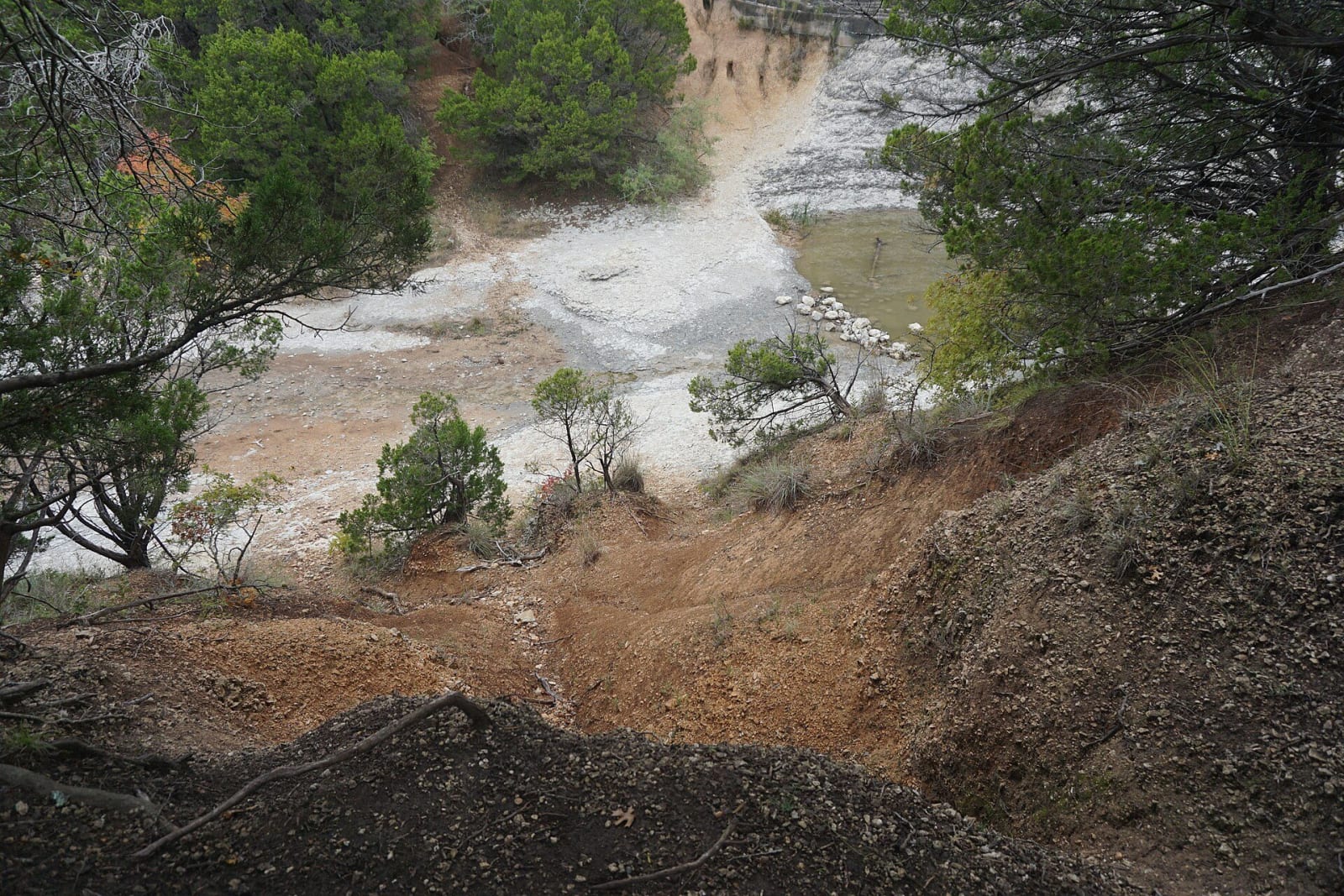
The park covers about 528 acres and sits 30 minutes southwest of Fort Worth. The Spillway Trail leads to the hand-carved spillway, which the park says looks like a waterfall after rains. There are nearly 13 miles of trails, including a six-mile wooded loop for mountain bikers. Fishing needs no license, and personal watercraft are not allowed on the lake.
Visitor Info
On the Map
Nearby
The closest stops worth working into your route
Historical markers nearby
Roadside plaques and monuments within a short detour