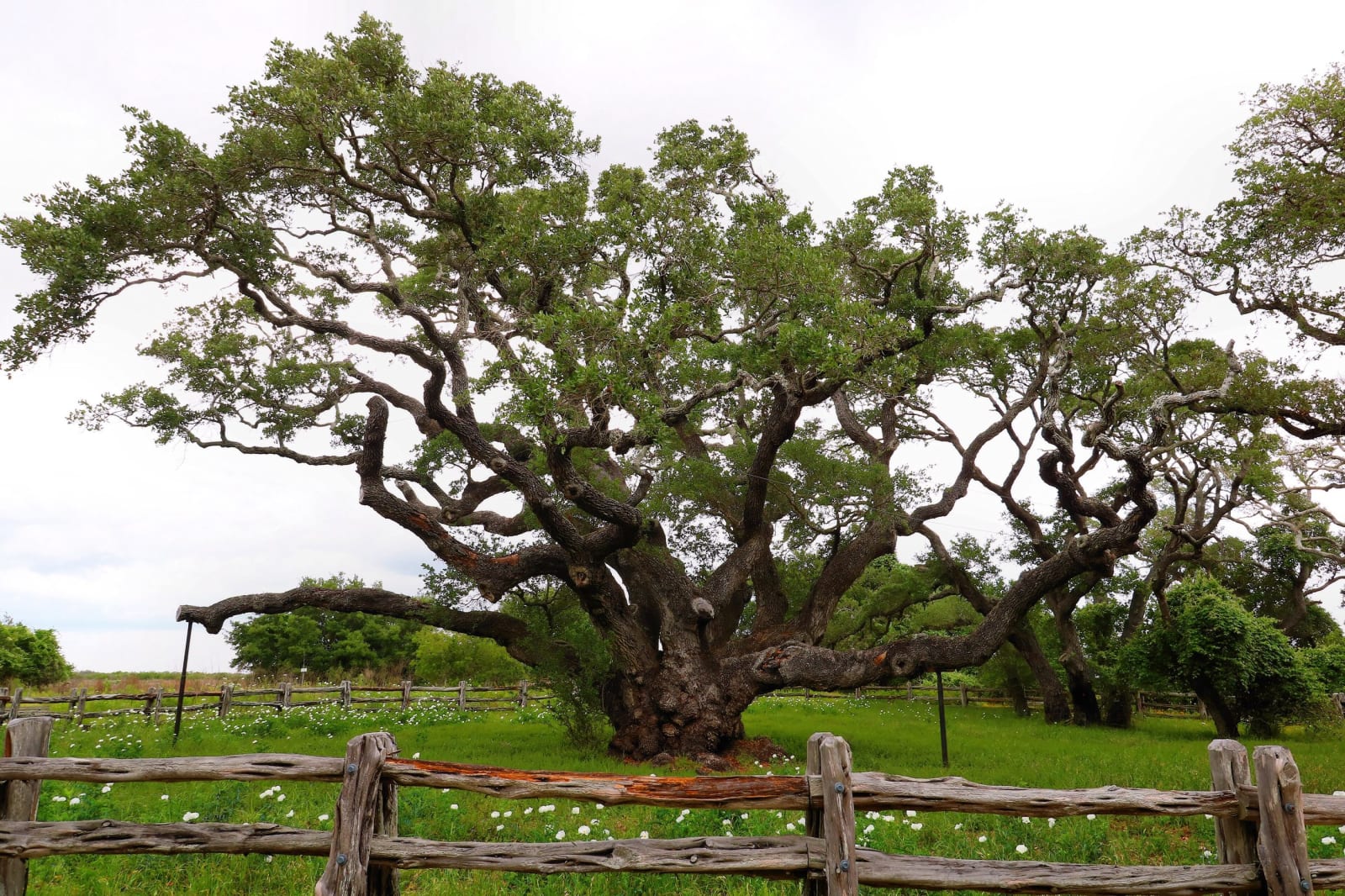
 Larry D. Moore / CC BY 4.0 via Wikimedia Commons
The Story
The Big Tree is the reason most people turn off the highway. It is a southern live oak, 35 feet around and 44 feet tall with a crown spread of 90 feet, named the State Champion Coastal Live Oak in 1969 and thought to be more than a thousand years old. The Civilian Conservation Corps cared for it in the 1930s, when they began work on the park.
The rest of the park sits where St. Charles Bay meets Aransas Bay on the Lamar Peninsula, on land bought from private owners between 1931 and 1935. CCC Company 1801 cleared and planted it and built its roads, bridges and drainage, and the recreation hall they put up was made of shellcrete, concrete made with oyster shell. The shore is bulkheads, shell, mud flats and marsh grass, so this is not a swimming park. People come to camp, fish and watch birds: forty-four campsites stand right on the bay and fifty-seven more under the oaks, and the lighted fishing pier runs 1,620 feet out. The park lends rods and tackle, and alligators turn up now and then.
Across St. Charles Bay is Aransas National Wildlife Refuge, where the endangered whooping cranes spend the winter. Wildflowers fill the park in spring.
Visitor Info
On the Map
Nearby
The closest stops worth working into your route
Historical markers nearby
Roadside plaques and monuments within a short detour