Home / Texas / Corpus Christi, Padre Island & the Coastal Bend / Aransas National Wildlife Refuge
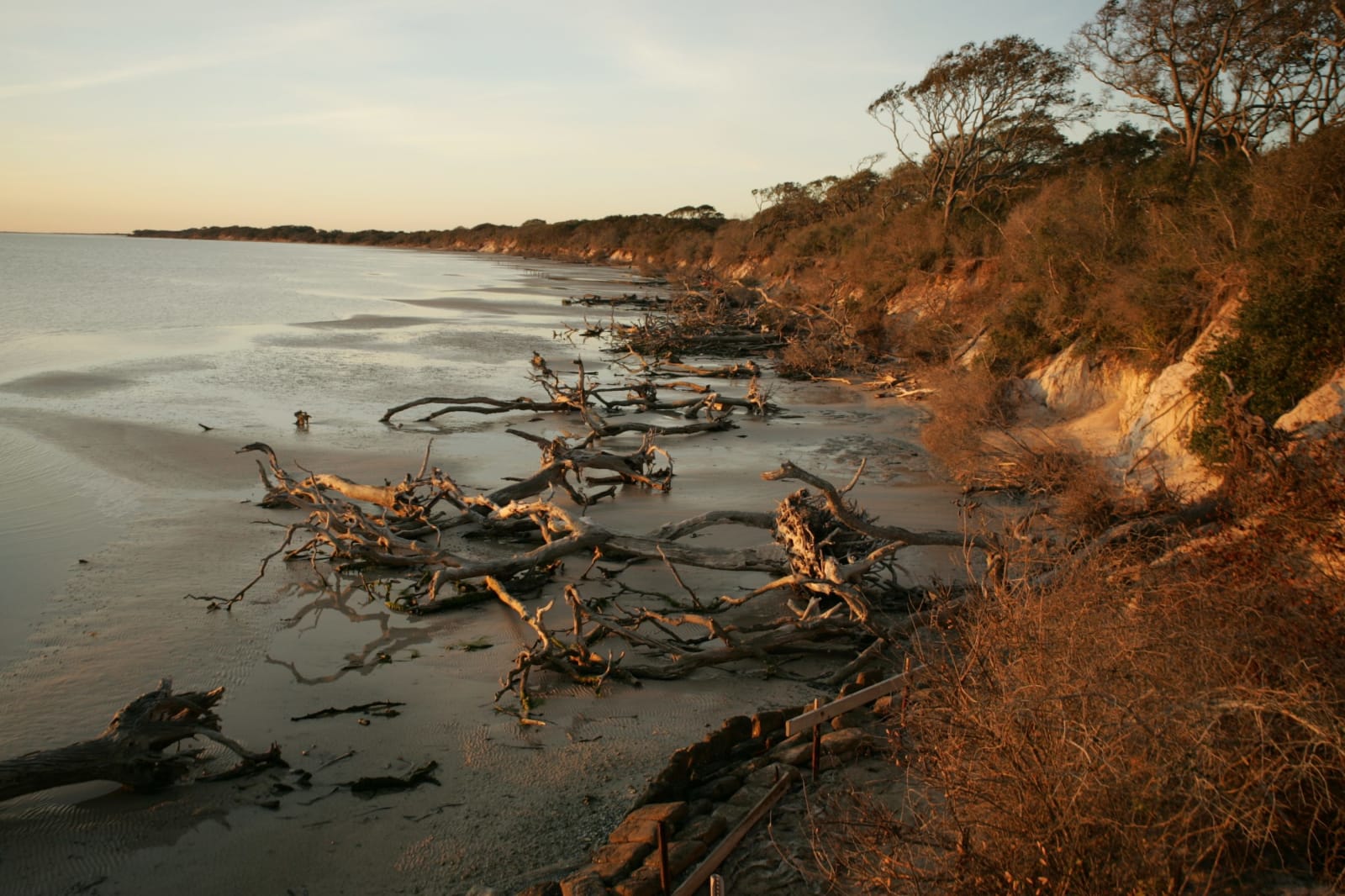
Bleached driftwood tangled on a sandy shoreline at Aransas National Wildlife Refuge, low water lapping at it and a bank of wind-shaped brush lit gold along the right.Steve Hillebrand, USFWS / public domain via Wikimedia Commons
🌲Natural

Aransas National Wildlife Refuge

Part ofCorpus Christi, Padre Island & the Coastal Bend

Blackjack Peninsula's refuge on San Antonio Bay, winter home of the only wild migrating flock of whooping cranes, which fell to about fifty birds and now numbers over five hundred.

⏱
Duration
An hour for the tower; half a day for the full loop and trails.
🎟
Admission
Daily entrance $3 for one adult in a vehicle, $5 for two or more; 17 and under free. Aransas annual pass $15; federal passes accepted.
📅
Best Season
Winter, for the cranes. Auto tour and trails daily sunrise to sunset; gates lock 30 minutes after sunset. Visitor center Tuesday to Saturday 9 a.m. to 4 p.m.

The Story

The whooping crane nearly vanished. When it was listed as endangered in 1967, about fifty birds were left in this flock, the Aransas-Wood Buffalo population, which summers in Wood Buffalo National Park in Canada and flies 2,500 miles to winter in the coastal marshes here, eating blue crabs and Carolina wolfberry. Fish and Wildlife Service aerial surveys estimated about 540 cranes, at least 57 of them juveniles, in the primary survey area around the refuge in the 2025-26 winter, after 557 the year before; the flock has stayed above 500 for nine straight years and has grown about 4.24 percent a year on average since 1938. As it grows it spreads, and more cranes now winter outside the survey area, eight of them in Oklahoma last winter.

The refuge came first. In 1937 the government used duck-stamp money to buy the surface rights to Leroy Denman's St. Charles Ranch on Blackjack Peninsula, and the refuge was established on December 31, 1937, for migratory waterfowl; Continental Oil kept the right to drill. Karankawa, Lipan, Tonkawa and Comanche people had all used this ground. The refuge now covers more than 115,000 acres, including the Matagorda Island unit.

The 16-mile auto tour runs through oak savanna and past an observation tower over San Antonio Bay, with a pier, trails and an alligator viewing area along the way. More than 400 bird species have been recorded. Register and pay at the visitor center or the kiosk.

Visitor Info

⏱
Time Needed
An hour for the tower; half a day for the full loop and trails.
🎟
Admission
Daily entrance $3 for one adult in a vehicle, $5 for two or more; 17 and under free. Aransas annual pass $15; federal passes accepted.
📅
Best Season
Winter, for the cranes. Auto tour and trails daily sunrise to sunset; gates lock 30 minutes after sunset. Visitor center Tuesday to Saturday 9 a.m. to 4 p.m.
🛣️
Highway
FM 2040 / SH-35

On the Map

Nearby

The closest stops worth working into your route

natural17 mi away
Goose Island State Park
A bayside park between St. Charles and Aransas bays, home of the Big Tree, the state champion coastal live oak, thought to be more than a thousand years old.
architectural23 mi away
Fulton Mansion State Historic Site
A French Second Empire house of 1874-77 on Aransas Bay, paid for with hides and tallow, with gas lights, central heat and hot running water no other house nearby had.
natural23 mi away
Matagorda Island
A 38-mile barrier island reached only by boat from Port O'Connor, with a lighthouse of 1852, the ghosts of two towns and a fort, and no water, power or cars.
historical23 mi away
Indianola
The site of Texas's second port, where Morgan's steamships, Army freight and the first refrigerated beef passed until the hurricanes of 1875 and 1886, now mostly under Matagorda Bay.
historical25 mi away
Half Moon Reef Lighthouse and Linnville
The last screw-pile lighthouse of the Texas coast, brought ashore at Port Lavaca, a town founded by refugees from Linnville, the port Buffalo Hump's Comanches burned in August 1840.
historical36 mi away
De León Plaza
The central plaza of Guadalupe Victoria, the only predominantly Mexican colony in Texas, founded by Martín De León in 1824 and taken from his family after 1836.

Historical markers nearby

Roadside plaques and monuments within a short detour

Marker5.8 mi away
Preston Rose Austin (November 11, 1872-September 29, 1929)
Austwell
Marker9 mi away
Seadrift
Seadrift
Marker14 mi away
Original Mission Refugio
Marker15 mi away
Green Lake
Port Lavaca vicinity
Marker16 mi away
Cotton Gins of Calhoun County
Port Lavaca
Marker16 mi away
Stella Maris Chapel
Lamar