Home / Nebraska / North Platte & the Great Platte River Road / Genoa U.S. Indian School Museum
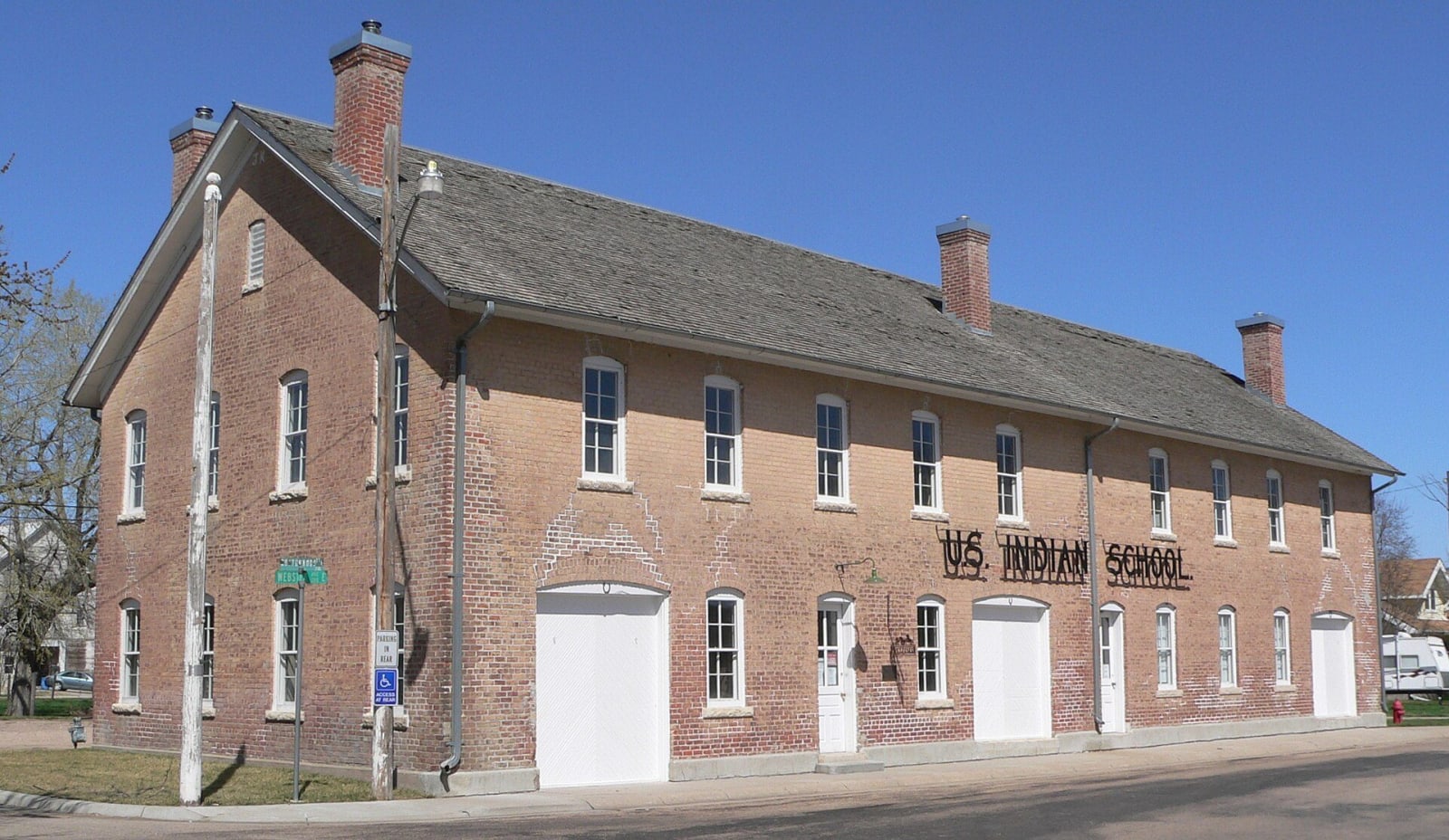
The long two-story brick shop building of the former U.S. Indian School in Genoa, its name painted across the front.Ammodramus / CC0 via Wikimedia Commons
🏛️Historical

Genoa U.S. Indian School Museum

Part ofNorth Platte & the Great Platte River Road

The surviving trades building of a federal boarding school that ran from 1884 to 1934 on the Pawnee Nation's last Nebraska land, where at least 86 children died and the cemetery is still lost.

⏱
Duration
One hour.
📅
Best Season
Memorial Day through Labor Day.

The Story

Genoa sits on the last Nebraska land the Pawnee held. A treaty of September 24, 1857 gave them a reservation along the Loup, where the government insisted it be, though the Pawnee had wanted land south of the Platte. Lakota war parties attacked the reservation villages eight times in the first year, and from 1873 the Pawnee could not leave without a pass. On October 8, 1874 they agreed to sell the reservation, and in waves through October 1875 they went to Indian Territory.

The government already owned the agency property, and on February 20, 1884 it opened the Genoa U.S. Indian Industrial School here, the fourth off-reservation boarding school of the Office of Indian Affairs, built to assimilate Native children away from their families. Children came from dozens of nations; on arrival they were given new clothes and names and forbidden their own languages. Enrollment grew from 74 to nearly 600, and the campus to more than 30 buildings. At least 86 students died. Nine were buried in the school cemetery, 37 were sent home, and what became of 40 is not known. The cemetery is lost, probably disturbed when a power canal was cut across the campus in the 1930s, and searches in 2021 and 2023 have not found it. The school closed in 1934.

The Genoa U.S. Indian School Foundation, formed in 1990, keeps a museum in the old manual training building, with the flags of the nations whose children were sent here. In 2026 Summer Copeland, an Omaha descendant, became its first Native American president.

Visitor Info

⏱
Time Needed
One hour.
📅
Best Season
Memorial Day through Labor Day.
🛣️
Highway
NE-39

On the Map

Nearby

The closest stops worth working into your route

industrial49 mi away
Neligh Mill State Historic Site
A brick flour mill on the Elkhorn, begun in 1873, that ground Gold Medal flour until 1940 and still holds all its original nineteenth-century machinery.
cultural52 mi away
Stuhr Museum of the Prairie Pioneer
Edward Durell Stone's island pavilion in Grand Island and an 1890s railroad town of moved buildings, among them the cottage where Henry Fonda was born in 1905.
architectural69 mi away
Nebraska State Capitol
Bertram Goodhue's 400-foot tower on the prairie, built in four phases from 1922 to 1932 and paid off on completion, home of the only one-house legislature in the country.
historical70 mi away
Fort Hartsuff State Historical Park
A small infantry post of 1874 in the North Loup valley, built of local lime concrete on the raiding road between Lakota and Pawnee country, and kept nearly whole by eighty years of farming.
geological71 mi away
Ashfall Fossil Beds State Historical Park
A watering hole in Antelope County where ash from an eruption in Idaho buried rhinoceroses and horses about twelve million years ago, now uncovered in place under the Hubbard Rhino Barn.
attraction79 mi away
Strategic Air Command & Aerospace Museum
Two hangar-sized halls beside I-80 near Ashland holding the bombers and reconnaissance planes of the command that ran America's nuclear force from Offutt, south of Omaha, from 1948 to 1992.