 Carol M. Highsmith / public domain via the Library of Congress
The Story
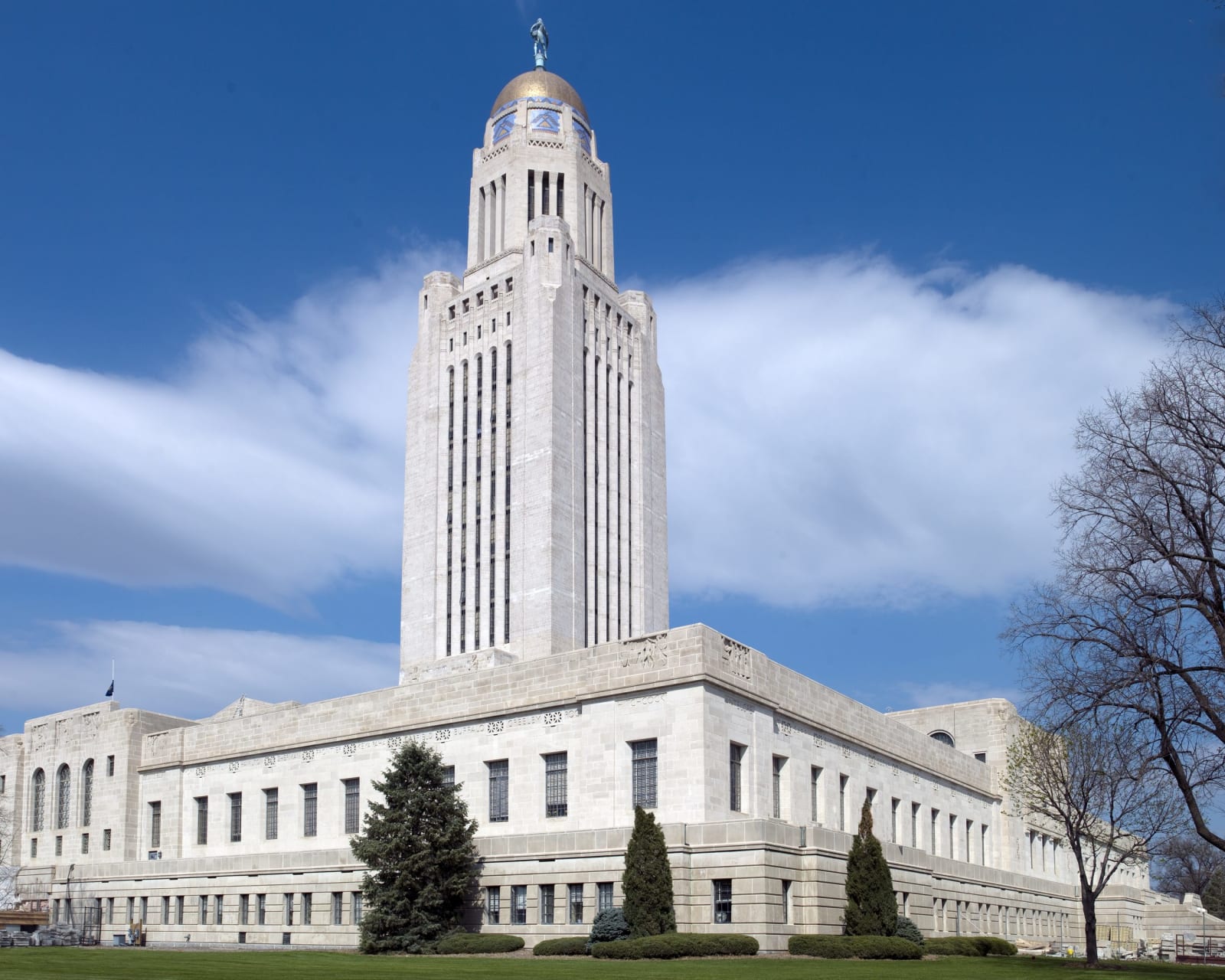
In 1919 the legislature voted for a new capitol, and in 1920 the New York architect Bertram Grosvenor Goodhue won a national competition with a square base 437 feet on a side and a tower rising 400 feet out of the middle of it, finished with a nineteen-foot sower scattering seed. The state built it in four phases from 1922 to 1932 around the old statehouse, which was torn down in 1925 once offices could move. It came in just under its $10 million budget and was paid for in full when it was finished.
Goodhue worked with the sculptor Lee Lawrie, the mosaicist Hildreth Meière and the philosopher Hartley Burr Alexander, who wrote the inscriptions and chose the story the building tells. The names of the state's 93 counties run around the base. Over the main door is Alexander's line, The Salvation of the State is Watchfulness in the Citizen. Bison panels on the main stairs honor the Plains nations, and the doors of the east chamber carry a tree of life.
The building holds a single chamber in use. In 1934 voters approved George Norris's amendment for a one-house, nonpartisan legislature, and in 1937 it replaced a body of 133 with 43 senators meeting in the west chamber, now named for Norris. The east chamber, now named for the senators Charles and Jerome Warner, is a public room. Free tours leave from the north entrance daily; the tower's observation decks are closed for HVAC work.
Visitor Info
On the Map
Nearby
The closest stops worth working into your route