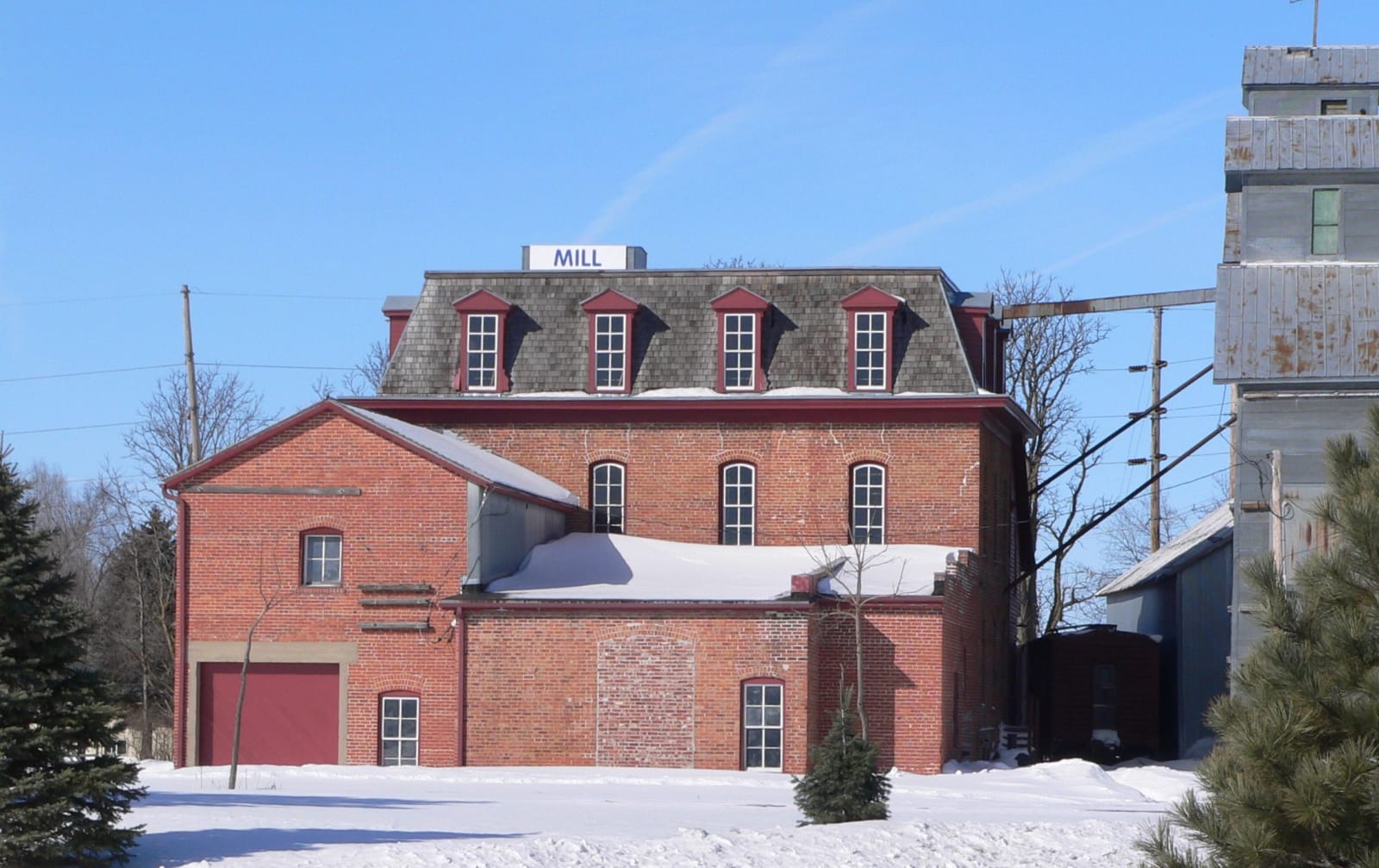
 Ammodramus / public domain via Wikimedia Commons
The Story
John D. Neligh, who founded the town, began the brick mill on the Elkhorn River in 1873, and W. C. Gallaway, another local businessman, finished it and dammed the river to power it. It began grinding on August 29, 1874. The water drove horizontal turbines rather than a wheel, and in 1886 the mill replaced its stone burrs with steel rollers, which can pass flour through again and again for finer grades. Improved turbines let it generate electricity as well, and it supplied the town until 1925.
At its peak, from 1900 to 1920, it was one of the largest flour mills in Nebraska, turning out up to 98,000 pounds a day with crews of twelve to fourteen on each of two twelve-hour shifts. It sold its flour as Gold Medal until May 1940, when General Mills paid it $5,000 for sole rights to the name. The mill came through the Depression of the 1930s that closed many Nebraska mills, ran on electric power after the dam washed out, and closed in 1969.
History Nebraska keeps it now as the only nineteenth-century flour mill in the state that still has all its original equipment, the 1880s machinery standing where it ran. The site includes the restored mill office, a reconstructed flume and penstock, and what is left of the dam, and guided tours walk through the whole milling process. An original Gold Medal sack is on display.
Visitor Info
On the Map
Nearby
The closest stops worth working into your route