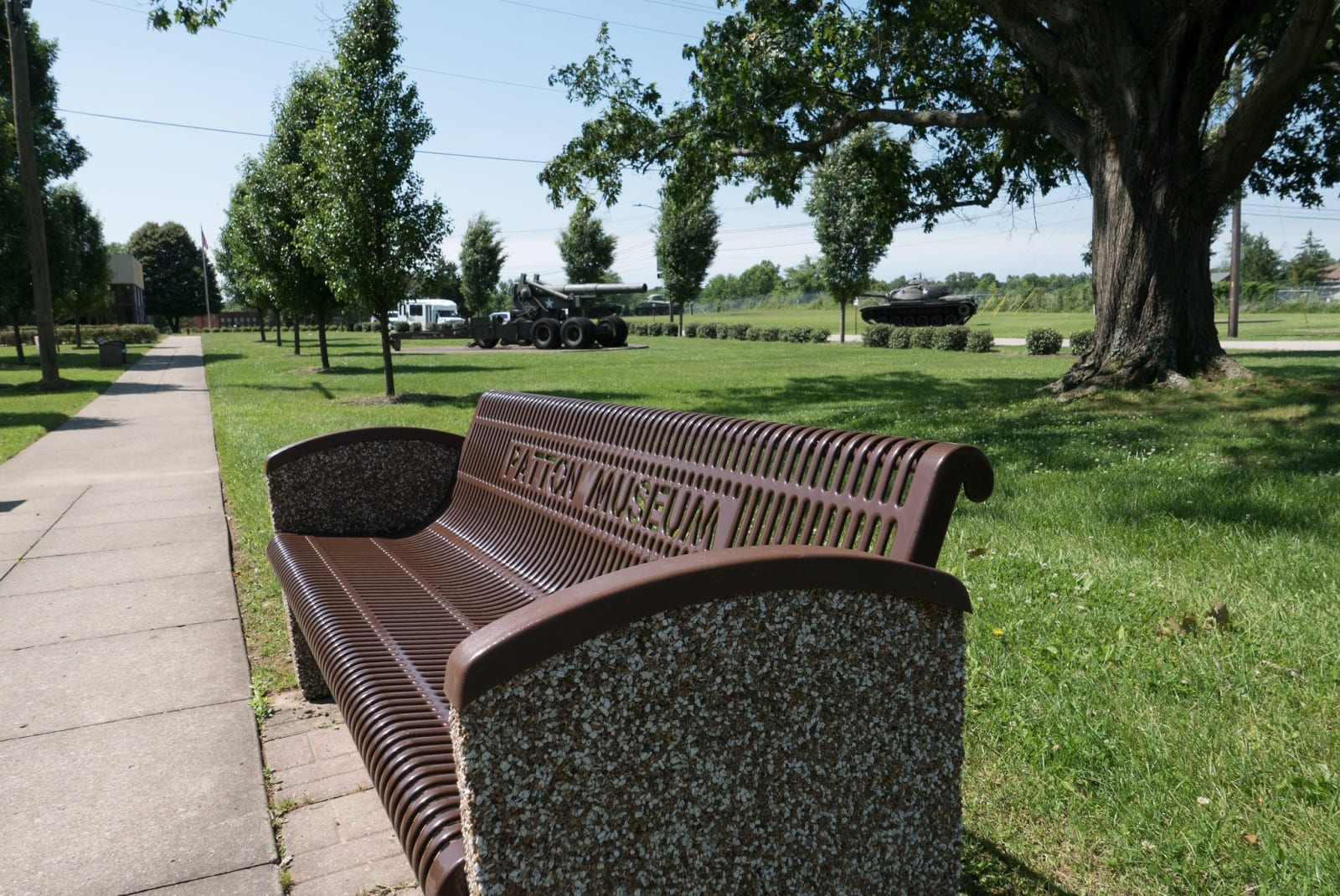
 rameylady / CC BY-SA 2.0 via Flickr
The Story
Camp Knox began in 1918 as an artillery training ground on land leased and bought around the village of Stithton, and it was named for Henry Knox, George Washington's chief of artillery. It became the Army's armor post: for 60 years the Armor Center and School trained tank crews here, until the school moved to Fort Benning in Georgia in 2011 and took most of the tanks with it. Next door, in 1936, the Treasury built the United States Bullion Depository on land transferred from the post. The gold vault is closed to the public, and photographing it is not allowed.
The museum grew from the captured German vehicles and equipment that Patton's Third Army sent to Fort Knox for study during World War II. After Patton's death in 1945 his own vehicles and belongings followed, and the Patton Museum opened in 1948, one of the oldest in the Army's museum system. Its present building dates from 1972. It holds the largest collection of his personal items, among them the sabers from his 1912 Olympic pentathlon, his revolvers, letters and journals, and the Cadillac from his final ride.
With the tanks gone, the museum turned to the study of leadership for the ROTC cadets who now train at Fort Knox every summer. A 1941 wooden barracks moved onto the grounds in 2011 shows how the wartime trainees lived, and one exhibit holds Foam 161, a fire truck partly melted at the Pentagon on September 11, 2001.
Visitor Info
On the Map
Nearby
The closest stops worth working into your route
Historical markers nearby
Roadside plaques and monuments within a short detour