
Pikes Peak & the Royal Gorge
Tava-kaavi and the Ute Pass trail, Cripple Creek's gold and the miners deported at gunpoint, and the gorge two railroads fought over.
The mountain is Tava-kaavi, Sun Mountain, to the Nuuchiu, who hold that their ancestors were placed on its summit by the Creator and still go up to pray. Zebulon Pike failed to reach the top in 1806, and the botanist Edwin James of the Long expedition made the first recorded ascent in July 1820. The old Ute Pass trail climbs from the springs at Manitou, where people of many nations came to the bubbling water, toward the hunting grounds of South Park.
On the mountain's southwest flank a cowhand named Bob Womack found gold at Cripple Creek in 1890, and after the silver crash of 1893 the district became the heart of Colorado mining. Its miners struck in 1894 and won an eight-hour day; when they struck again in 1903 and 1904, the mine owners and the state broke the union, and after a bomb at the Independence depot killed thirteen strikebreakers in June 1904, hundreds of union men were deported from the district at gunpoint.
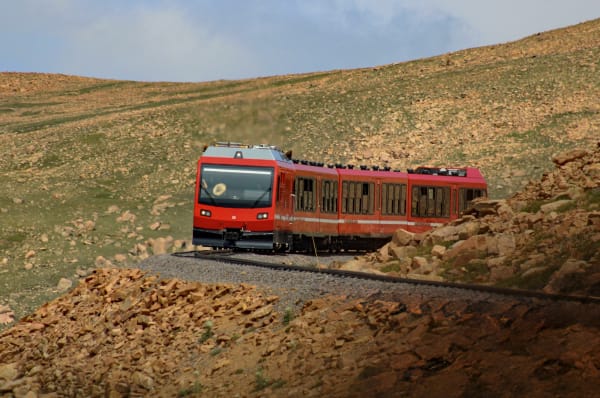
The Arkansas leaves the mountains through the Royal Gorge, too narrow at its bottom for more than one railroad. From 1878 the Santa Fe and the Denver & Rio Grande fought for it with grading crews, stone forts and hired guns until the Treaty of Boston of March 27, 1880, gave the Rio Grande the line to Leadville. The suspension bridge across the rim, 955 feet above the river, was built in 1929 and held the record for the highest bridge in the world until 2001.
What to See in Pikes Peak & the Royal Gorge
5 places across the region, grouped by what they are.
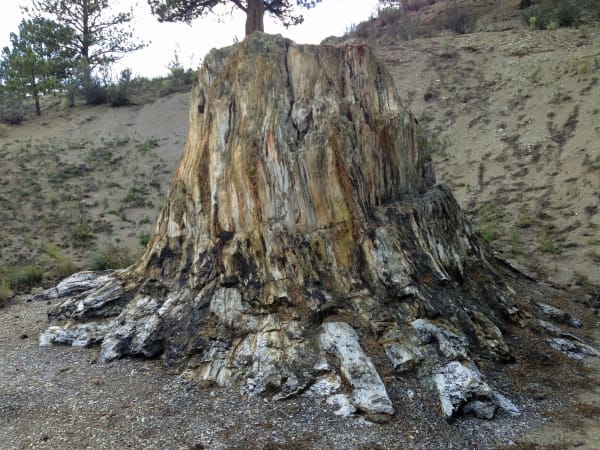
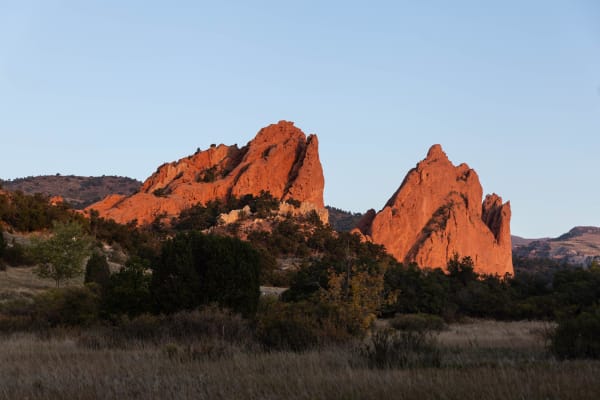
Geology & Rock Formations
Historic Sites
Architecture

Scenic Drives through Pikes Peak & the Royal Gorge
Stories from Pikes Peak & the Royal Gorge
Pikes Peak & the Royal Gorge rewards the unhurried. Pick a base, fan out, and let the country between the headline stops surprise you.
← Explore more of Open Road Guide