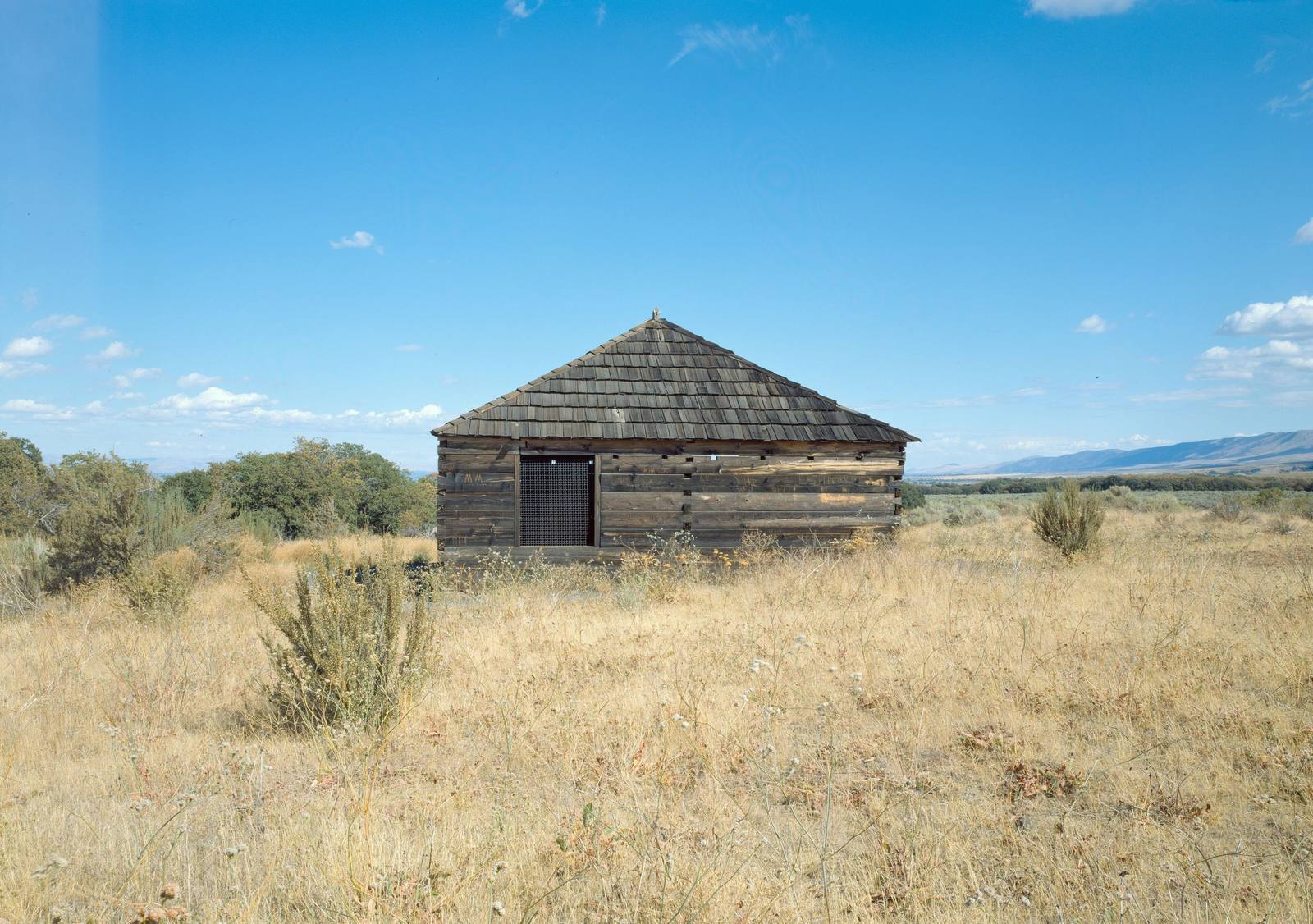
 James W. Rosenthal / public domain via Wikimedia Commons
The Story
The Yakama call the place Mool-Mool, bubbling water, for the springs in an oak grove at the foot of the Simcoe Mountains, and the Yakama archaeologist Jon Shellenberger describes a village and crossroads there long before the fort. The Army began building in August 1856, in the middle of the treaty war, and chose the site because it sat on a heavily traveled Yakama path where soldiers could watch who came and went. In October 1858 the commander, James Archer, hanged two Yakama men, Wap-pi-wa-pi-clah and Stok-an-chan, from a beam set in one of the oaks.
The Army left in 1859 and handed its twenty-one buildings, now inside the reservation, to the Indian agency. In 1860 the Methodist missionary James Wilbur opened a boarding school here with eighteen children, nearly twenty years before Carlisle. Sahaptin was forbidden, children were given English names, boys' hair was cut, and Native clothing was taken away. Enrollment reached 141 by 1917. The school building burned in December 1919, the school closed in 1920, and in the early 1920s the agency moved to Toppenish over the nation's objections.
The Yakama Nation leased the fort to the state in 1953, and the park opened on August 12, 1956. Five original buildings stand: the commander's house, three captains' houses and a blockhouse. In 2021 searchers began looking for unmarked graves on the grounds with ground-penetrating radar and dogs.
Visitor Info
On the Map
Nearby
The closest stops worth working into your route