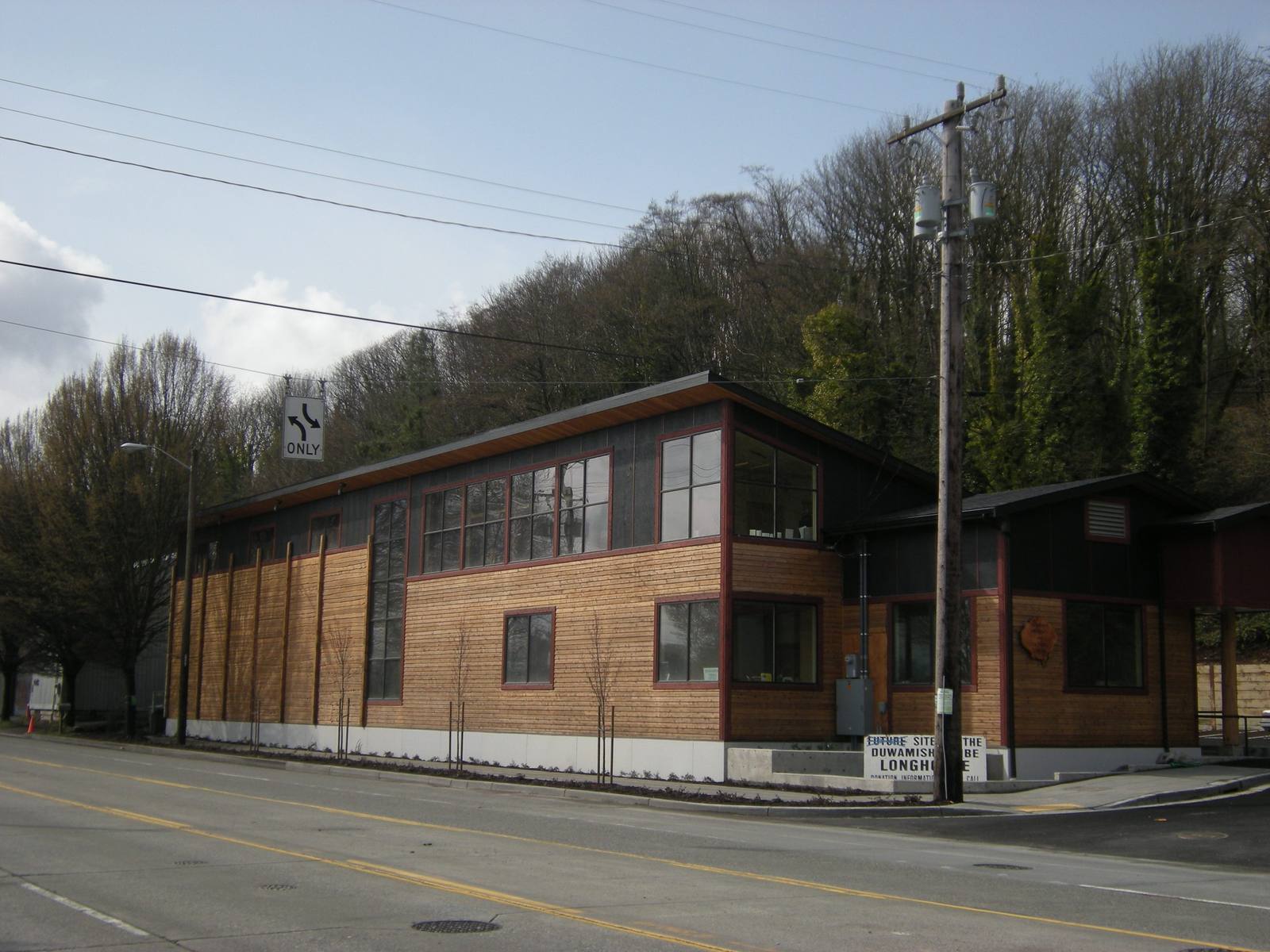
 Joe Mabel / CC BY-SA 3.0 via Wikimedia Commons
The Story
When the Denny party landed at Alki in November 1851, Duwamish longhouses stood along Elliott Bay and up the river that carries the tribe's name, more than ninety of them by the tribe's count. The settlers' town grew over the villages. The last Duwamish house in what is now West Seattle was burned in 1894, the tribe says, to drive its people off the land, and the Duwamish never received a reservation of their own.
For most of the next century the tribe had no place to gather. Under Cecile Hansen, a great-great-grandniece of siʔał who has chaired the tribe since 1975, the Duwamish bought a parcel on West Marginal Way and spent years raising the money, close to four million dollars from neighbors, foundations and supporters, to build a house the way they wanted it. It opened on January 3, 2009: a cedar post-and-beam longhouse in the Puget Salish style, the first longhouse in the city in more than a century. Inside are a museum of Duwamish history, a gallery of Native art, the tribe's offices and a great room used, as longhouses always were, for ceremony and tribal business.
Across the road, along the river, is Herring's House Park, a former village site, and nearby is the largest excavation of a Duwamish village to date. The tribe won federal recognition in the last days of the Clinton administration in 2001, and the decision was reversed later that year; the longhouse was built anyway.
Visitor Info
On the Map
Nearby
The closest stops worth working into your route