 Joe Mabel / CC BY-SA 3.0 via Wikimedia Commons
The Story
The memorial is a long wall of old-growth red cedar, granite and basalt that runs downhill through the trees to the place where the Eagledale ferry dock stood, and ends at a deck built out over the water in 2021 on the dock's footprint. The wall carries the names of every islander of Japanese descent, with their stories.
What happened after the ferry left is what sets Bainbridge apart. The islanders were sent by train to Manzanar in the Owens Valley of California, almost the only people from the Northwest held there, and within a year nearly all of them had asked for and won a transfer to Minidoka in Idaho, where friends and relatives from Seattle were held. At home, Walt and Milly Woodward, who owned the weekly Bainbridge Review, had opposed the removal in print from the start, and they kept at it through the war, losing subscribers for it. They hired young Nisei correspondents to send regular columns from the camps, so that the families would stay in the paper as part of the island.
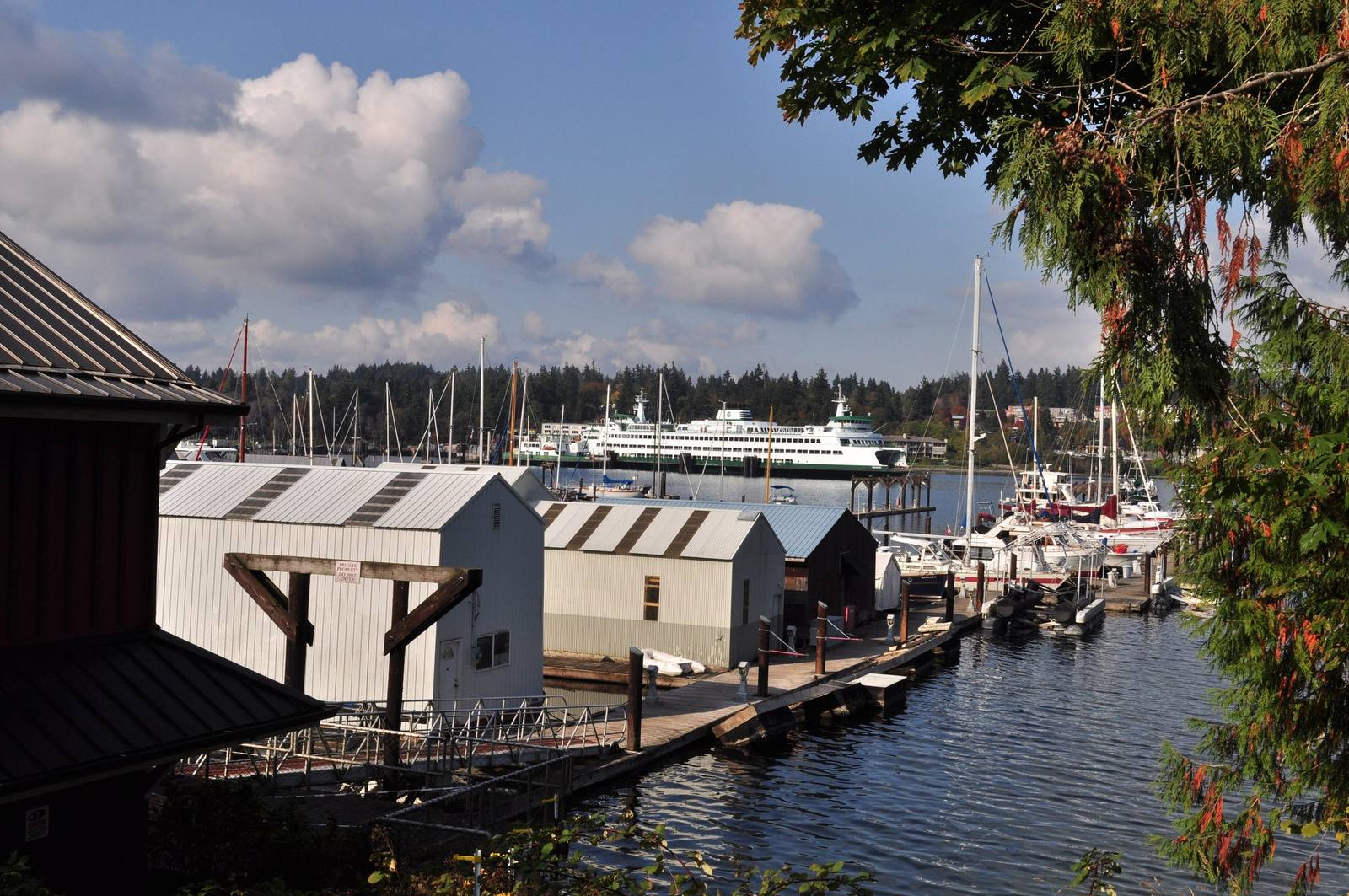
When the war ended about half of the exiled islanders came home, a larger share than from most West Coast towns, and many of them said the Woodwards were the reason they found neighbors waiting rather than strangers. In 1994 the island named its middle school for the couple. The memorial is a unit of Minidoka National Historic Site, and the old dock is across Eagle Harbor from the ferry terminal where the Seattle boats come in.
Visitor Info
On the Map
Nearby
The closest stops worth working into your route