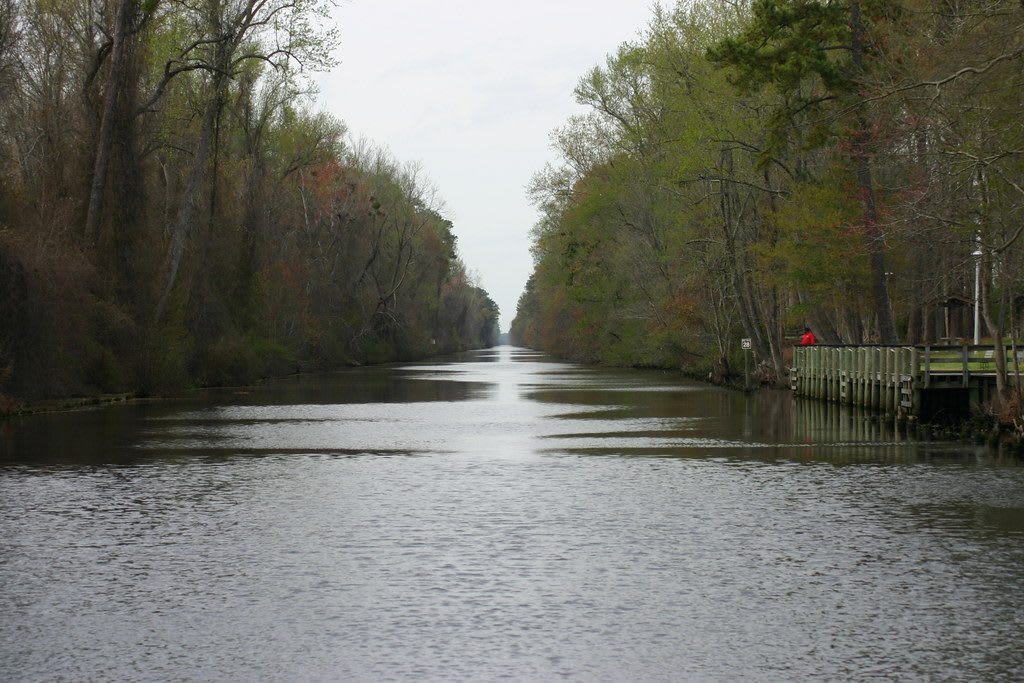
 Ryan Somma / CC BY-SA 2.0 via Flickr
The Story
The Great Dismal Swamp is the largest remaining swamp in the eastern United States. Native peoples hunted here for thousands of years, and the Chesapeake and Nansemond, among others, used the swamp in the 1600s; Tuscarora people were living in it in the early 1700s. In the eighteenth century George Washington's Dismal Swamp Land Company, formed in 1763, began ditching and logging it. Enslaved men did much of that labor, and the canal along the park's front opened to commercial traffic around 1805.
The swamp also hid people. From the 1600s until the end of slavery in 1865, maroons, people who had escaped slavery and their children born free, lived on the higher, drier islands deep in the swamp. Estimates run to the thousands, which would make it one of the largest maroon communities in the country. A militia with dogs went in after them in 1823, and North Carolina passed a law aimed at them in 1847, but most were never found. Archaeologists working in the swamp since 2002 have turned up their traces, and Harriet Beecher Stowe built her 1856 novel Dred on their story.
The park was a state natural area from 1974 and opened in 2008 as North Carolina's first public access to the swamp. You reach the visitor center across a floating bridge over the canal. A boardwalk loops through the swamp forest, and more than twenty miles of old logging roads take bicycles and hikers among the cedar and red maple. Canoes and kayaks can be rented for the canal.
Visitor Info
On the Map
Nearby
The closest stops worth working into your route
Historical markers nearby
Roadside plaques and monuments within a short detour