Home / Louisiana / New Orleans & the River Parishes / Destrehan Plantation
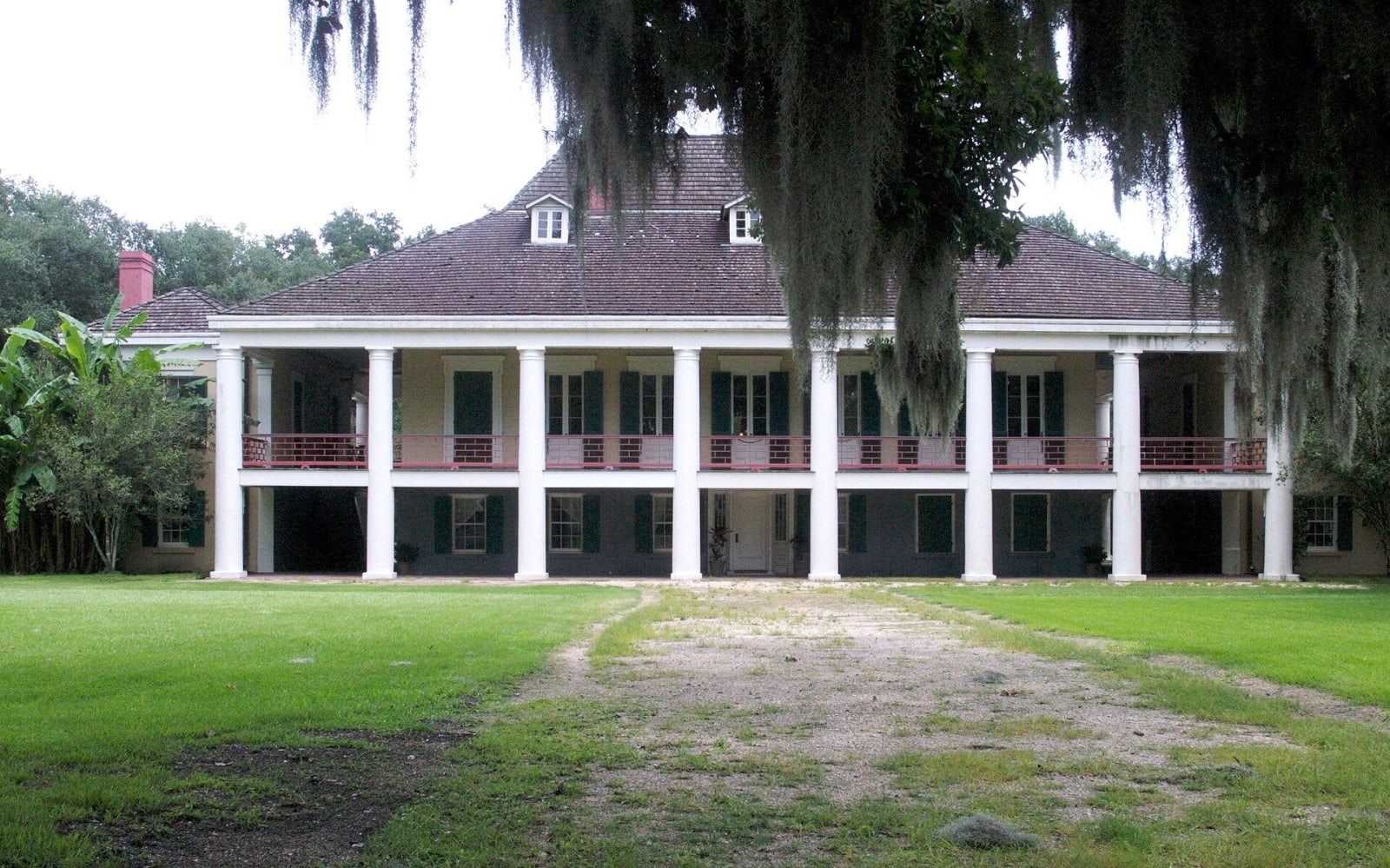
The two-story columned manor house of Destrehan Plantation seen across a lawn, with Spanish moss hanging from an oak in the foreground.Michael Overton / CC BY-SA 3.0 via Wikimedia Commons
🏛️Historical

Destrehan Plantation

Part ofNew Orleans & the River Parishes
On this driveThe Great River Road in Louisiana: New Orleans to Baton Rouge

A River Road house begun in 1787 where, in January 1811, a tribunal of five slaveholders tried people who had risen on the German Coast, and where an exhibit now tells the revolt.

⏱
Duration
About two hours with the museum and grounds.
🎟
Admission
Tickets sold online; the site lists senior, military, child and group discounts but no prices (check before you go).
📅
Best Season
Open daily, 9 a.m. to 5:30 p.m. by the site's own listing; confirm days and tour times.

The Story

Destrehan Plantation on River Road in St. Charles Parish holds a courtroom story as well as a house. Robert Antoine Robin de Logny contracted Charles Pacquet to build the house in 1787, and it was finished in 1790. When de Logny died in December 1792, his son-in-law Jean Noël Destréhan bought the plantation at auction and moved it from indigo toward sugarcane.

In January 1811 enslaved people along the German Coast rose, beginning on the evening of January 8 at Manuel Andry's plantation upriver. Slaveholding judges tried the recaptured, and the busiest tribunal, five slaveholders, met at Destrehan; Jean Noël Destréhan himself sat on it. Of 21 captured people tried here, 18 were executed by firing squad, and Charles Deslondes, named as the revolt's leader, was seized from custody and killed without a trial. White residents put heads on poles along the levee, from Andry's plantation to the gates of New Orleans, more than thirty miles.

After the Civil War the Freedmen's Bureau set up the Rost Home Colony on the grounds. The Mexican Petroleum Company bought the property in 1914, and American Oil gave the house and four acres to the River Road Historical Society in 1971. The address is 13034 River Road. The tour covers the main house and an enslaved cabin, and the Miller-Haydel Museum holds an exhibit on the 1811 uprising and one on the Rost Home Colony and free people of color.

Visitor Info

⏱
Time Needed
About two hours with the museum and grounds.
🎟
Admission
Tickets sold online; the site lists senior, military, child and group discounts but no prices (check before you go).
📅
Best Season
Open daily, 9 a.m. to 5:30 p.m. by the site's own listing; confirm days and tour times.
🛣️
Highway
River Road

On the Map

Nearby

The closest stops worth working into your route

historical17 mi away
Lafayette Cemetery No. 1
The Garden District's 1833 cemetery of about 1,100 family tombs, closed to visitors in 2019 and reopened on October 1, 2026 for small guided tours run by the Preservation Resource Center.
historical18 mi away
St. Louis Cemetery No. 1
New Orleans' oldest surviving city of the dead, opened in 1789 after the fire of 1788 and the burial place of Homer Plessy, reachable only on a guided tour since March 2015.
cultural18 mi away
Congo Square
The 2.35-acre corner of Louis Armstrong Park where, from 1817, New Orleans confined Sunday dancing by enslaved people to one place, and where crowds of hundreds gathered to drum, dance and trade.
cultural18 mi away
The Historic New Orleans Collection
A French Quarter museum and research center founded in 1966, whose 2015 Purchased Lives exhibition took on New Orleans' place as the largest slave market in antebellum America.
cultural18 mi away
New Orleans Jazz National Historical Park
A National Park Service unit created in 1994 to tell where jazz came from, with free programs and a visitor center in the French Quarter and park land inside Louis Armstrong Park.
historical18 mi away
The Cabildo
The Spanish town hall on Jackson Square, finished in 1799, where Louisiana changed flags in 1803 and where the state Supreme Court sat in the same room until 1910, Plessy v. Ferguson among its cases.

Historical markers nearby

Roadside plaques and monuments within a short detour

Marker17 mi away
Mass Lynching in New Orleans / Racial Violence in America
New Orleans
Marker17 mi away
Dooky Chase's Restaurant
New Orleans
Marker17 mi away
Oscar James Dunn
New Orleans
Marker17 mi away
The Pythian Temple
New Orleans
Marker17 mi away
New Orleans Massacre Of 1866
New Orleans
Marker18 mi away
Bernard de Marigny
New Orleans